
Lawn
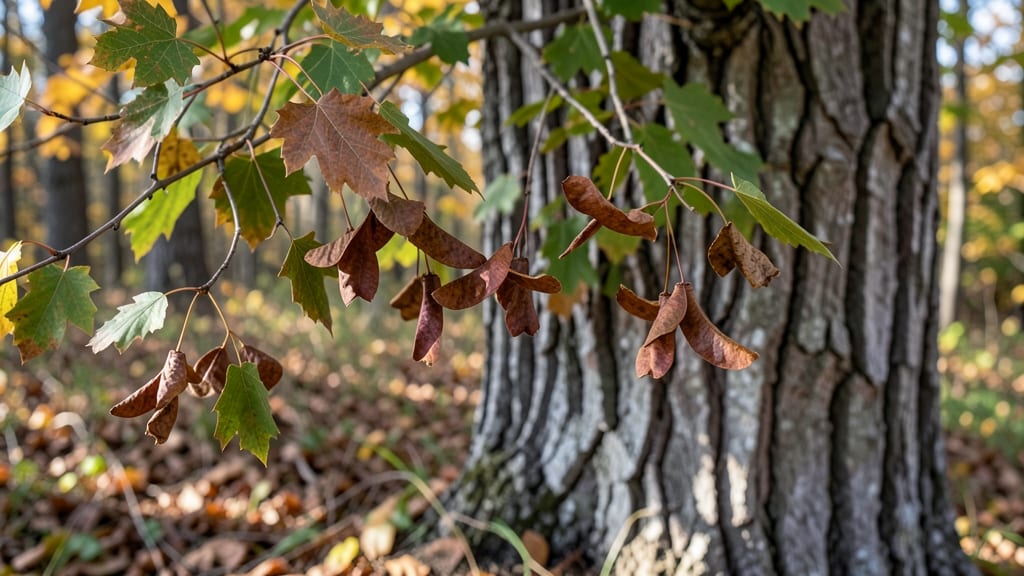
The identification of maple tree seed pods starts with spotting those classic V-shaped wings fluttering to the ground. 🌿 These "helicopters" are called samaras, and their shape, size, and color reveal exactly which maple species you're dealing with—whether it's a towering sugar maple or a compact Japanese maple in your yard.
Look for key details: sugar maples produce samaras about 1.5 inches long with a deep V-wing, while red maples have narrower wings and a slightly smaller size. The wings attach at a sharp angle—unlike ash tree seeds, which have a straighter, less dramatic shape.
Time of year matters too: most maple samaras drop in late spring to early summer, just as the leaves reach full size.
Confirm your ID by checking the tree itself: sugar maple leaves are lobed with serrated edges, while red maple leaves have a brighter red tint when young.
These pods aren’t just for show—they’re great for wildlife attraction and even propagation if you’re starting new trees. Just avoid collecting near roads, where they might carry pollutants.
For tricky cases, compare with ash tree "keys" (longer, straighter wings) or elm seeds (flatter, papery). Grab a notebook, jot down wing shape and leaf details, and you’ll nail the ID every time—no guesswork required.
Behind the science of seed pods
Maple tree seed pods—those iconic winged samaras—are far more than just autumn’s whimsical decorations. Their design and behavior are the result of millions of years of evolutionary adaptation, shaped by physics, climate, and survival instincts.
Understanding why these pods form, disperse, and sometimes cluster can help you predict their behavior and even identify the tree species behind them. Let’s break down the key factors driving their lifecycle.
Maple samaras are masterpieces of aerodynamic engineering. Their distinctive winged shape isn’t random—it’s a perfectly optimized solution for wind dispersal. Here’s how it works:
- Surface Area vs. Weight: The thin, papery wings create drag while keeping the seed (the nut) lightweight. This balance allows the pod to spin and glide like a helicopter, covering distances of up to 100 feet or more from the parent tree.
- Gyroscopic Stability: The wings cause the samara to rotate as it falls, reducing the risk of crashing into the tree trunk or getting eaten by birds. This spiral descent is a survival tactic—it maximizes the chance of landing in fertile soil far from competitors.
- Species-Specific Adaptations: Different maple species tweak this design slightly. For example, sugar maples (Acer saccharum) produce pods with wider wings for longer flights, while box elders (Acer negundo) have shorter wings and often cluster in dense groups. This variation helps them exploit different microclimates.
Pro Tip: 💡 If you notice samaras always landing in a tight cluster near the tree, it’s likely a box elder—their pods are less adapted for long-distance travel and often drop in batches.
Not all maple trees produce seed pods every year—and when they do, the timing and quantity depend on environmental cues. Here’s what influences their lifecycle:
| Factor | How It Affects Seed Pods | What to Watch For |
|---|---|---|
| Temperature & Day Length | Maples are photoperiod-sensitive, meaning they respond to changes in daylight. Cooler temperatures and shorter days in late spring/early summer trigger flower production, which later becomes seed pods. | Heavy pod years often follow mild winters—warmer temps reduce flower/fruit mortality. |
| Water Availability | Drought stress can reduce pod formation or cause aborted flowers. However, too much moisture can also lead to fungal infections in developing samaras. | Look for thin, underdeveloped pods after a dry spell or blackened pods after heavy rain. |
| Tree Health & Age | Young maples (<10 years old) often skip reproduction to focus on growth. Mature trees (20+ years) produce pods every 2–5 years in a cycle called masting—a survival strategy to overwhelm predators. | A sudden explosion of pods? It’s likely a masting event—common in sugar and red maples. |
| Pollination Success | Maples are wind-pollinated, so poor pollination (due to lack of nearby trees or high winds) can result in fewer or deformed pods. | Isolated maples may produce smaller, misshapen pods or none at all. |
Fun Fact: 🌡️ Some maples, like the silver maple (Acer saccharinum), produce pods so prolifically that they can smother lawns or clog gutters—earning them the nickname "the trash tree" in some areas!
Sometimes, maple samaras don’t follow the script—they drop early, cluster unnaturally, or even fail to disperse. Here’s why:
- Disease or Pest Damage:
- Tar spot fungus can cause premature leaf and pod drop, leaving blackened, crumbly wings.
- Aphids or maple seed borers may attack flower buds, leading to stunted or empty pods.
- Physical Stress:
- Heavy rain or snow can weigh down branches, causing pods to detach early.
- Construction vibrations or lawnmower trauma can shock the tree into dropping pods prematurely.
- Genetic Quirks:
- Some maple cultivars (like ‘Autumn Blaze’) are bred for ornamental value over seed production, resulting in fewer or sterile pods.
- Box elders often produce dense clusters because their pods lack the long-distance dispersal advantage of other species.
Actionable Tip: 🔥 If your maple’s pods are dropping before autumn or look shriveled, inspect the tree for fungal spots, sawdust-like frass (borer droppings), or sticky aphid trails. Treat accordingly to protect next year’s crop!
Fixing Common Maple Seed Pod Issues
Maple tree seed pods—those iconic winged samaras—can become a nuisance if they clutter your yard, damage gutters, or even attract pests. Below are practical solutions tailored to the most common problems, from cleanup to long-term prevention.
Problem: Seed pods accumulating in gutters, on driveways, or around your property.
Solution:
- 🔥 Schedule Regular Cleanups
- Use a leaf blower (on low setting) or a grabbing tool to gather pods into piles before they decompose.
- For heavy buildup, rake them into bags and dispose of them in yard waste.
- 👨🍳 Prevent Gutter Clogs
- Install gutter guards (mesh or reverse-curve designs) to block seed pods while allowing water flow.
- Trim nearby branches to reduce overhang and limit pod entry points.
- 🥘 Mulch or Compost (If Possible)
- If pods aren’t causing issues, mow them into lawn clippings (they’ll decompose naturally).
- Compost small amounts—just avoid large piles, as they can attract rodents.
Problem: Rodents, insects, or wildlife nesting in seed pod debris.
Solution:
- 🔪 Remove Debris Promptly
- Piles of samaras create hiding spots for mice, squirrels, and insects—clear them within 2–3 days of falling.
- 🌡️ Use Natural Deterrents
- Spread diatomaceous earth (food-grade) around infested areas to repel crawling pests.
- Plant pest-repelling ground covers (like mint or lavender) near the tree base.
- ✨ Seal Entry Points
- Check for gaps in siding, vents, or roof edges where animals might nest. Use steel wool or caulk to block access.
Problem: Your maple tree produces too many seed pods, overwhelming your yard.
Solution:
- 💡 Prune Strategically in Late Winter
- Remove 20–30% of the tree’s branches (especially dense clusters) to reduce seed production.
- Focus on vertical branches—these often bear the heaviest samara loads.
- 🎯 Choose Low-Samara Varieties (If Planting New)
- Opt for ‘Autumn Blaze’ or ‘October Glory’ maples—they produce fewer seed pods than silver or red maples.
- 🌿 Mulch the Root Zone
- A 3–4 inch layer of mulch (wood chips or bark) suppresses weeds and reduces stress on the tree, which can lower seed output.
💡 Pro Tip: If seed pods are damaging your roof or gutters year after year, consider professional tree shaping—an arborist can train the tree to grow in a way that minimizes mess. 🌳✨
Frequently asked questions
How can I tell if a seed pod is from a maple tree vs. ash or elm?
Maple seed pods (samaras) have a distinctive V-shaped wing that creates a helicopter-like spin as it falls. Ash tree seeds have straighter, flatter wings that don’t spiral, while elm seeds are smaller, papery, and lack wings entirely. Look for the sharp angle where the wings meet the seed—maples have a pointed junction, unlike ash’s broader base.
Why do some maple trees produce more seed pods than others?
Maples use a survival strategy called masting, producing heavy seed crops every 2–5 years to overwhelm predators. Young trees (10 years old) often skip reproduction, while mature trees respond to mild winters, good pollination, and low stress. Box elders, for example, cluster pods tightly near the tree, while sugar maples disperse them widely.
Can I use maple seed pods for planting new trees?
Yes! Collect fresh, healthy samaras in late spring/early summer and plant them 1/4-inch deep in well-draining soil. Keep the soil moist until germination (2–4 weeks). For best results, plant multiple seeds—many won’t sprout. Avoid pods from roadside trees, as they may carry pollutants.
What should I do if my maple tree’s seed pods are dropping early?
Early pod drop often signals stress, disease, or pests. Check for tar spot fungus (black spots on leaves), aphids (sticky residue), or borer damage (sawdust-like frass). Prune affected branches and apply fungicide or insecticide if needed. Heavy rain or construction vibrations can also trigger premature shedding.
Are maple seed pods harmful to pets or wildlife?
While samaras are non-toxic, large accumulations can create slip hazards for pets or attract rodents. Avoid composting piles of pods, as they may harbor insects or mold. Birds and squirrels love them for nesting material, but remove debris promptly to prevent pests.