
Light Requirements
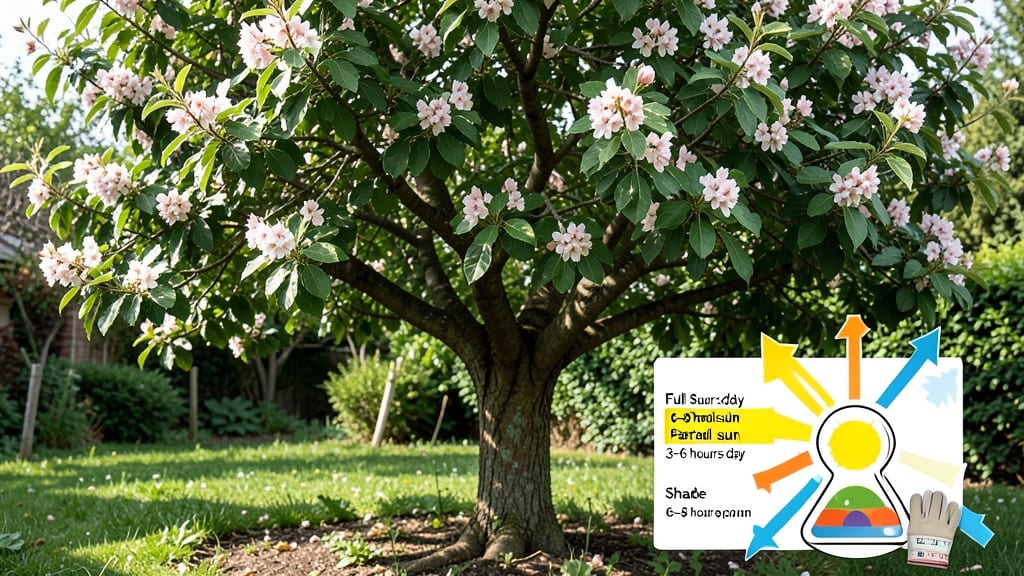
A cherry tree 🍒 needs at least 6 to 8 hours of full sunlight daily to produce sweet, flavorful fruit and stay healthy.
But here’s the catch: too much scorching afternoon sun can actually damage leaves, while too little shade slows growth and cuts fruit production. If your tree is struggling, it might not be getting the right balance—whether it’s too much heat or not enough light to fuel its energy.
Sweet cherries (like Bing or Rainier) demand the most sun, while tart varieties (like Montmorency) tolerate slightly more shade. Ornamental cherries? They’re flexible but still crave bright light for vibrant blooms.
Below, I’ll break down the exact sunlight needs by variety, how to adjust for young vs. mature trees, and the warning signs your tree isn’t getting it right.
You’ll also learn how to position your cherry tree for peak sunlight—whether you’re planting in an open yard, a small urban space, or dealing with seasonal shade shifts. Get it right, and you’ll reward yourself with a bountiful harvest every June through August.


Daily sunlight requirements for cherry trees by variety (sweet vs. tart vs. ornamental)
Cherry trees are sun-worshippers, but not all varieties demand the same amount of sunlight.
Sweet cherries (Prunus avium) like Bing and Rainier need 6-8 hours of direct sun daily to produce flavorful fruit, while tart cherries (Prunus cerasus) such as Montmorency can tolerate 5-7 hours.
Ornamental varieties like Prunus serrulata (Japanese flowering cherry) thrive with 4-6 hours but still reward you with stunning blooms. Understanding these differences ensures your tree grows strong and productive.
Sunlight isn't just about quantity—it's also about quality. Cherry trees require full sun exposure with minimal obstructions, like nearby buildings or tall trees. Even partial shade can reduce fruit size and sugar content in sweet cherries.
For tart cherries, a little afternoon shade helps prevent sunburn, especially in hot climates. Ornamental cherries, however, can handle light shade better than fruiting varieties, making them ideal for partial-sun gardens.
Here’s a quick comparison of sunlight needs for each variety to help you choose the right spot in your garden:
| Variety | Sunlight Needs | Shade Tolerance | Fruit/Flower Impact |
|---|---|---|---|
| Sweet Cherries (Prunus avium) | 6-8 hours | Low (≤2 hours shade) | Reduced fruit size/sugar |
| Tart Cherries (Prunus cerasus) | 5-7 hours | Moderate (≤3 hours shade) | Smaller berries, fewer blooms |
| Ornamental Cherries (Prunus serrulata) | 4-6 hours | High (≤4 hours shade) | Fewer/muted flowers |
Sunlight directly impacts fruit development in cherry trees. Sweet cherries, for example, need ample sun to develop their signature sweetness and vibrant color. Without enough light, their sugars won’t convert properly, leaving you with bland, underripe fruit.
Tart cherries are slightly more forgiving but still require sufficient sunlight to produce high-acid berries packed with antioxidants. For ornamental varieties, sunlight triggers vibrant spring blooms—too little shade, and you’ll miss out on show-stopping pink or white flowers.
Disease resistance also hinges on sunlight. Cherry trees grown in low-light conditions are more susceptible to fungal diseases like powdery mildew and brown rot because their leaves stay damp longer.
Full sun promotes faster drying of foliage, reducing pathogen risks. If you’re growing cherries in a humid climate, prioritize south-facing locations to maximize airflow and sunlight exposure.
Young cherry trees are especially sensitive to sunlight changes. When transplanting, place them in a spot that mimics their original sunlight conditions. Sudden shifts from shade to full sun can cause leaf scorch or stunted growth.
For mature trees, prune to thin the canopy and ensure sunlight reaches the inner branches, where fruit often develops. This practice boosts yield and prevents uneven ripening.
Microclimates play a crucial role in sunlight exposure. In urban areas, buildings and pavement can create heat islands, increasing sunlight intensity. If your cherry tree is near a wall or sidewalk, monitor for heat stress signs like curled leaves or wilting.
In rural settings, open fields provide ideal conditions, but watch for late-frost damage if sunlight exposure varies by season. Adjusting mulch depth or using lightweight shade cloth in extreme heat can help balance conditions.
Seasonal adjustments are key for cherry trees. During summer solstice, days are longest, and trees get 14-16 hours of daylight. While this is ideal, avoid overwatering to prevent root rot in saturated soil.
In winterat least 4-5 hours of winter sun to maintain health. Evergreen trees or fences blocking sunlight can disrupt this balance, so plan your garden layout with year-round light in mind.
If your garden lacks full sun, consider dwarf varieties like Stella® sweet cherry or Meteor® tart cherry, which tolerate partial shade better than standard trees. These compact options are perfect for small yards or containers, though they’ll still produce smaller yields compared to full-sun counterparts.
For ornamental cherries, varieties like Kwanzan® flourish with morning sun and afternoon shade, making them versatile for mixed-light gardens.
Pro tip: Use a sunlight meter or observe your garden’s light patterns before planting. Note which areas get direct sun for 6+ hours and which are in partial shade. This simple step ensures you place your cherry tree in the optimal spot from day one.
With the right sunlight, your cherry tree will reward you with bountiful fruit, stunning blooms, or both, depending on the variety.
How to adjust sunlight exposure for young vs. mature cherry trees
Cherry trees are sun-hungry plants, but their needs shift dramatically as they transition from young saplings to mature fruit producers. Young cherry trees require careful sunlight management to establish strong roots, while mature trees need consistent full sun for optimal fruit production.
The key is balancing their exposure to avoid stress or disease while maximizing growth potential.
When planting a new cherry tree, choose a location that offers at least 6-8 hours of direct sunlight daily.
However, young trees can’t handle the intense afternoon sun right away. Dappled shade during the hottest hours (11 AM–3 PM) can protect tender leaves while still providing the light they need to grow. This gradual adjustment helps prevent sunburn and leaf scorch, common issues in young cherry trees.
⚠️ callout warning
Young cherry trees planted in full sun too soon can suffer from leaf scorch or sunburn. Gradually acclimate them by providing 50% shade for the first 2-4 weeks after transplanting, then slowly reduce shade over 4-6 weeks. Mature trees, on the other hand, cannot tolerate shade—they need full sun for proper fruit development.
For mature cherry trees, full sun exposure is non-negotiable. These trees thrive with 8+ hours of direct sunlight daily, especially during their fruit-bearing years. If your mature tree is in partial shade, you’ll likely see smaller fruit, poor color development, or even reduced blossoming.
In urban or small-space gardens, consider pruning nearby structures or trees to open up the canopy and allow more light to reach the cherry tree’s lower branches.
Pruning plays a critical role in managing sunlight exposure. For young trees, selective pruning opens the center of the canopy, allowing light to penetrate and reduce the risk of fungal diseases like powdery mildew.
In mature trees, thinning out dense branches ensures even sunlight distribution, which is essential for uniform fruit ripening. Always prune in late winter or early spring before new growth begins.
If your cherry tree is in a small-space garden or urban setting, consider reflective surfaces like white walls or mulch to maximize light exposure. A south-facing wall can bounce extra sunlight onto the tree, mimicking full-sun conditions.
For dwarf varieties, ensure they’re placed where they won’t be overshadowed by taller plants or structures as they grow.
Monitor your cherry tree’s leaf color and fruit development as indicators of proper sunlight. Young trees with yellowing leaves may need more light, while mature trees with small, pale fruit are likely shaded too much.
Adjust pruning or positioning as needed to keep your cherry tree thriving at every growth stage. With the right sunlight strategy, you’ll enjoy a bountiful harvest for years to come. 🌿