Welcome to Tree Sapling
You’ve planted a seed—maybe it’s a packet of heirloom tomatoes or a cutting from a friend’s garden—and now you’re waiting. The soil is right. The light is good. But the days stretch on, and nothing happens. You’re not alone.
Most gardeners spend more time staring at empty pots than admiring full blooms. This site is for the in-between: the patience, the small victories, and the lessons learned when things go wrong.
Here, we don’t just tell you what to plant. We talk about why it matters—how a single seed can teach you more than a textbook ever could.
Whether you’re a beginner with a windowsill or a veteran with a plot, you’ll find the kind of advice that works in real soil, not just in perfect photos.
Our story
The first time Guadalupe Okafor tried to grow something from seed, it was a sunflower in her grandmother’s backyard in Houston. The packet promised a towering stalk by summer. Instead, it sprouted crooked, leaned into the fence, and died before it could open. She replanted it three times that year.
By the fourth attempt, she noticed the soil near the fence was always damp—too damp—and adjusted. That sunflower grew straight.
The idea for *Tree Sapling* came on a rainy afternoon in 2023, when Guadalupe was troubleshooting a batch of struggling pepper seedlings. She’d spent hours researching online, only to find advice that assumed perfect conditions: the right pH, the exact temperature, the ideal sunlight.
None of it accounted for a landlord who turned off the heat in April or a neighbor’s dog that dug up half the plot. She started writing down what *actually* worked in her hands—and what didn’t.
The turning point was a post about reviving a root-bound fern. A reader in Portland replied that the same method saved her dying Boston fern during a heatwave. Another in Chicago said it worked for her orchids. That’s when it clicked: gardening isn’t just about plants.
It’s about the stories behind them—the missteps, the lucky breaks, and the quiet moments when something finally takes root.
What we stand for
We believe gardening should be honest. That means talking about the times your seedlings rot in the tray, your tomatoes split before they ripen, or your prized rose bush gets munched by rabbits. The best lessons come from the mess, not just the manicured rows.
What you will always get here
- Advice that works in *your* garden—not just in a greenhouse or a perfect growing zone.
- No jargon. If we say ‘harden off,’ we’ll explain what that means for someone with a busy schedule.
- Real timelines. Germination takes longer in a cold basement. Flowers bloom later if your spring was wet. We’ll tell you when to push and when to wait.
- A focus on the *why*. Not just ‘add compost,’ but ‘this is how compost fixes the clay soil in Zone 7b—and here’s what happens if you skip it.’
Meet the team
Behind *Tree Sapling* is a small team of gardeners who’ve all had the same frustration: finding advice that feels like it was written for someone else. We’re not botanists with PhDs or farmers with acres.
We’re the people who’ve Googled ‘why is my mint taking over?’ at 2 a.m. and still ended up with a yard full of it.
Guadalupe Okafor

Guadalupe Okafor is the founder and editor of *Tree Sapling*, and her approach to gardening is shaped by years of trial and error. She started with her grandmother’s sunflowers and has since filled her Houston balcony with everything from chili peppers to dwarf citrus trees.
Her work here reflects a hands-on philosophy: if a tip hasn’t been tested in her own soil—or failed spectacularly in it—she won’t write about it.
Before *Tree Sapling*, she ran a small urban farming collective, where she learned that the biggest mistakes often come from assumptions. ‘Everyone tells you to water in the morning,’ she’d say, ‘but what if your morning is 70°F and humid?
What if your plants are thirstier at noon?’ That’s the kind of detail she hunts for. On her desk, there’s always a notebook with half-finished sketches of garden layouts—and a jar of saved seeds from plants that didn’t make it, labeled with what went wrong.
I’d rather admit I killed a plant than give someone advice that’ll do the same. The best gardens aren’t about perfection—they’re about learning which mistakes you can afford to make.
Guadalupe Okafor
How we create our content
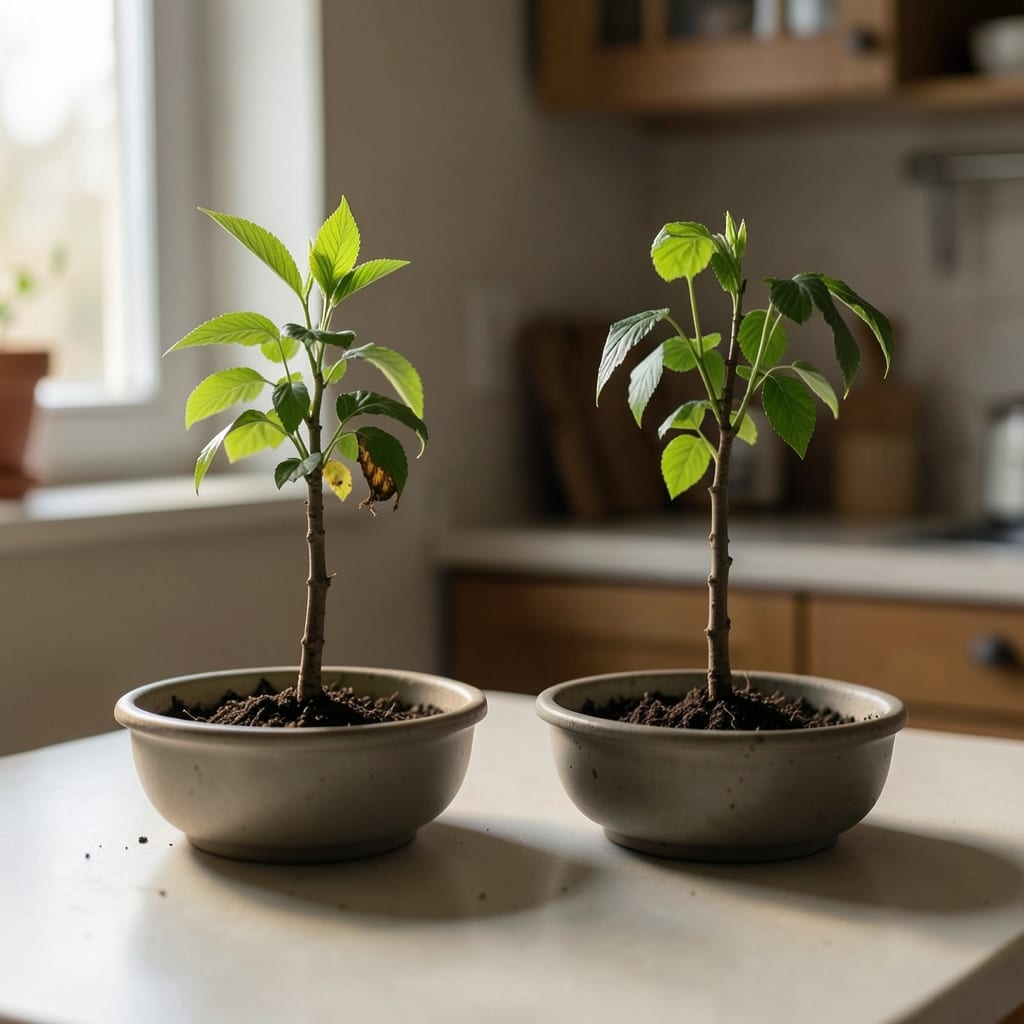
Every piece on *Tree Sapling* starts with a question—or a problem. It could be a reader’s email about yellowing leaves, a gardener’s frustration with slow germination, or even our own failed experiment (like the time we tried growing basil indoors without enough light). We don’t begin with a theory.
We start with the dirt.
The first draft: real conditions
The initial test happens in conditions that match what most gardeners face. That means planting seeds in trays at room temperature (not a heated mat), watering with tap water (not distilled), and tracking results over weeks—not days.
If we’re writing about overwintering herbs, we’ll leave a pot outside in December, even if it’s freezing, and note when the frost kills the leaves (and when it doesn’t).
We measure everything: the time it takes for a cutting to root, the depth of soil needed to prevent wilting, the exact hour the first bloom opens. No guesswork. If a method works 80% of the time but fails when the humidity drops below 40%, we’ll say so.
The goal isn’t to sell you a perfect system—it’s to give you the tools to fix yours.
The second draft: fixing the flaws
The second phase is where the real work happens. We take the ‘what worked’ and push it further: Can you grow these tomatoes in a 5-gallon bucket? Will this compost recipe still work if you skip the worms?
We adjust for edge cases—like a balcony with afternoon shade or a garden where the soil is 60% clay. Every guide is rewritten at least twice, with input from gardeners in different climates.
The final version includes not just the steps, but the warnings. ‘If your tap water is chlorinated, let it sit out for 24 hours before watering seedlings,’ or ‘This fertilizer burns roots if applied in high heat.’ We don’t hide the risks. That’s how you avoid repeating them.
Join our community
This site exists because gardening is better when you’re not alone.
Here, you’ll find answers to questions like *‘Why is my zucchini flowering but not fruiting?’* or *‘How do I save my dying houseplant without buying a new one?’* But the real value comes from what others share: the ‘I tried your method and this happened’ updates, the photos of before-and-after fixes, and the suggestions that lead to new guides.
If you’ve got a gardening win—or a disaster—we want to hear about it.
Let's connect
We love hearing about your gardens—what’s thriving, what’s struggling, and the plants you’re stubbornly trying to grow (we’ve all got that one). Whether you’ve got a windowsill herb garden or an acre of vegetables, your story helps make this site better.
If you’ve got a question or a tip to share, head to the contact page. Let’s grow something together.
The guides are grouped by category: Advice, Aphids, Blooming, Companion Plants, Container Gardens and Diseases.