
Pests and Diseases
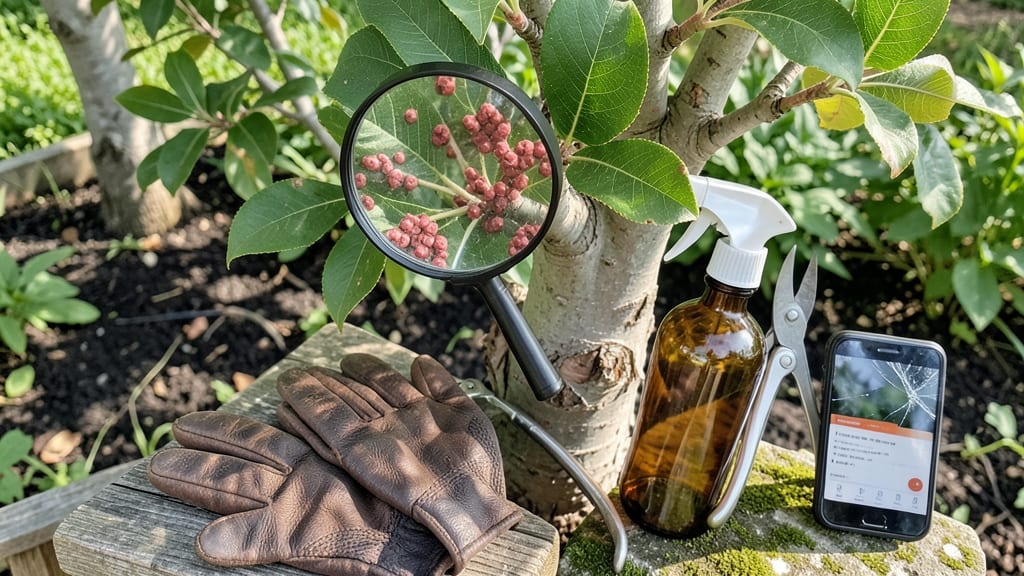
Those red bumps on your peach tree leaves aren’t just unsightly—they’re a sign your tree is fighting something serious. 🌿 I’ve seen rust fungus, spider mites, and even environmental stress create those telltale spots, and the good news is most cases have simple fixes.
The key is acting fast before the problem spreads to the fruit or weakens the whole tree.
First, get up close and identify what you’re dealing with: rust fungus leaves powdery orange spots on undersides, while mites create tiny yellow specks and webbing. Environmental stress might show as raised bumps without the telltale color.
Once you know the cause, you can choose the right treatment—organic sprays for fungus, neem oil for mites, or just better watering habits for stress.
With the right approach, your tree can bounce back in just a few weeks. I’ve restored trees that looked hopeless by combining treatments and preventive care.
The goal is to keep your peach tree healthy enough to produce those sweet, juicy fruits you love without the stress of a struggling plant.
If the bumps keep coming back or the tree looks seriously weakened, it’s time to call in an arborist. But for most home gardeners, this is a fixable problem—one that won’t keep your tree from thriving for years to come. Let’s get your peach tree back to its best.
Root Causes Of Leaf Spots
Red bumps or discolored patches on peach tree leaves are rarely a cause for panic, but they do signal underlying issues that need attention. Understanding the why behind these symptoms is the first step toward effective treatment.
Below, we break down the most common causes—each with a distinct trigger—and explain how they disrupt your tree’s health.
Fungal pathogens are the #1 culprit behind red bumps, spots, or lesions on peach leaves. These microscopic invaders thrive in warm, humid conditions and exploit weak spots in the tree’s defenses.
- **Leaf Spot Diseases (e.g., Cercospora or Alternaria): These fungi create reddish-brown, circular spots with darker edges, often surrounded by a yellow halo.
Over time, spots may develop tiny black fruiting bodies** (fungal reproductive structures) in their centers. - Why it happens: Spores land on leaves, germinate in moisture, and penetrate through stomata (leaf pores) or wounds. High humidity (above 75%) and poor air circulation accelerate spread.
- Rust Fungi (e.g., Tranzschelia discolor): Rust causes pustule-like red-orange bumps (urediniospores) on the leaf surface, often on the undersides.
These eventually burst, releasing spores that infect other plants. - Why it happens: Rust fungi require two hosts (peach trees and alternate hosts like blackberry bushes) to complete their life cycle. Wind or splashing water disperses spores.
- Powdery Mildew (Less Common but Possible): While powdery mildew typically appears as white, powdery patches, some strains can cause reddish discoloration in advanced stages.
Infected leaves may curl or develop crusty bumps. - Why it happens: This fungus thrives in shady, low-light conditions with high humidity. Poor airflow (e.g., dense foliage) traps moisture, creating ideal conditions.
💡 Pro Tip: Fungal infections worsen when leaves stay wet for more than 6 hours. Prune for airflow and avoid overhead watering to reduce humidity around the canopy.
Bacterial leaf spots are less common than fungal ones but can still produce reddish, water-soaked bumps that eventually turn brown and crinkly. Unlike fungi, bacteria often cause oozing lesions or halo effects around spots.
- Bacterial Leaf Spot (Xanthomonas spp.): Symptoms include small, red-brown spots with yellow margins, sometimes merging into larger necrotic areas. In severe cases, leaves may drop prematurely. - Why it happens: Bacteria enter through wounds (e.g., hail damage, pruning cuts) or natural openings.
Rain splashing or contaminated tools spread the pathogen.
- **Fire Blight (Erwinia amylovora): While fire blight primarily targets blossoms and shoots, it can cause reddish, oily lesions on leaves if the disease spreads systemically.
Infected areas may oozes bacterial ooze** when wet. - Why it happens: This bacterium thrives in cool, wet springs and is often introduced via infected nursery stock or contaminated pruning tools.
⚠️ Warning: Bacterial infections are harder to treat than fungal ones. Sterilize pruners with rubbing alcohol (70% or higher) between cuts to prevent spread.
Not all red bumps are caused by pathogens—sometimes, your peach tree is screaming for help due to environmental factors. These issues weaken the tree, making it more susceptible to infections.
- Sunburn or Heat Stress: Intense sunlight (especially after frost or drought) can cause reddish, scalded patches on leaves.
These spots may appear dry and papery, with no fungal growth. - Why it happens: Peach trees have thin, delicate leaves that burn when exposed to sudden heat or UV radiation. Young trees or those recovering from drought are most at risk.
- Nutrient Deficiencies (Iron or Zinc): Iron chlorosis (yellowing between veins) can sometimes progress to reddish-brown spots if severe.
Zinc deficiency may cause small, red bumps along leaf veins. - Why it happens: Poor soil drainage (e.g., alkaline soil) locks out iron, while over-fertilizing with nitrogen can starve roots of micronutrients.
- Hail or Physical Damage: Hailstones or pests (like aphids) can bruise leaves, creating reddish-purple marks that later turn brown.
Unlike fungal spots, these injuries are irregularly shaped and may have ragged edges. - Why it happens: Physical trauma disrupts cell membranes, leading to localized necrosis (cell death).
🌡️ Quick Fix: If stress is the cause, focus on watering deeply (1–2 inches per week), mulching to retain moisture, and avoiding overhead irrigation during hot days.
While pests don’t directly cause red bumps, their feeding can trigger secondary infections or create conditions that lead to discoloration.
- Mites (Spider Mites or Rust Mites): These tiny pests pierce leaves, causing stippling (tiny red or yellow dots) that can merge into larger necrotic areas.
Heavy infestations weaken the tree, making it prone to fungal attacks. - Why it happens: Mites thrive in dry, hot conditions and multiply rapidly on stressed trees. Their saliva contains toxins that disrupt chlorophyll production, leading to reddening.
- Scale Insects or Aphids: These sap-suckers inject toxins as they feed, causing reddish, curled leaf tissue near infestation sites.
Their honeydew (sticky residue) also fosters sooty mold, a black fungus that further stresses the tree. - Why it happens: Aphids and scale secrete protective wax coatings, making them hard to spot until damage is visible. They cluster on new growth, where leaves are most vulnerable.
🎯 Prevention: Blast pests off with a strong spray of water (early morning) or use neem oil (follow label instructions) to disrupt their life cycles.
Overzealous gardeners sometimes accidentally poison their trees with improper chemical use. Symptoms may mimic fungal spots but lack the organism’s distinct patterns.
- Herbicide Drift or Overapplication: If nearby weeds were sprayed with glyphosate or other broadleaf herbicides, wind can carry residue to peach leaves, causing reddish-brown, crinkled spots with yellow halos. - Why it happens: Peach trees are not immune to systemic herbicides.
Even low doses can disrupt cell membranes, leading to necrosis.
- Fungicide or Copper Spray Burn: Copper-based fungicides (common for fungal control) can cause reddish-brown scorch marks if applied too concentrated or in direct sunlight.
- Why it happens: Copper is phototoxic—when it hits leaves under UV rays, it overstimulates chlorophyll breakdown, causing burn spots.
✨ Solution: Always dilute chemicals as directed, apply early in the day, and avoid spraying when rain is forecasted (to prevent runoff).
Quick Fixes for Leaf Bumps
Now that you’ve identified the cause of those pesky red bumps on your peach tree leaves, it’s time to take action! 🌿💥 Whether it’s fungal infections, mites, or environmental stress, these targeted solutions will help restore your tree’s health—without breaking the bank or your back.
Below, we’ve mapped out practical, step-by-step fixes for each common culprit, plus prevention tips to keep your peach tree thriving long-term.
Fungi love damp, humid conditions, and once they take hold, they can spread like wildfire. The good news? You can outsmart them with a mix of cultural fixes and natural remedies.
🔥 Step 1: Prune Infected Areas
- 👨🍳 Remove and dispose of heavily infected leaves, twigs, or branches. Do not compost them—burn or trash them to prevent spores from lingering.
- ✂️ Sterilize pruners with rubbing alcohol or a 10% bleach solution (1 part bleach to 9 parts water) to avoid spreading disease.
🌡️ Step 2: Improve Airflow & Reduce Moisture
- 🌿 Thin out dense foliage to allow sunlight and air to circulate. Fungi thrive in shady, damp spots.
- 💦 Water at the base (not overhead) in the early morning so leaves dry quickly.
Avoid late-afternoon watering. - 🌡️ Space out irrigation—peach trees need about 1–1.5 inches of water per week, but soggy soil invites fungal growth.
🎯 Step 3: Apply Fungicidal Treatments
- 🍄 Natural options first:
- Baking soda spray: Mix 1 tsp baking soda + 1 tbsp vegetable oil + 1 tsp mild soap per quart of water.
Spray every 7–10 days until symptoms fade. - Neem oil: A 2% neem oil solution (1 tbsp neem oil + 1 tsp soap per gallon of water) disrupts fungal spores. Reapply every 5–7 days for severe infections. - 💊 Chemical backup (if needed): - Copper fungicides (like Copper Sulfate) are effective but use sparingly—follow label instructions to avoid leaf burn. - Systemic fungicides (e.g., Myclobutanil) can be applied preventively in early spring before spores activate.
✨ Prevention Tips for Fungi
- 🌱 Plant resistant varieties (e.g., ‘Redhaven’ or ‘Elberta’ peaches are less prone to leaf curl).
- 🍂 Clean up fallen leaves in autumn—fungal spores overwinter in debris!
- 🌡️ Apply a dormant spray (copper or lime sulfur) in late winter before buds swell.
Tiny but mighty, mites suck sap and leave behind stippled, reddened leaves that look like tiny bumps. Here’s how to crush their lifecycle fast.
🔪 Step 1: Blast Them Off
- 💦 Strong water spray: Use a hose on a gentle setting to dislodge mites from leaves. Do this every 3–4 days for a week.
- 🌬️ Shake the tree (literally!) to knock mites onto a tarp below, then dispose of them.
🍳 Step 2: Introduce Natural Predators
- 🐞 Ladybugs, lacewings, and predatory mites (like Phytoseiulus persimilis) devour mites—buy them online or release them at dawn when mites are sluggish.
- 🌿 Plant companion flowers (e.g., marigolds, dill, or yarrow) to attract beneficial insects.
💊 Step 3: Use Mite-Killing Sprays
- 🍋 Horticultural oil or insecticidal soap: Mix 1 tbsp per gallon of water and spray directly on undersides of leaves (mites hide there!). Reapply every 5–7 days.
- 🌿 Neem oil (as above) works well for mites too—reapply every 7 days until mites vanish.
- 💊 Severe cases? Try sulphur sprays (follow label rates—too much can burn leaves!).
🎯 Prevention Tips for Mites
- 💦 Keep trees hydrated—mites thrive in dry, hot conditions.
- 🌿 Mulch with straw or wood chips to retain moisture and deter mites.
- 🍂 Avoid broad-spectrum pesticides (they kill predator bugs too!).
Sometimes, red bumps aren’t pests or fungi—they’re your tree’s SOS signal for better care. Here’s how to revive a stressed peach tree.
🌞 Step 1: Shield from Harsh Conditions
- 🌿 Provide afternoon shade if leaves are bleached or sun-scorched (use shade cloth or plant near taller trees).
- 🌡️ Protect from hail with row covers during storms if your tree is young or delicate.
🍎 Step 2: Boost Nutrition
- 📊 Soil test first! Red bumps from nutrient deficiency (e.g., magnesium, zinc, or iron) need a targeted fix:
- 💪 Iron deficiency? Apply chelated iron or iron sulfate in early spring.
- 🌱 Magnesium? Sprinkle Epsom salt (magnesium sulfate) around the base (1 tbsp per gallon of water, every 2 weeks).
- 🌿 Top-dress with compost to improve soil health long-term.
💧 Step 3: Adjust Watering & Mulching
- 💦 Deep watering (1–2 inches per week) prevents stress from drought or overwatering.
- 🌿 Mulch with organic matter (like straw or pine needles) to retain moisture and regulate soil temp.
🎯 Prevention Tips for Stress
- 🌱 Plant peach trees in well-draining soil (they hate soggy roots).
- 🌿 Avoid heavy pruning in late summer—it stresses trees before winter.
- 🌡️ Monitor weather forecasts and protect young trees from sudden temperature swings.
- 💡 Act fast! The sooner you treat red bumps, the less damage spreads.
- 🌿 Rotate treatments (e.g., neem oil one week, insecticidal soap the next) to prevent resistance.
- 📅 Keep a garden journal to track what works—note when you sprayed, watered, or pruned!
- 🌱 If all else fails, consult a local agricultural extension office for region-specific advice.
With these fixes, your peach tree should bounce back with lush, healthy leaves in no time. 🌳💚 Stay vigilant, and your tree will reward you with sweet, juicy peaches next season!
Frequently asked questions
Are red bumps on peach leaves always caused by disease?
No, they’re often caused by environmental stress or pests. Check for irregular shapes (sunburn/hail), tiny yellow dots (mites), or webbing (spider mites). Fungal spots usually have distinct patterns like rust-colored pustules or dark centers.
Can I still harvest peaches if leaves have red bumps?
It depends! If the bumps are from fungus or bacteria, remove and destroy infected fruit to prevent spread. For environmental stress or light mite damage, peaches may still be safe—just wash thoroughly. When in doubt, check a few leaves first.
How do I tell if it's rust fungus vs. mites?
Rust fungus shows as orange-red pustules (often on leaf undersides) that burst open. Mites create tiny stippled dots (like pepper sprinkles) and leave fine webbing between leaves. Use a magnifying glass for close inspection.
Will pruning help if red bumps are already widespread?
Yes, but focus on removing 1/3 of infected branches to improve airflow. Sterilize tools between cuts, and dispose of pruned material in sealed bags. Combine pruning with neem oil sprays for best results.
How often should I check my peach tree for new bumps?
Inspect leaves every 7–10 days during growing season (spring-fall). Early detection is key—catching issues before they spread saves time and effort. Keep a small notebook to track progress.