
How To
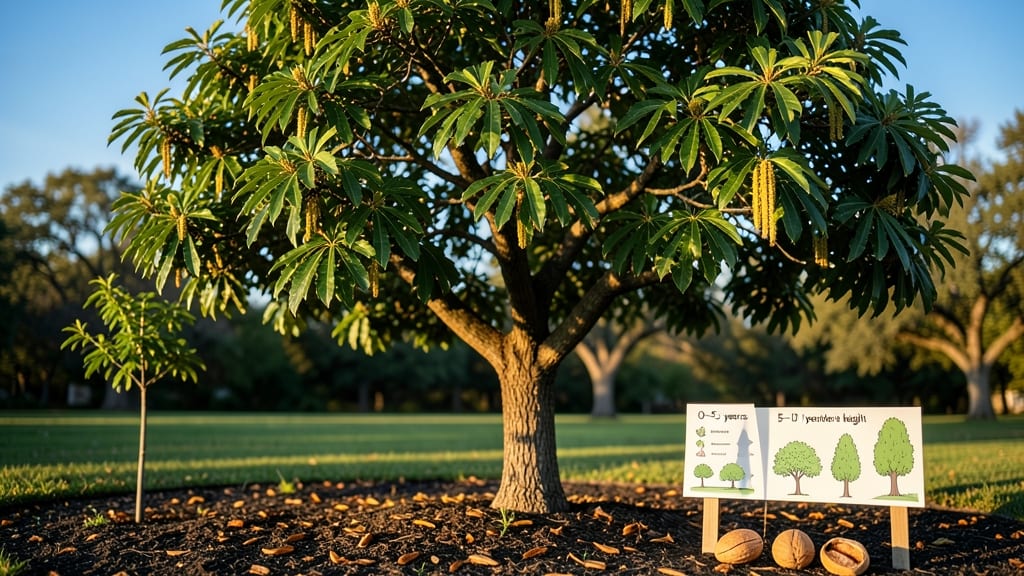
A pecan tree grows to 50 to 100 feet tall at maturity, towering over most backyard landscapes like a living skyscraper 🌰 — but that’s just the starting point.
If you're dreaming of a backyard filled with shade-providing pecan trees but wondering how much vertical space they’ll need, you’re not alone. Many gardeners overlook the dramatic height differences between varieties and growth conditions.
A dwarf variety might stay under 25 feet, while a standard tree can easily reach the height of a 10-story building.
Your location in USDA Zone 6a or warmer plays a huge role, as does soil quality and sunlight. Even the right planting time (April–May for most regions) can influence how quickly your tree reaches its full height.
With the right variety and care, you can balance that impressive stature with manageable growth.
In this guide, I’ll break down the height ranges by variety, how to control growth through pruning, and whether a pecan tree is even the right choice for your yard. Spoiler: there are ways to enjoy their nuts without sacrificing your entire backyard to their canopy.


Pecan tree height by variety: from dwarf to giant mature sizes
Choosing the right pecan tree variety is crucial if you're working with limited space or aiming for a specific backyard aesthetic. Standard pecan trees can tower up to 100 feet tall, while dwarf varieties stay under 25 feet.
The difference isn't just about height—it affects nut production, shade coverage, and even pruning requirements. Let's explore the full spectrum of pecan tree heights so you can pick the perfect fit for your landscape.
Before we dive into varieties, it's important to note that mature height isn't the only factor. Growth rate also varies—some fast-growing varieties reach half their mature height in just 10-15 years, while others take 30+ years.
This means a 25-foot dwarf might still need 15-20 years to reach that height, while a standard variety could grow 10 feet per year in ideal conditions.
Here's a quick visual guide to help you compare popular pecan tree varieties by their mature heights and growth characteristics:
If you're considering a dwarf variety like Cape Fear, you'll love its compact size—perfect for small urban yards or even large containers. These trees typically reach mature height in 15-20 years and produce high-quality nuts without requiring extensive pruning.
However, they may have lower overall yields compared to standard varieties, making them better suited for home consumption rather than commercial production.
For medium-sized properties, semi-dwarf varieties like Western Scholar offer the best compromise. They grow to 30-40 feet tall and produce consistent yields while still being manageable with regular pruning.
These trees often bear fruit in 5-7 years, making them a great choice for gardeners who want sooner rewards without committing to a full-sized tree.
When it comes to standard pecan trees, varieties like Desirable and Schley are popular for their fast growth rates and high nut production. These trees can reach 60-80 feet tall and require significant space, so they're best suited for rural properties or orchard settings. If you're planting one in your backyard, be prepared for regular pruning to manage height and
How growth conditions affect pecan tree height: sun, soil, and climate factors
Pecan trees are stunning shade providers, but their mature height can vary dramatically based on growing conditions. A tree in optimal conditions might reach 100 feet, while one with limited sunlight or poor soil could stay under 50 feet.
Understanding these factors helps you plan for the right space and maximize your tree's potential. Let's explore how sunlight, soil quality, and climate shape your pecan tree's vertical growth.
First, sunlight exposure plays the biggest role in determining height. Pecan trees thrive with at least 8 hours of direct sun daily. In full sun, they grow taller and stronger, while partial shade can stunt growth by 20-30%.
For example, a tree in Texas' sunbelt might reach 80 feet, but the same variety in Pacific Northwest shade could max out at 40 feet. This difference matters when choosing planting locations in your yard.
Full Sun Exposure (8+ hours/day)
Height Impact: Standard varieties reach 70-100 feet with vigorous vertical growth. Dwarf varieties grow 20-30% taller than in partial shade.
Well-Draining Soil (pH 6.0-7.5)
Height Impact: Trees in sandy loam grow 15-25% taller than in clay soil. Compacted soil restricts root growth, limiting height to 50-60 feet.
Water Availability (Deep Root Zone)
Height Impact: Consistent moisture in first 3 years enables trees to reach 60-80 feet. Drought stress reduces height by 30% and delays maturity by 5+ years.
Climate Zone (USDA 6-9)
Height Impact: Trees in Zone 8-9 (e.g., Georgia, Texas) grow 20% taller than in Zone 6-7 due to longer growing seasons. Cold snaps in northern zones can stunt growth by 10-15 feet.
Wind Exposure
Height Impact: High winds in open areas can reduce height by 10-20% as trees grow wider to stabilize. Sheltered locations allow for taller, straighter trunks.
Your local climate also determines how quickly a pecan tree grows tall. In southern states like Florida or Louisiana, trees mature faster due to warmer winters and longer growing seasons.
For example, a 'Pawnee' variety might reach 60 feet in 20 years in Zone 8, but take 30 years to reach the same height in Zone 6. This timing affects when you'll enjoy shade and pecan harvests.
Don't overlook soil quality—pecan trees despise soggy roots. In well-draining soil with a pH of 6.0-7.5, roots expand freely, supporting taller growth. Amend heavy clay with compost or sand to prevent root suffocation, which can limit height by 30% or more.
A simple soil test before planting ensures your tree has the best foundation for reaching its full potential.
For gardeners in small yards, consider dwarf varieties like 'Western Scholar', which max out at 20-25 feet even