
Pests and Diseases
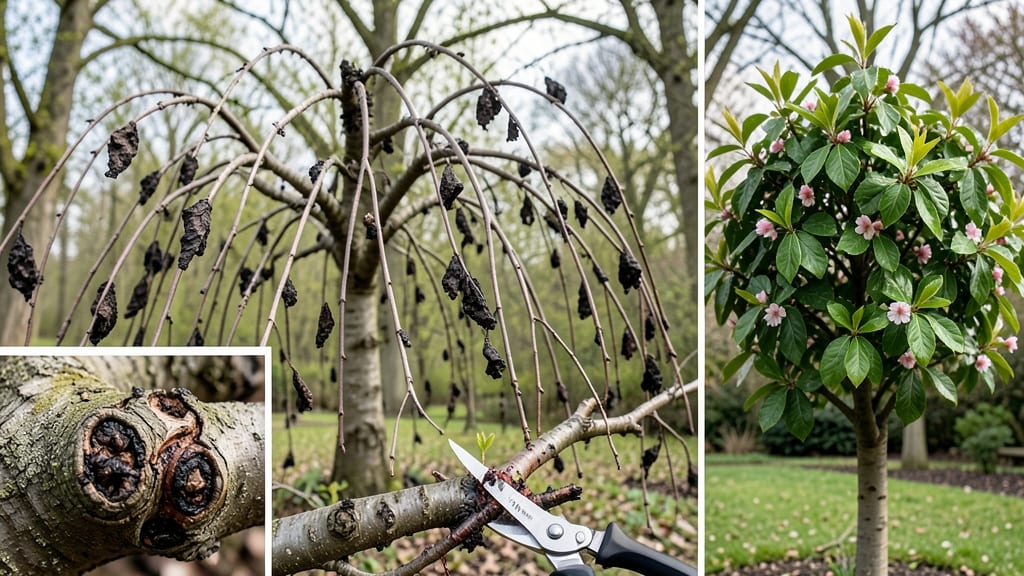
Your weeping cherry tree’s leaves turning silvery gray isn’t just cosmetic—it’s silver leaf fungus, and it spreads fast. 🌿 I’ve seen this disease twist beautiful canopies into skeletal shadows if you don’t act quickly, but the good news is you can stop it before it takes hold.
The key is catching it early when the first silvery patches appear on the undersides of leaves.
This fungus thrives in wet, humid conditions, so spring rains or poor airflow between branches create the perfect breeding ground. The spores spread through water splashes, and once established, they block the tree’s ability to photosynthesize—leading to those telltale gray, papery leaves.
The worst part? It often starts in the lower canopy, where you might not notice until it’s too late.
You can prune infected branches 6 inches below the last visible sign of disease and sterilize your tools with rubbing alcohol to prevent spreading. For organic control, apply a copper fungicide spray every 7-10 days during wet seasons, and improve airflow by thinning dense branches.
The goal is to starve the fungus of its favorite conditions.
With consistent care, your tree can bounce back—just don’t let the fungus go unchecked for more than a month. The sooner you act, the better the chances of saving those delicate, weeping branches you love. Let’s get your tree healthy again.
Root Causes of Tree Decline
When your beloved weeping cherry tree starts showing signs of distress—wilting leaves, discolored bark, or mysterious silver sheens—it’s often the result of underlying biological or environmental stressors. Understanding these root causes is key to preventing further damage and restoring your tree’s health.
Below, we break down the most common culprits behind these symptoms, with clear explanations of how they attack your tree and what makes them tick.
Fungal pathogens are the primary antagonists behind many weeping cherry tree diseases, including the infamous silver leaf fungus (Chondrostereum purpureum). Here’s how they exploit your tree:
- 🔬 How It Spreads: Fungi like Chondrostereum purpureum enter through wounds—think pruning cuts, storm damage, or even insect bites. Once inside, they release enzymes that break down the tree’s vascular system, blocking water and nutrient flow. The silvering of leaves? That’s a telltale sign of fungal hyphae (thread-like structures) clogging the xylem, starving the tree from within.
- 🌡️ Ideal Conditions for Outbreaks: Fungi thrive in cool, moist environments. Overhead watering, dense shade, or rainy seasons create the perfect breeding ground. Even mild winter temperatures can keep fungal spores active, allowing them to spread unchecked.
- 💡 Pro Tip: Prune during dry weather and sterilize tools with a 10% bleach solution (1 part bleach to 9 parts water) to prevent fungal hitchhiking. Remove and destroy infected branches—do not compost them—to stop the spread.
While insects rarely cause disease directly, they often create entry points for fungi and bacteria. Here’s how they weaken your tree’s defenses:
- 🐛 Common Culprits:
- Borers (e.g., Sirex woodwasps): These pests tunnel into the bark, creating perfect highways for fungal spores. Their larvae disrupt the tree’s ability to transport nutrients, making it vulnerable to secondary infections.
- Aphids and Scale Insects: These sap-suckers stress the tree by draining its energy. Weakened trees are far more susceptible to fungal attacks like silver leaf.
- 🚨 Warning Signs: Look for sawdust-like frass (borer droppings), sticky honeydew (aphid residue), or black sooty mold growing on leaves. If you spot these, act fast—pests move quickly!
- 🔥 Quick Fix: Apply neem oil or insecticidal soap to aphids/scale, and treat borers with systemic insecticides (like imidacloprid) during the egg-laying season (late spring/early summer).
Sometimes, the problem isn’t a pathogen but the tree’s unfavorable living conditions. Chronic stress makes trees magnets for disease. Here’s what’s likely sabotaging your weeping cherry:
- 💧 Water Woes:
- Overwatering: Soggy roots suffocate beneficial microbes and invite Phytophthora fungi, which rot roots and cut off water supply.
- Drought Stress: While less common for weeping cherries (they prefer moisture), prolonged dry spells weaken the tree’s immune response, making it easier for fungi to take hold.
- 🌳 Poor Soil and Compaction: Weeping cherries thrive in well-draining, slightly acidic soil (pH 6.0–7.0). Compacted or alkaline soil restricts root growth, while nutrient deficiencies (e.g., low nitrogen or potassium) leave the tree malnourished and defenseless.
- 🌡️ Temperature and Sunlight: Sudden temperature swings (e.g., late frosts after bud break) or excessive afternoon sun can scorch leaves, creating wounds that fungi exploit. Young trees are especially vulnerable.
- 💡 Action Plan:
- Test your soil (kits are cheap and available at garden centers) and amend with compost or peat moss if needed.
- Mulch with wood chips (2–4 inches deep) to retain moisture and regulate soil temperature.
- Water deeply 1–2 times per week during dry spells, aiming for the root zone (not the leaves).
Sometimes, the problem traces back to human intervention. Overuse or misuse of chemicals can devastate your tree’s health:
- 🍄 Fungicide Misapplication: Broad-spectrum fungicides (like copper-based sprays) can kill beneficial microbes in the soil, disrupting the tree’s natural defenses. Overuse also leads to fungal resistance, making future infections harder to treat.
- 🌱 Herbicide Drift: Glyphosate or other herbicides drifting onto your tree can burn roots and foliage, creating stress points for fungi. Always apply herbicides on wind-still days and keep a buffer zone.
- 💡 Safe Practices:
- Use targeted fungicides (e.g., myclobutanil for silver leaf) only when necessary.
- Spot-treat weeds with vinegar-based solutions to avoid chemical runoff.
- If you suspect herbicide damage, flush the soil with water and apply a root stimulator (like mycorrhizal fungi).
By identifying the specific stressor behind your weeping cherry’s decline, you can tailor treatments to address the root cause—not just the symptoms. Next, we’ll dive into diagnostic steps to confirm whether your tree is battling silver leaf or another issue.
How to Fix Fungal Infections
Reviving a weeping cherry tree suffering from silver leaf fungus requires a mix of immediate action and long-term prevention. Since this disease thrives in damp conditions and spreads through infected wood, your strategy should focus on removing the source, improving airflow, and strengthening the tree’s defenses.
Below, we break down practical solutions tailored to the root causes of silver leaf fungus—so you can act fast and keep your tree healthy.
Silver leaf fungus spreads through infected sapwood, so the fastest way to stop it is by removing diseased branches before the spores take over.
How to Do It Right:
✅ 🔪 Use Sterilized Tools – Disinfect pruners with 70% isopropyl alcohol or a 10% bleach solution (1 part bleach to 9 parts water) between cuts to avoid cross-contamination. ✅ 🌿 Cut Back to Healthy Wood – Look for brown, discolored, or shriveled leaves and black streaks under the bark.
Trim 6–12 inches below the last visible signs of infection. ✅ 🚮 Dispose of Infected Material Properly – Do NOT compost pruned branches.
Instead, burn them (if legal in your area) or seal them in a plastic bag and throw them in the trash. ✅ 🌳 Avoid Pruning During Wet Weather – Fungal spores spread more easily when tools are damp, so prune on a dry, sunny day.
💡 Pro Tip: If the fungus has spread to the main trunk, you may need to consult an arborist—removing large sections can weaken the tree further.
Silver leaf fungus loves humidity and crowded branches. Adjusting your tree’s environment can dramatically slow down the disease.
Quick Fixes:
🌬️ 🌿 Thin Out the Canopy – If branches are too dense, prune to increase airflow between them. Aim for a well-ventilated structure. 💧 🌧️ Water Early in the Day – Wet leaves at night traps moisture, promoting fungal growth.
Water before 10 AM so foliage dries quickly. 🌳 🌳 Space Trees Properly – If your weeping cherry is too close to other plants, give it more room (at least 6–10 feet from neighbors). 🌡️ 🌡️ Use a Fan (For Severe Cases) – In humid climates, a gentle outdoor fan near the tree can reduce stagnant air and speed up drying.
💡 Pro Tip: Mulch correctly—keep mulch 3–4 inches deep and 6 inches away from the trunk to prevent excess moisture buildup.
If the infection is already widespread, fungicides can help suppress further spread. However, they’re not a cure—they work best as a supportive treatment.
Best Fungicide Options:
🔹 🍄 Copper-Based Fungicides (e.g., Bordeaux mixture, copper sulfate) – Kills fungal spores on contact but must be applied early (before symptoms appear). 🔹 🍄 Systemic Fungicides (e.g., Propiconazole, Myclobutanil) – Absorbed into the tree’s system to stop internal spread.
Best for moderate to severe infections. 🔹 🍄 Organic Options (e.g., Neem oil, potassium bicarbonate spray) – Less toxic but may require more frequent applications.
How to Apply:
⏰ 🌿 Apply in Early Spring or Late Fall – Before new growth starts (spring) or after leaves drop (fall). 🌧️ 🌧️ Avoid Applying When Rain Is Expected – Fungicides need 24–48 hours to bond to the tree. 🎯 🎯 Cover All Surfaces – Spray both sides of leaves, trunk, and branch junctions where spores hide.
💡 Pro Tip: Rotate fungicides if you use them year after year to prevent resistance.
A healthy tree fights off diseases better. Boost your weeping cherry’s resistance with these nutritional and care tweaks:
🌱 Soil & Fertilizer Adjustments 🔹 🌱 Test Your Soil – Silver leaf fungus thrives in acidic or nutrient-poor soil.
Aim for a pH of 6.0–7.0. 🔹 🌱 Use a Balanced Fertilizer – A 10-10-10 or 20-20-20 NPK ratio in early spring promotes strong growth. 🔹 🌱 Add Compost or Organic Matter – Improves drainage and microbial activity, helping roots absorb nutrients better.
💪 General Tree Care
🔹 💧 Water Deeply but Less Often – Deep watering (1–2 inches per week) encourages strong root growth instead of shallow, weak roots. 🔹 ☀️ Provide Adequate Sunlight – Weeping cherries need full sun (6+ hours/day) to stay vigorous. 🔹 🌿 Avoid Over-Fertilizing with Nitrogen – Too much nitrogen = soft, weak growth that’s more susceptible to disease.
💡 Pro Tip: Avoid wounding the tree—prune only when necessary and use smooth cuts to prevent entry points for fungus.
The best way to defeat silver leaf fungus? Prevent it in the first place with these long-term strategies:
✅ 🌿 Choose Resistant Varieties – Some weeping cherries (like ‘Amanogawa’ or ‘Shirotae’) are less prone to fungal diseases. ✅ 🌧️ Improve Drainage – If your soil is clay-heavy, amend it with sand or perlite to prevent waterlogging. ✅ 🍄 Monitor for Early Signs – Catch it early with regular inspections (check for silvering leaves or black streaks). ✅ 🚫 Avoid Overhead Watering – Use drip irrigation or soaker hoses to keep foliage dry. ✅ 🌳 Keep the Area Clean – Remove fallen leaves and debris where spores hibernate over winter.
With prompt pruning, better airflow, targeted fungicides (if needed), and proactive care, your weeping cherry tree can recover and thrive—even after a silver leaf fungus attack. Act fast, stay consistent, and give your tree the best shot at a full comeback! 🌳✨
Frequently asked questions
What are the first signs of silver leaf fungus in my weeping cherry?
Look for silvery-gray patches on the undersides of leaves, which turn papery and brittle. Check for black streaks under the bark along branches—this indicates the fungus has invaded the vascular system. If you see these symptoms, act immediately to prevent spread.
Can I save my weeping cherry if the trunk is infected?
Trunk infections are serious—if the fungus has spread this far, the tree may not recover. For small infections, consult an arborist about surgical removal of infected wood while preserving healthy tissue. In severe cases, removal may be the only option to protect nearby plants.
How often should I apply fungicide for prevention?
Apply fungicide every 7-10 days during wet seasons (spring/fall) or when humidity is high. For organic options like neem oil, increase frequency to every 5-7 days. Always follow label instructions and alternate products to prevent resistance.
Will pruning alone stop silver leaf fungus?
Pruning removes infected branches but won't cure an established infection. It must be combined with sterilized tools and proper disposal of infected wood. For best results, pair pruning with fungicide treatments and improved airflow around the tree.
Can I still harvest fruit from a diseased weeping cherry?
No—silver leaf fungus makes fruit unsafe to eat. The disease affects the tree's vascular system, which can contaminate the fruit. Remove all fruit from infected trees immediately and focus on treating the disease to restore tree health for future harvests.