
Trees
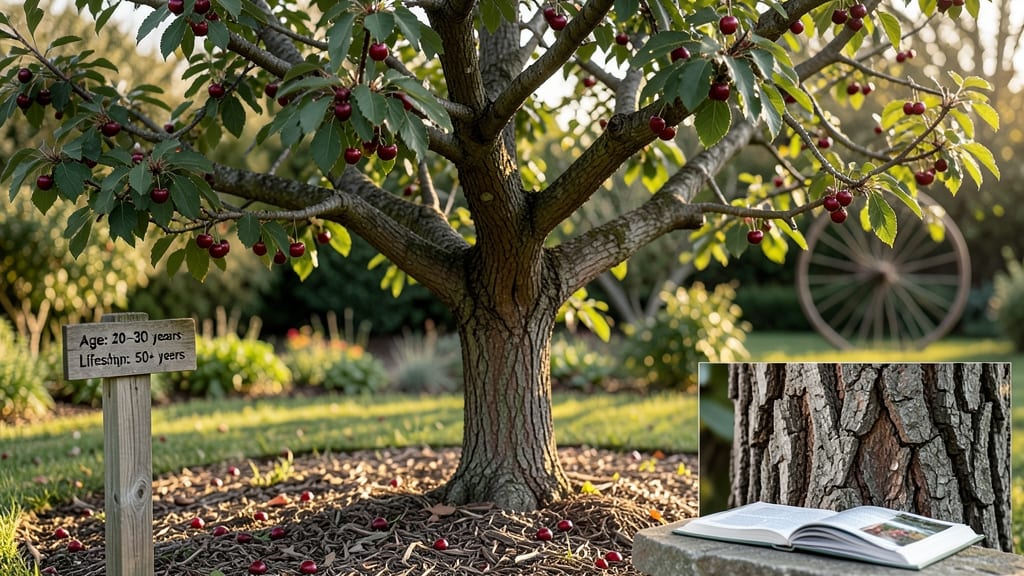
The life span of cherry trees ranges from 25 to 50 years, though some varieties like sour cherries can live 75+ years with proper care, soil conditions, and regular pruning. Dwarf varieties tend to have shorter lifespans but produce fruit more quickly.
The life span of a cherry tree depends heavily on its variety and growing conditions. Sweet cherries like Bing often reach their peak fruit production around 20-25 years, while hardy sour cherries such as Montmorency can thrive for decades longer when planted in well-draining soil and protected from pests.
Proper pruning techniques—like removing dead branches in late winter—help maintain tree health and extend its productive years. 🌳 What many gardeners overlook is how climate plays a role; trees in warmer regions may struggle with disease pressure, while those in cooler zones often live longer with fewer stress factors.
Dwarf cultivars, though shorter-lived, offer a practical solution for smaller gardens. These trees reach maturity faster—often within 3-5 years—but may only live 15-25 years total. The trade-off is worth it for urban growers who want quick fruit production without the long-term commitment of standard-size trees.
For maximum longevity, focus on soil health, consistent watering, and disease monitoring—small efforts that make a big difference over decades.
💡 In This Article
- Factors Influencing Cherry Tree Longevity
- Best Cherry Tree Varieties for Long-Term Growth
Factors influencing cherry tree longevity
The foundation of a cherry tree's lifespan lies in its rootstock—the underlying root system that determines size, vigor, and disease resistance. Standard rootstocks like Mahaleb (used for sweet cherries) create trees that can live 50+ years but require deep, well-drained soil.
Dwarfing rootstocks like Gisela 5 or 6 produce trees that mature in 3-5 years but typically live only 15-25 years due to their compact growth. The rootstock also affects cold hardiness; some varieties struggle in zones below 5, where winter dieback accelerates aging.
Soil health is equally critical—cherry trees demand 6.0-7.0 pH and soil rich in organic matter to prevent nutrient deficiencies that weaken structural integrity. Poor drainage causes root rot, a silent killer that reduces lifespan by 20-30 years by preventing proper nutrient uptake.
Watering habits matter too: 1-1.5 inches per week during growing seasons keeps roots hydrated, while drought stress triggers early leaf drop and weakens the tree's immune response to pests like borers or fungal diseases.
Climate suitability plays a surprising role—cherry trees in USDA zones 5-7 often outlive those in marginal zones due to consistent temperature ranges.
For example, Montmorency sour cherries thrive in zone 4 with proper winter protection, while Bing sweet cherries may only reach 40 years in zone 6 without summer shade to prevent heat stress.
Even microclimates matter: trees planted near buildings or fences may live 10 years shorter due to reduced airflow increasing fungal pressure.
Disease resistance is the hidden factor—some varieties carry genetic traits that make them 30% more resilient to bacterial canker or leaf spot diseases. For instance, Stella® sweet cherries have built-in resistance to cracking, a major issue that shortens lifespan in rainy climates.
Regular pruning (especially late winter when trees are dormant) removes diseased wood and improves airflow, which can extend a tree's life by 15-20 years by preventing fungal spread.
Pest management also impacts longevity—cherry trees attacked by spotted lanternfly or cherry fruit fly may decline 2-3 years faster than healthy counterparts. The key is early intervention: using horticultural oil sprays in spring and reflective mulch to deter pests can add decades to a tree's productive life.
Even something as simple as mulching with wood chips (3-4 inches deep) helps regulate soil temperature and retain moisture, reducing stress that accelerates aging.
What most gardeners overlook is how fruit production itself affects longevity. Heavy cropping (like 50+ pounds per tree) annually can drain a tree's energy reserves, shortening its life by 10-15 years.
Thinning fruit clusters in early summer ensures the tree allocates energy to root and branch growth rather than just fruit development. This balance is why sour cherry varieties often live longer—they produce smaller, less demanding fruit loads than their sweet counterparts.