
Pruning
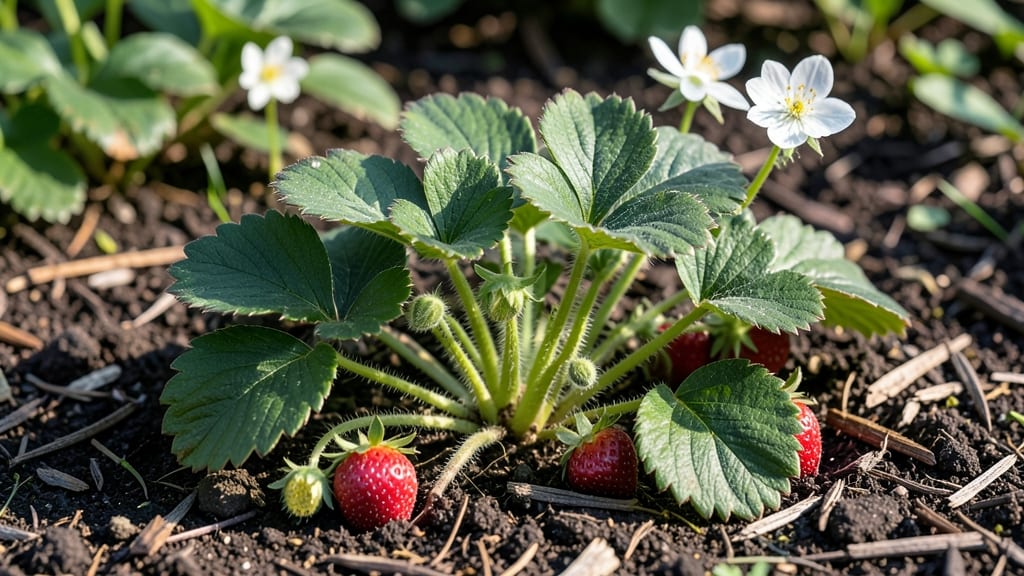
Pruning your strawberry tree trunk keeps it strong and productive—without losing next year's fruit. 🌱 I learned the hard way when my first tree developed a gnarled trunk from neglect, making it prone to disease and pests.
The key is understanding when to prune, what to remove, and how to encourage healthy growth without stressing the tree.
You'll need sharp pruning shears, rubbing alcohol for sterilizing, and a close look at your tree's trunk. Check for cracks, oozing sap, or unusual growths—these are red flags. A healthy trunk should feel firm, not soft or spongy, and have smooth bark without deep grooves or holes.
Most pruning happens in late winter, but light shaping can continue year-round.
After pruning, your tree will reward you with a straighter trunk and better fruit production. The branches will spread more evenly, catching sunlight and air circulation. You'll notice fewer pests hiding in crevices and less risk of fungal infections taking hold in damaged areas.
This method works for both young trees and mature ones, adapting to your tree's growth rate. Whether you're dealing with a newly planted tree or an established one that's outgrown its space, these techniques will keep it thriving for years to come.
📚 In This Guide
- What you need
- Instructions
- Tips and common mistakes
- Wrapping up and next steps
What you need
- ● Bypass pruners (sharp, clean, 10-12 inch handles) – 2-3 pairs (one for thick branches, one for precision cuts).
- ● Loppers (for branches ½–1.5 inches thick) – 1 pair with long handles (24+ inches).
- ● Pruning saw (for stubborn, 2+ inch branches) – 1 (fine-tooth blade for clean cuts).
- ● Gloves (cut-resistant, gardening-grade) – 1 pair (nitrile-coated for grip).
- ● Disinfectant (70% isopropyl alcohol or bleach solution – 1 part bleach to 9 parts water).
- ○ Pruning sealant (optional, for cuts > ½ inch thick) – 1 small bottle (e.g., Tanglefoot Tree Wound Pruning Seal).
- ● Ladder (extendable, 12–16 ft) – 1 (if tree exceeds 8 ft tall).
- ● Heavy-duty trash bags – 2–3 (for debris disposal).
- ● Hand pruners (for tiny twigs) – 1 pair (ergonomic grip).
- ● Safety glasses – 1 pair (to protect from debris).
- ● Tree tie or zip ties – 5–10 (for securing branches post-pruning).
- ● Notebook & pen – 1 (to sketch pruning plan or track growth).
- ● Fertilizer (balanced, 10-10-10 NPK) – 1 bag (apply post-pruning in spring).
Step-by-Step guide to pruning a strawberry tree trunk
Here's how to maintain a healthy, productive strawberry tree without losing fruit potential.
✂️ Step 1: Inspect the Trunk for Structural Weaknesses
Start by examining the trunk closely for any signs of stress or damage. Look for cracks, splits, or areas where the bark appears to be peeling away. These are common weak points that can invite pests or disease. I always run my hands along the trunk—rough spots or soft areas usually indicate hidden problems.
Check for any signs of fungal growth, like black or white spots, which often appear after winter. If you find any, make a note of those areas for special attention later. The goal here is to identify where the tree might be vulnerable before you begin cutting. Healthy bark should feel firm and slightly rough, not spongy or cracked.
✂️ Step 2: Clean and Sterilize Your Pruning Tools
Before making any cuts, sterilize your pruning shears or saw with rubbing alcohol. This prevents spreading disease between cuts. I like to wipe down the blades with a clean cloth soaked in alcohol, then let them dry completely. Sharp, clean tools make precise cuts that heal faster and reduce the risk of infection.
While you're at it, sharpen your tools if needed. Dull blades tear the bark instead of making clean cuts, which slows healing. Test the sharpness by making a clean cut through a small twig—if it crushes instead of slices, it's time to sharpen. This step is non-negotiable for maintaining tree health.
☀️ Step 3: Prune for Airflow and Light Penetration
Focus on removing any branches that grow directly into the trunk or cross over others. These create rubbing points that damage bark and invite rot. I always start at the top and work my way down, removing smaller branches first. Cut just outside the branch collar—the swollen area where the branch meets the trunk—to promote faster healing.
Next, thin out any dense growth that blocks sunlight from reaching the center of the tree. Strawberry trees need good airflow to prevent fungal issues, so aim for an open, vase-like shape. You'll know you're on the right track when you can see light filtering through to the inner branches. Never remove more than 25% of the tree's foliage in one session.
⏰ Step 4: Shape for Balance and Fruit Accessibility
Step back and visualize the tree's final shape. The goal is to create a balanced silhouette that allows easy access to fruit. I like to maintain a slightly wider base that narrows toward the top—this mimics the tree's natural growth pattern. Use your pruners to trim back any overly long branches, cutting just above a leaf node or outward-facing bud.
For strawberry trees, prioritize branches that produce fruit. If a branch is too heavy with berries, it can weigh down the tree and cause breakage. In this case, thin out some of the fruit clusters while keeping the branch structure intact. This ensures the tree can support its harvest without structural damage.
💧 Step 5: Seal Cuts and Monitor for Healing
After pruning, apply a thin layer of tree sealant to any large cuts—those wider than ¼ inch. This helps prevent moisture loss and infection. I use a high-quality pruning sealant and apply it with a small brush, covering the cut completely but not the surrounding bark. Avoid over-applying, as this can suffocate the wound.
Water the tree deeply after pruning to help it recover. Keep an eye on the pruned areas over the next few weeks for signs of stress, like yellowing leaves or oozing sap. If you notice any issues, adjust your care routine—usually, this means increasing watering or providing shade for a short period. With proper care, your strawberry tree will bounce back stronger than ever.
Tips & tricks for pruning a strawberry tree trunk
Here's what nobody tells you about pruning strawberry trees—these tricks will keep your tree thriving while maximizing fruit production.
Timing is Everything: The best time to prune your strawberry tree is in late winter or early spring, just before new growth begins. This timing allows the tree to heal before the growing season kicks in. Avoid pruning during extreme heat or cold, as these conditions stress the tree. I always schedule my pruning for late February or early March in my climate zone—just as the buds start to swell but before leaves emerge.
The Technique That Changed Everything: When removing branches in Step 3, make sure to cut at a 45-degree angle just outside the branch collar. This angle helps water run off the cut rather than pooling, which reduces the risk of rot. I've seen too many pruning mistakes where cuts were made too close to the trunk or at awkward angles—this leads to slow healing and potential infection. Use a sharp saw or pruners to make clean cuts without tearing the bark.
Visual Cues for Healthy Pruning: As you work through Step 4, look for branches that grow inward or cross over others—these are your top priorities. I remember one time I missed a crossing branch, and within a year, it had rubbed against another branch, creating a perfect entry point for disease. Also, keep an eye out for "water sprouts"—those vertical shoots growing straight up from the trunk. These sap-suckers drain energy from fruit production and should be removed completely at the base.
Sealant Application Wisdom: When applying sealant in Step 5, focus only on cuts wider than ¼ inch. Smaller cuts will heal on their own without needing protection. I've found that using a small brush to apply the sealant gives me better control than just dabbing it on with my fingers. Also, avoid applying sealant to the surrounding bark—this can smother the tree's natural healing process. Think of it like a bandage: it should cover the wound but not extend beyond it.
Pro Tips for Strawberry Tree Trunk
- Here's what nobody tells you about pruning strawberry trees—these tricks will keep your tree thriving while maximizing fruit production.
- Timing is Everything: The best time to prune your strawberry tree is in late winter or early spring, just before new growth begins.
- The Technique That Changed Everything: When removing branches in Step 3, make sure to cut at a 45-degree angle just outside the branch collar.
Frequently asked questions
Got questions about pruning your strawberry tree trunk? You’re not alone—many gardeners want to keep their trees healthy and productive without losing fruit. Here are answers to the most common questions!
When is the best time to prune a strawberry tree trunk?
The ideal time is late winter or early spring (just before new growth starts), but you can also prune lightly after fruiting in summer. Avoid heavy pruning in fall, as it may stress the tree before dormancy. For minor shape adjustments, year-round pruning is fine!
How do I prune a strawberry tree trunk without killing it?
Use clean, sharp pruners and cut at a 45-degree angle just above a bud or branch collar. Never leave stubs—this invites disease. For thick trunks, make three small cuts (notch, undercut, final cut) to avoid tearing. Disinfect tools between cuts to prevent bacterial spread.
Will pruning the trunk reduce my strawberry tree’s fruit production?
Not if done correctly! Pruning opens the canopy to sunlight, which actually boosts fruit quality. Focus on removing dead, crossing, or weak branches—never cut more than 25% of the tree’s foliage in one session. Thin out dense areas to improve air circulation and prevent disease.
Can I use the same pruning techniques for young vs. mature strawberry trees?
Yes, but with key differences:
- Young trees (1–3 years): Prune lightly to encourage structural branching. Remove only water sprouts or misplaced growth.
- Mature trees (4+ years): Prioritize rejuvenation cuts—thin out older wood and open the center. Aim for an open vase shape for airflow.
What should I do if my strawberry tree trunk starts bleeding sap after pruning?
Sap bleeding is normal for 2–4 weeks post-pruning—it’s the tree’s way of sealing wounds. To minimize it:
- Prune on a cool, cloudy day (not hot or windy).
- Avoid pruning in late summer/fall when sap flow is highest.
- Apply pruning sealant (optional) only on large cuts (>1 inch).
Wrapping up and next steps
Mastering the art of pruning your strawberry tree trunk is all about balance—keeping your tree healthy, productive, and beautifully shaped while preserving its fruit-bearing potential. 🌱 Whether you’re trimming in spring, summer, or even winter, the key lies in patience, sharp tools, and a little seasonal know-how.
With the right techniques, you’ll enjoy a thriving tree that rewards you with delicious berries for years to come!
Ready to take your pruning skills to the next level? Start small—pick one season to refine your approach, then gradually expand your knowledge. Before you know it, your strawberry tree will be the star of your garden! 🌟