
Pests and Diseases
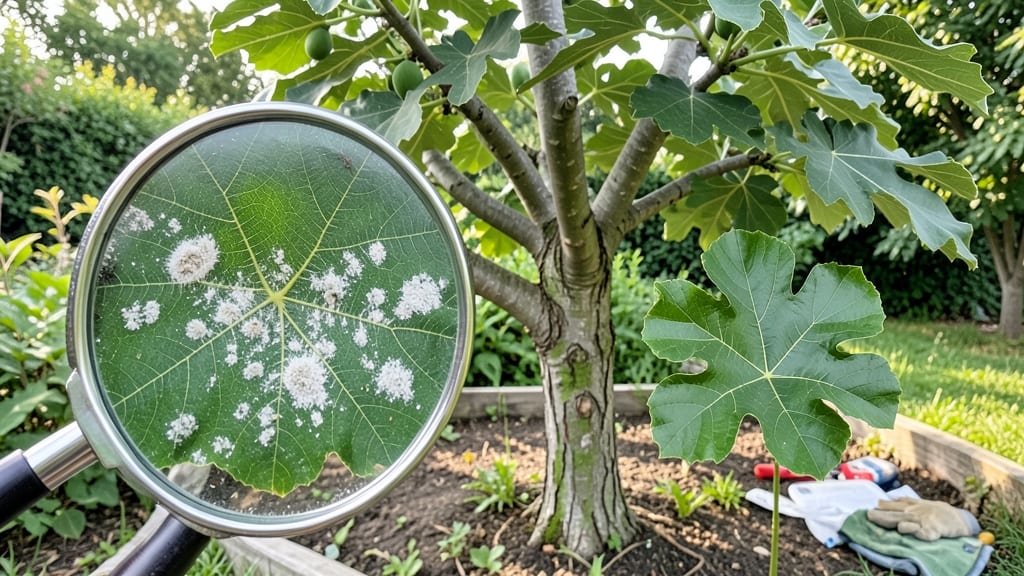
White spots on fig tree leaves could mean your tree is fighting fungal blight—and copper spray is the game-changer. 🌿 I’ve seen this happen when humidity hangs around after rain, turning leaves into a white powdery mess. The key is catching it early before it spreads to every branch.
Most of the time, it’s powdery mildew, but spider mites can also leave a similar white residue. The difference? Mildew feels fuzzy, while mites leave tiny webs. Either way, the sooner you act, the better—your tree can bounce back in just a few weeks with the right treatment.
Copper spray works because it stops the fungus in its tracks without harming bees or beneficial insects. You’ll see new growth emerge within 2-3 weeks if you apply it correctly. The leaves will turn a healthy green again, and your figs won’t be affected at all.
Prevention is easier than cleanup: water at the base, not overhead, and prune for airflow. If you’re in a humid climate, a preventative spray every 4-6 weeks keeps mildew from getting a foothold. Here’s how to diagnose and fix it for good.
Root Causes Of Leaf Spots
White spots on fig tree leaves aren’t just random blemishes—they’re often a plant’s way of signaling distress. Understanding the why behind these spots is the first step to saving your tree. Below, we break down the most common culprits, from microscopic invaders to environmental stressors, with actionable science-backed explanations.
Fungi are the most frequent offenders behind white spots on fig leaves. These organisms thrive in warm, humid conditions and spread via spores—often carried by wind, water, or even garden tools.
- Powdery Mildew (Erysiphe spp.) The classic white, powdery coating on leaves is actually a fungal mycelium (thread-like structures) growing on the leaf surface. This fungus blocks sunlight, stunting photosynthesis and weakening the plant. Look for white, talcum-like patches that spread quickly under high humidity.
- Leaf Spot Fungi (e.g., Cercospora or Mycosphaerella) Unlike powdery mildew, these fungi create small, circular white or grayish spots with darker borders. They often develop in wet conditions and can lead to leaf drop if untreated.
The fungus penetrates the leaf tissue, causing necrosis (dead tissue) and creating the classic "spotted" appearance.
- Anthracnose (Colletotrichum spp.) This aggressive fungus produces sunken, white-to-tan spots that may ooze a pinkish or yellowish substance when wet. It thrives in rainy seasons and can defoliate a tree if left unchecked.
🔍 How to confirm? Scrape a spot gently with a fingernail. If it leaves a powdery residue, it’s likely powdery mildew. If the spot bleeds or turns darker, it’s a deeper fungal infection.
Some white spots aren’t fungal—they’re pest damage in disguise. Insects like mites, aphids, or scale can leave behind white residue, webbing, or even tiny eggs that look like spots.
- Spider Mites (Tetranychus spp.) These microscopic pests suck sap from leaves, causing tiny white or yellow speckles (stippling). Heavy infestations create fine webbing on the undersides of leaves. They thrive in hot, dry conditions and multiply rapidly.
- Whiteflies (Bemisia tabaci) Adult whiteflies are tiny, white, moth-like insects that cluster on leaf undersides. Their excrement (honeydew) attracts sooty mold, creating a white, fuzzy film on leaves. They also transmit viruses, weakening the tree further.
- Scale Insects (e.g., Aspidiotus spp.) These pests appear as small, white, waxy bumps on leaves and stems. They feed on sap, causing leaves to yellow and drop. Unlike mites, scale insects are stationary and often go unnoticed until the damage is visible.
💡 Pro Tip: Use a magnifying glass to inspect leaf undersides. Look for tiny moving dots (mites/whiteflies) or sticky residue (honeydew)—clear signs of pest activity.
Not all white spots are biological. Sometimes, environmental factors like extreme weather, poor nutrition, or chemical exposure trigger leaf discoloration.
- Sunscald or Sunburn Fig trees with thin or newly unfurled leaves can develop white, crispy patches when exposed to intense sunlight after rain or cold nights. This happens when water droplets act like magnifying glasses, burning leaf tissue.
- Chemical Burn from Fertilizers or Sprays Overapplication of high-nitrogen fertilizers or copper-based fungicides (ironically, the cure for some fungal issues!) can cause white, necrotic spots. Symptoms often appear as irregular, bleached areas with yellow halos.
- Water Stress (Overwatering or Drought)
- Drought: Causes white, dry, papery patches (necrosis) due to cell death from dehydration.
⚠️ Watch for patterns: Are spots appearing after rain, fertilizer, or a heatwave? That’s your clue to the environmental trigger.
While rare, mineral deficiencies can sometimes mimic fungal spots. The most common culprits:
- Magnesium Deficiency Causes interveinal chlorosis (yellowing between veins) that can appear white or pale in severe cases. Figs need magnesium for chlorophyll production—without it, leaves can’t photosynthesize properly.
- Calcium or Potassium Imbalance Leads to necrotic (dead) white patches, often at leaf edges or tips. This is common in soggy or alkaline soils, where roots struggle to absorb nutrients.
📊 Test your soil: A simple pH test kit can reveal if deficiencies are the issue. Figs prefer slightly acidic to neutral soil (pH 6.0–7.0).
Fixing White Spots on Your Fig Tree
Now that you’ve identified the root cause of those pesky white spots on your fig tree leaves—whether it’s powdery mildew, rust fungus, or a mineral deficiency—it’s time to roll up your sleeves and bring your tree back to health!
The good news? Most of these issues are treatable with the right approach. Below, we’ve broken down practical, step-by-step solutions tailored to each cause, plus prevention tips to keep your fig tree thriving long-term.
Fungal infections like powdery mildew and rust thrive in damp, shaded conditions, but they’re not invincible. Here’s how to kick them to the curb for good.
🔥 Step 1: Prune for Better Airflow
Fungus loves hiding in dense, humid spots. Open up your fig tree’s canopy to let sunlight and air circulate.
- How to do it: 👨🍳 Trim back any overly crowded branches or leaves touching the ground.
- Pro tip: ⏰ Do this on a dry, sunny day—never when leaves are wet.
🍳 Step 2: Apply Fungicide (Organic or Chemical)
Copper-based fungicides are highly effective against fungal blights and are a staple in organic gardening. - DIY Copper Spray: 💡 Mix 1 tsp copper sulfate + 1 gallon of water + a drop of dish soap (as a surfactant).
Spray thoroughly on both leaf surfaces. - Store-Bought Options: 🌡️ Products like Neem Oil, Serenade Garden, or sulfur sprays work well too. Follow label instructions! - Frequency: ✨ Reapply every 7–10 days until new growth is free of spots.
🌡️ Step 3: Adjust Watering & Environment
Fungus = moisture + shade. Break the cycle!
- Water at the base (avoid overhead sprinkling).
- Space plants 3–4 feet apart for airflow.
- Morning watering (leaves dry by evening).
✨ Prevention for Next Season
- Plant in full sun (fig trees need 6+ hours of sunlight).
- Mulch with straw or wood chips (keeps soil moist but improves drainage).
- Rotate crops if growing figs in containers (avoid replanting in the same spot yearly).
If white spots are actually calcium or magnesium deficiencies, the solution is simpler: balance your soil’s nutrients.
🔪 Step 1: Test Your Soil
- DIY Test: 📊 Grab a soil sample and send it to a local extension office (affordable and accurate).
- Quick Fix: If you suspect calcium deficiency, sprinkle crushed eggshells around the base.
💪 Step 2: Adjust Fertilizer Use
- Stop over-fertilizing! 🎯 Too much nitrogen (common in fast-release fertilizers) can burn roots and disrupt nutrient uptake.
- Switch to a balanced fertilizer (e.g., 10-10-10 or 5-5-5) or compost tea for a gentle boost.
- Avoid synthetic salts—they worsen deficiencies.
🥗 Step 3: Amend the Soil
- For Calcium: Mix in lime (calcium carbonate) or gypsum (follow package rates).
- For Magnesium: Add Epsom salt (magnesium sulfate)—1 tbsp per gallon of water, applied as a foliar spray or soil drench.
- Improve Drainage: If soil is compacted, add perlite or sand to loosen it.
🌟 Prevention Tips
- Mulch annually with well-rotted compost to maintain nutrient balance.
- Monitor fertilizer labels—look for low-salt, organic options.
- Water deeply but infrequently to prevent nutrient leaching.
If the infection is spreading rapidly or the tree looks severely stressed:
- Remove heavily infected leaves (dispose of them in the trash, not compost).
- Consider a systemic fungicide like Myclobutanil (for stubborn cases).
- Isolate the tree until symptoms improve to prevent spread to other plants.
Remember: Patience is key! 🌱 Healthy fig trees recover faster when given the right care. With these steps, your tree should bounce back with vibrant, spot-free leaves in no time. Now go forth and save your fig tree—your future harvests will thank you! 🍈✨
Frequently asked questions
Are white spots on fig leaves always a sign of disease?
Not necessarily! While fungal infections like powdery mildew are common, white spots can also come from pests (like spider mites), environmental stress (sunburn or chemical burns), or even nutrient deficiencies. First check for webbing, sticky residue, or patterns—this helps narrow down the cause.
How do I tell if it's powdery mildew vs. spider mites?
Powdery mildew leaves a white, fuzzy coating that wipes off easily, while spider mites create tiny yellow speckles and fine webbing on leaf undersides. Use a magnifying glass—mites move when disturbed, but mildew stays put.
Will copper spray harm my fig tree if I use too much?
Yes, overuse can cause leaf burn or stunted growth. Stick to the recommended ratio (1 tsp copper sulfate per gallon) and apply in the early morning when leaves are dry. Always test a small area first!
Can I still harvest figs if the leaves have white spots?
Yes, but only if the spots are on older leaves. Fungal infections rarely spread to fruit, but remove infected leaves to prevent further spread. If spots appear on new growth, treat immediately to protect future harvests.
How often should I inspect my fig tree for early signs?
Check leaves every 2 weeks during growing season (spring-fall). Focus on undersides where pests hide, and prune crowded branches to improve airflow. Early detection makes treatment much easier!