
Size
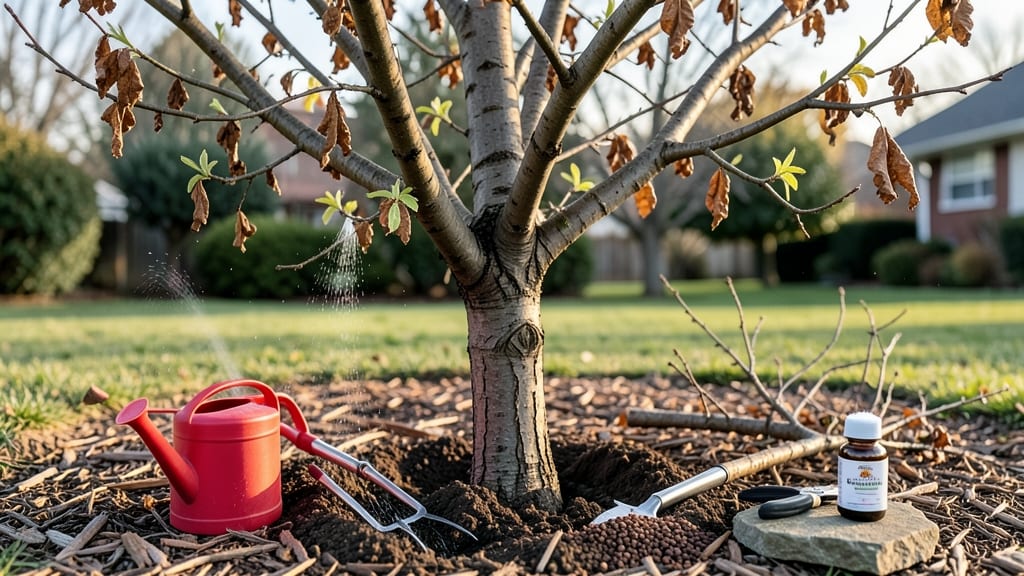
Can you bring a dying tree back to life?
It’s not just possible—it’s one of the most rewarding challenges in gardening. 🌳 I’ve nursed back trees with split bark, yellowing leaves, and even fungal spots, and the right steps can turn a sad, wilted plant into a thriving one within months.
The key lies in diagnosing the problem first: is it thirst, disease, or something deeper like root rot?
Start by checking the soil—it should be moist but not soggy—and inspect the leaves for pests or discoloration. Prune dead branches to redirect energy, then water deeply but less frequently to encourage strong roots.
For nutrient loss, a slow-release fertilizer can work wonders, but avoid overdoing it—trees need balance, not a chemical shock.
Within weeks, you’ll see new growth signaling recovery, and by next season, your tree could be healthier than ever. The trick is patience and consistency—trees don’t bounce back overnight, but with the right care, they’ll thank you for years. Here’s how to assess and act fast.
If the damage is severe—like hollowed trunk or widespread fungal infection—don’t hesitate to call an arborist. Some issues require professional tools or expertise, but many trees can be saved with basic TLC. Let’s get your tree back on track.
📚 In This Guide
- What you need
- Instructions
- Tips and common mistakes
- Wrapping up and next steps
What you need
- ● Pruning shears or sharp bypass pruners – For trimming dead branches (look for sterilized, stainless steel blades to prevent disease spread).
- ● Garden trowel or spade – A sturdy, 8-12" shovel for digging around roots without damaging them.
- ● Well-draining potting mix or compost – A high-quality blend (e.g., 60% soil, 30% perlite, 10% compost) to replant roots in.
- ○ Rooting hormone (optional but helpful) – A powder or gel (like Clonex) to boost regrowth.
- ● Watering can with a fine rose nozzle – For gentle, deep hydration without disturbing roots.
- ● Clear plastic bag or humidity dome – To create a mini greenhouse and retain moisture (e.g., a 5-gallon zip-top bag).
- ● Mulch (e.g., straw or wood chips) – 2-3 inches thick to lock in moisture and regulate soil temp.
- ○ pH test kit (optional but recommended) – To check soil acidity (6.0–7.0 ideal for most trees).
- ● Safety gear: Wear gloves (nitrile for protection) and closed-toe shoes—some plants have thorns or sap!
- ● Clean workspace: Lay down tarps or newspapers to contain soil and debris.
- ● Time commitment: Reviving roots takes patience—expect 4–8 weeks for visible signs of recovery.
- ● Weather check: Aim for overcast days or early morning to avoid stressing the plant with direct sun.
Step-by-Step root rescue for wilted or dying trees
Here's how I've revived trees that looked beyond saving—just follow these steps carefully.
🌱 Step 1: Assess the Damage and Identify the Problem
Start by examining the tree's leaves, bark, and roots. If leaves are crispy and brown, it's likely dehydrated. If they're yellowing but still pliable, overwatering or root rot may be the issue. Gently scratch the bark—if it's soft or peeling, the tree is stressed. For roots, carefully dig around the base with a trowel, but only expose what you need to see.
Look for signs of pests like borers or sawdust-like frass on the bark. If the soil smells sour or has a gray, mushy texture, root rot is likely. Healthy roots should be firm and white or light tan. If you find dark, slimy roots, you're dealing with rot. Note where the damage is worst—this helps you focus your rescue efforts.
💧 Step 2: Adjust Watering and Soil Conditions
If the tree is dehydrated, water deeply but slowly over 2-3 hours using a soaker hose or drip irrigation. Avoid overhead watering, which can encourage fungal growth. The goal is to moisten the soil 12-18 inches deep—stick a metal rod into the ground to check. If the soil feels dry past 6 inches, keep watering until it's damp but not soggy.
For overwatered trees, stop watering entirely for 3-5 days to let the soil dry out. If root rot is suspected, improve drainage by adding 2-3 inches of compost mixed with 1 inch of coarse sand to the top 6 inches of soil. This helps aerate compacted soil and prevents future waterlogging. Mulch the base with 2-3 inches of organic mulch, keeping it 6 inches away from the trunk to protect roots from moisture.
✂️ Step 3: Prune Damaged Branches and Stimulate New Growth
Use sterilized pruning shears to remove 25-30% of the tree's dead or dying branches, cutting just outside the branch collar. Focus on removing branches that are brown, brittle, or have no leaves. Avoid heavy pruning—this stresses the tree further. After pruning, apply a balanced, slow-release fertilizer (like 10-10-10) around the drip line, 6 inches from the trunk, to encourage root and foliage recovery.
If the tree is severely stressed, consider a foliar spray with a seaweed-based fertilizer or a diluted solution of fish emulsion (1 tablespoon per gallon of water). This provides quick nutrients without overwhelming the roots. Watch for new growth within 4-6 weeks—this is your sign the tree is responding. If no new leaves appear after 8 weeks, reassess the situation.
☀️ Step 4: Protect and Monitor for Recovery
Shade the tree slightly by covering 30-50% of its canopy with lightweight shade cloth for the first 2-3 weeks to reduce stress from direct sun. This helps the tree conserve energy while it recovers. Avoid heavy mulch or plastic wraps, which can suffocate roots. Instead, use straw or wood chips to retain moisture and regulate soil temperature.
Check the tree weekly for signs of improvement, like new leaves or firmer bark. If pests or disease reappear, treat immediately with neem oil or horticultural oil (follow label instructions). Keep a log of watering, pruning, and any treatments—this helps track progress. With patience, many trees bounce back, especially if the root system is still intact.
Tips & tricks for reviving wilted trees
Real talk: I've seen trees that looked like they were on their last legs come back to life with these simple but critical adjustments. Here's what nobody tells you about bringing trees back from the brink.
Diagnosis is Everything: In Step 1, when you're assessing damage, pay special attention to the soil's texture and smell. Healthy soil should have a slightly earthy scent—not sour or rotten. If you're unsure about root health, dig just enough to expose the roots but avoid disturbing the entire root ball. You're looking for firm, white or light tan roots; if they're dark and slimy, that's your red flag for root rot. I've saved trees by catching rot early, but once the roots turn mushy, it's often too late.
Watering Wisdom: The 2-3 hour deep watering in Step 2 isn't just about quantity—it's about technique. Use a soaker hose or drip irrigation to deliver water slowly to the root zone. If you're using a regular hose, create a small dam around the base with soil to contain the water. This prevents runoff and ensures the moisture reaches those critical 12-18 inches deep. I learned this the hard way after watching water just pool on top of compacted soil.
Pruning with Purpose: When you're removing 25-30% of dead branches in Step 3, think quality over quantity. Focus on branches that are larger than 1/4 inch in diameter—smaller ones won't significantly impact the tree's recovery. After pruning, sterilize your tools with rubbing alcohol to prevent spreading disease. I've seen trees recover beautifully after targeted pruning, but heavy-handed cutting can push them over the edge.
Fertilizer Timing: The 4-6 week window for new growth after applying fertilizer in Step 3 is your best indicator of success. If you don't see any improvement by week 8, don't add more fertilizer—this can actually stress the tree further. Instead, reassess your approach. I've had better results with a seaweed-based foliar spray for severely stressed trees because it delivers nutrients directly to the leaves without overwhelming the roots.
Pro Tips for Can You Bring A Tree Back To Life
- Real talk: I've seen trees that looked like they were on their last legs come back to life with these simple but critical adjustments.
- Diagnosis is Everything: In Step 1, when you're assessing damage, pay special attention to the soil's texture and smell.
- Watering Wisdom: The 2-3 hour deep watering in Step 2 isn't just about quantity—it's about technique.
Frequently asked questions
Got questions about reviving your wilted or dying tree? You’re not alone—many gardeners wonder if it’s even possible! Below are some of the most common questions (and answers) to help you troubleshoot and take action.
Can you revive a tree that’s completely dried out or dead?
Unfortunately, if a tree is fully dried out or dead (no green leaves, brittle branches, or a hollow trunk), it’s unlikely to recover. However, if it’s just dormant or stressed, you may still have a chance! Check for signs of life like buds or green beneath the bark—if present, prune dead branches and water deeply to see if it responds.
How long does it take to revive a dying tree?
Reviving a tree depends on the cause and species, but you’ll often see improvements within 2–4 weeks if you act quickly. Deep watering, proper pruning, and addressing pests/disease can speed up recovery. Patience is key—some trees take months to show full signs of life, especially in extreme conditions like drought or frost.
What’s the best way to water a struggling tree?
Deep, infrequent watering is more effective than light, frequent sprinkles. Water the root zone (not the leaves) slowly to encourage roots to grow deeper. For mature trees, aim for 1–2 inches of water per week, adjusting for your climate. Use a soaker hose or drip irrigation to avoid runoff. Pro tip: Water in the early morning to reduce evaporation.
Should I prune dead branches now, or wait?
Prune dead or diseased branches immediately—they drain energy from healthy parts. Use sterilized tools to make clean cuts just outside the branch collar. Avoid heavy pruning in late summer or fall, as it stresses the tree. Focus on removing only what’s necessary to reduce shock. If the tree is severely damaged, consult an arborist for guidance.
What if my tree still doesn’t recover after trying everything?
If your tree shows no improvement after 3–6 months of consistent care, it may be beyond saving. Consider removing it to prevent disease spread to other plants. Before giving up, test the soil (pH, nutrients) and check for hidden pests like borers. Sometimes, a root barrier or soil aeration can help, but removal is often the kindest option for a hopeless case.
Still unsure? Drop your specific tree type or symptoms in the comments—we’re happy to help diagnose!
Wrapping up and next steps
Bringing a tree back to life is absolutely possible with patience, the right techniques, and a little green thumb love! 🌱 Whether it’s pruning damaged branches, reviving roots, or adjusting care routines, your efforts can make a real difference.
Remember, even the hardiest trees need time to recover—so stay consistent and trust the process.
Ready to take action? Start small: inspect your tree’s roots, trim what’s necessary, and give it the care it deserves. With dedication, that wilted wonder could soon be thriving again—proving that even the most struggling plants have a second chance! 🌿