
Trees
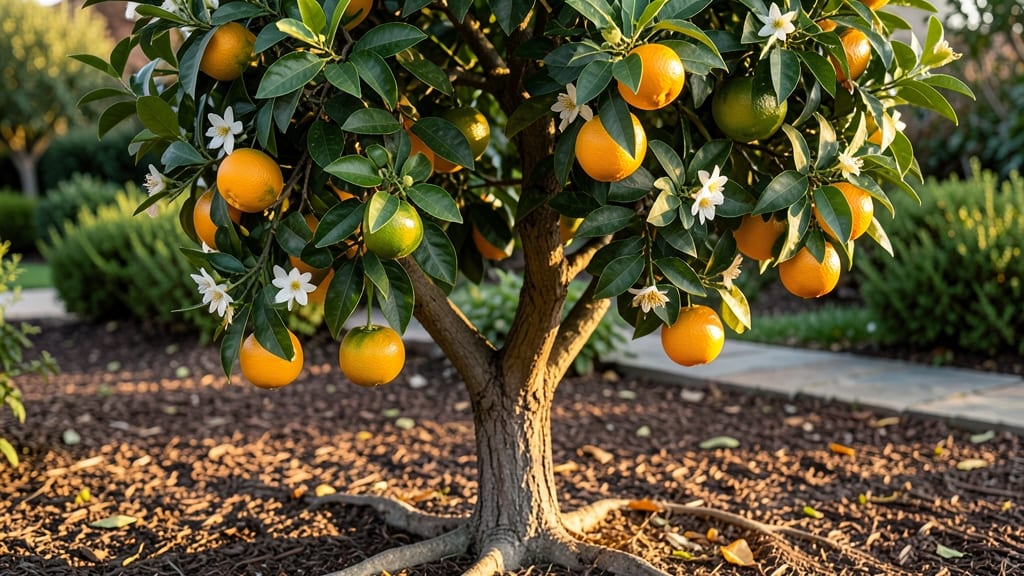
Orange berry tree identification adds vibrant color and wildlife appeal to any yard—but correctly recognizing the species is the first step to proper care. 🌿 The key lies in leaf shape, fruit color, and bark texture, which reveal whether you're dealing with a citrus tree, holly, hawthorn, or ornamental berry producer. I've spent years distinguishing these look-alikes in my own garden, and the differences become obvious once you know what to look for.
Citrus trees like orange and kumquat boast glossy, oval leaves and bright orange fruit that ripens in late fall. Holly trees feature spiky-edged leaves and red berries that persist through winter, while hawthorns produce clusters of small red or yellow berries alongside clusters of white flowers.
Ornamental berry trees often have broader leaves and berries in shades of red, orange, or purple.
Once identified, each tree demands different care: citrus needs well-draining soil and winter protection, while holly thrives in partial shade with acidic soil. Hawthorns handle tough conditions but need regular pruning to maintain shape.
The right identification ensures you're giving your tree the perfect growing environment for lush foliage and abundant berries.
This guide covers the most common orange berry producers in North American gardens, along with their growing zones and basic maintenance needs.
Whether you're adding a new tree or troubleshooting an existing one, these visual clues will help you match the tree to its care requirements—so you can enjoy vibrant berries season after season.
Root Causes of Misidentification
Understanding why orange berry trees get mixed up can help you spot the right clues. Here’s a breakdown of the most common reasons for confusion:
Many trees produce berries that share similar orange hues, but their leaf shapes, bark textures, or growth habits differ subtly.
For example: - Native vs. Invasive Species: Some native orange berry producers (like Viburnum dentatum) may resemble invasive species (e.g., Celastrus orbiculatus, or Oriental bittersweet), which climb and spread aggressively.
Their leaves and berry clusters look alike but grow on entirely different structures. - Hybrids and Cultivars: Nursery-grown trees (e.g., Crataegus or hawthorn cultivars) may have been selectively bred for vibrant orange berries, making them harder to distinguish from wild types. Pro Tip: 💡 Check for thorns—many hawthorns have them, while others (like Ilex or holly) don’t. - Seasonal Color Shifts: Berries can change from green to yellow to orange as they ripen.
A tree might be misidentified if observed too early or late in the season.
Focusing solely on fruit color ignores critical identifying features:
- Leaf Arrangement: Alternate vs. opposite leaves (e.g., Viburnum has opposite leaves, while Crataegus has alternate). Actionable Tip: 👨🍳 Trace a leaf’s stem back to the branch—opposite leaves grow directly across from each other.
- Berry Cluster Patterns: Some trees (like Cornus mas, or cornelian cherry) bear berries in tight, drooping clusters, while others (e.g., Pyracantha) have dense, thorny sprays. Visual Check: ✨ Compare cluster density—Pyracantha berries are packed tightly, like a brush.
- Bark and Branch Texture: Smooth bark (common in young Prunus species) vs. deeply furrowed bark (seen in mature Crataegus). Tool Tip: 🔪 Use a magnifying glass to inspect bark texture—some trees develop corky ridges with age.
Geography plays a role—some orange berry trees thrive in overlapping zones:
- Eastern U.S. Confusion: Viburnum (arrowwood) and Pyracantha (firethorn) both grow in similar climates but have different leaf serrations (saw-toothed vs. smooth edges).
- Western U.S. Challenges: Rhamnus (buckthorn) and Toxicodendron (poison oak) can produce orange berries, but poison oak’s leaves have a distinctive "middle lobe" shape. Warning: 🚨 Never touch unknown berries—some (like Toxicodendron) are toxic.
- Introduced Species: Trees like Hippophae rhamnoides (sea buckthorn) were planted for erosion control and now grow wild, mimicking native Amelanchier (serviceberry) in fruit color but with silvery undersides on leaves.
Digital and visual missteps lead to errors:
- Blurry or Cropped Photos: A close-up of berries might miss the tree’s full form. Fix: 📊 Always capture 3 angles: leaves, bark, and a wide shot of the tree’s structure.
- Seasonal Bias: Observing a tree in winter (bare branches) vs. summer (full foliage) changes identification cues. Pro Tip: 🌡️ Note bark patterns in winter—they’re more visible without leaves.
- Color Distortion: Camera flashes or lighting can alter berry colors. Actionable Tip: ⏰ Take photos in natural daylight and compare them to field guides under the same conditions.
Even experts rely on flawed resources:
- Outdated Guides: Older books may not include newly identified species or hybrids.
- Regional Focus: A guide for the Pacific Northwest won’t cover Appalachian species. Solution: 🎯 Use region-specific apps like iNaturalist or Seek by iNaturalist for crowd-sourced verification.
- Terminology Confusion: Terms like "berry" can be misleading—some "berries" are actually drupes (e.g., Prunus species). Clarification: 🔥 A true berry has seeds embedded in fleshy tissue; drupes have a single hard seed (pit).
Key Takeaway: Misidentification often stems from focusing on one trait (like color) while ignoring the tree’s full story. Action Plan: Cross-reference at least 3 features (leaves, bark, berry clusters) and compare them to verified sources.
Quick Fixes for Common Tree ID Mistakes
When it comes to identifying an orange berry tree, a few common pitfalls can lead to confusion—whether it’s misjudging leaf shape, overlooking fruit details, or ignoring seasonal changes. Here’s how to troubleshoot and correct those errors, plus tips to prevent them in the future.
Cause: Overlooking subtle differences in leaf structure, such as serrated edges, lobing, or glossy vs. matte textures.
Fix:
- 📏 Compare side by side: Use a ruler or reference guide to measure leaf length and width. For example, a serviceberry (Amelanchier) has elongated, oval leaves (2–4 inches long), while a hawthorn (Crataegus) has smaller, deeply lobed leaves (1–2 inches).
- 🌿 Check the underside: Some orange berry trees (like wax myrtle) have rust-colored undersides, while others (like firethorn) are smooth and green.
- 📸 Take a photo: Snap a clear image of the leaf against a white background for better comparison with online databases.
Prevention: ✔ Study seasonal changes—leaves may look different in spring (new growth) vs. fall (drying out). ✔ Note arrangement—alternate vs. opposite leaf patterns can be a game-changer.
Cause: Assuming all orange-red berries are the same, ignoring variations like smooth vs. bristly surfaces or seed presence.
Fix:
- 🔍 Examine the fruit closely:
- Smooth and shiny? Likely a serviceberry or crabapple.
- Bristly or fuzzy? Could be a hawthorn or firethorn.
- Translucent or waxy? Possibly a wax myrtle or arbutus (madrone).
- 🌱 Check the stem: Some berries (like juniper) grow in cones, while others (like yew) are fleshy and attached directly to the branch.
- 🍇 Taste test (safely!) If edible, a slight tartness suggests serviceberry, while bitterness may indicate hawthorn (use caution—some berries are toxic).
Prevention: ✔ Observe ripening stages—some berries start green or yellow before turning orange. ✔ Look for bird activity—birds often target serviceberry and hawthorn, leaving fewer berries on the tree.
Cause: Focusing only on leaves or fruit while overlooking bark texture, which can be a dead giveaway.
Fix:
- 🌲 Run your fingers along the bark:
- Smooth and gray? Likely a young crabapple or serviceberry.
- Ridged or scaly? Could be an arbutus (madrone) or hawthorn.
- Peeling or papery? A sycamore (though its berries aren’t orange, nearby trees might influence ID).
- 🌿 Check for thorns: Hawthorns and firethorns have sharp thorns, while serviceberries usually don’t.
Prevention: ✔ Photograph the entire tree—bark and branch structure are often underrated clues. ✔ Note height and shape—tall, narrow trees (like arbutus) differ from bushy hawthorns.
Cause: Trying to ID a tree in winter when leaves and fruit are absent, or in early spring before berries ripen.
Fix:
- 🌸 Spring: Look for bud shapes (round = serviceberry; pointed = hawthorn).
- 🍂 Fall/Winter: Examine dried fruit clusters or bud scales for texture clues.
- 🌿 Late Summer: Wait for berries to fully color—some start green or yellow.
Prevention: ✔ Plan your ID mission—visit the tree in late summer to early fall for optimal fruit visibility. ✔ Use a field guide app (like iNaturalist or PictureThis) to log observations year-round.
Before finalizing your ID, verify three key features:
- Leaf shape & arrangement (simple vs. lobed, alternate vs. opposite).
- Fruit color, texture, and attachment (berry vs. capsule, smooth vs. bristly).
- Bark or branch quirks (thorns, ridges, or peeling patterns).
📊 Quick Reference Table:
| Feature | Serviceberry | Hawthorn | Firethorn | Wax Myrtle |
|---|---|---|---|---|
| Leaf Shape | Oval, serrated | Lobed, small | Narrow, glossy | Lance-shaped |
| Fruit Color | Red-orange | Orange-red | Bright red | Blue-gray |
| Bark | Smooth | Thorny | Spiny | Scaly |
| Best ID Time | Late summer | Fall | Year-round | Winter (berries) |
Wax myrtle berries are technically blue-gray but may appear orange when dried.
If your tree doesn’t match any common orange berry species, consider:
- Consulting a local arborist (many offer free consultations).
- Posting to gardening forums (Reddit’s r/whatsthisplant or Facebook groups).
- Visiting a botanical garden—they often have labeled specimens for comparison.
With these fixes, you’ll go from guessing to confidently identifying your orange berry tree in no time! 🌳🔍
Frequently asked questions
What's the easiest way to tell a citrus tree from other orange berry trees?
Citrus trees like oranges and kumquats have glossy, oval leaves with smooth edges and fragrant white flowers. Their fruit grows directly from the branches (not in clusters) and has a thick, textured skin. Non-citrus orange berry trees like hawthorn or firethorn have smaller leaves, often with serrated edges, and produce berries in dense clusters.
Can I identify a tree just by looking at its berries?
No—berry color alone isn't enough! You must also examine leaf shape, bark texture, and branch structure. For example, smooth orange berries in clusters likely belong to a serviceberry, while bristly orange berries on thorny branches are probably hawthorn. Always check at least 3 features before making a final identification.
Why do some orange berry trees lose their leaves in winter while others don't?
Deciduous trees like serviceberry and hawthorn drop leaves in winter to conserve energy, while evergreens like arbutus (madrone) keep theirs year-round. Some ornamental berry trees (such as Pyracantha) are semi-evergreen—they may lose older leaves but retain new growth. Check your tree's leaf habits in both summer and winter for accurate identification.
Are all orange berries edible? How can I tell which ones are safe?
Never eat unknown berries! Safe edible orange berries like serviceberry are tart and firm, while toxic varieties (such as yew or bittersweet) often have smooth, waxy surfaces. When in doubt, consult a field guide or local arborist. Some orange berries (like hawthorn) are edible when fully ripe but have toxic seeds—always remove pits before eating.
What's the best time of year to identify an orange berry tree?
Late summer to early fall is ideal when berries are fully colored and leaves are mature. Spring is also helpful for observing bud shapes and early leaf growth. Avoid winter identification—bare branches make it nearly impossible to distinguish between similar species. If you must ID in winter, focus on bark texture and any remaining dried fruit clusters.