
Trees
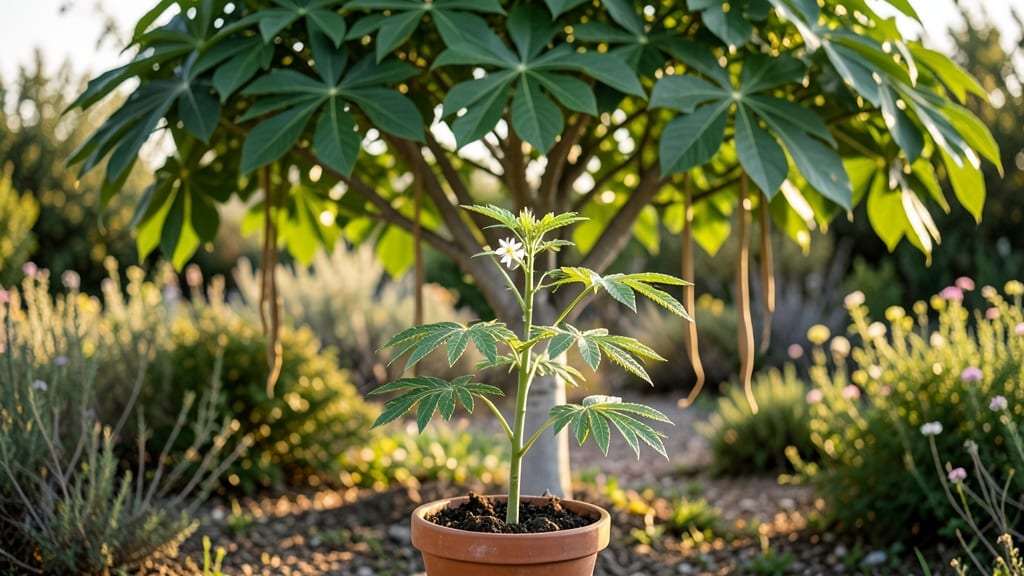
Spotting a moringa tree identification starts with those finger-like leaves that look like they were designed by a botanist’s hand. 🌿 Moringa oleifera stands out with its pinnate leaves (7-13 leaflets per stem) and feathery texture—nothing else in its neighborhood grows quite like it.
The young bark is smooth and greenish, while mature trees develop a rougher, grayish-brown texture that’s easy to miss if you’re not looking closely. The real giveaway? Those long, slender seed pods that hang like nature’s own green beans.
They’re a dead ringer for drumstick pods (which are the same plant, just cooked differently), but the key difference is the white, fluffy seeds inside—no other tree in its range produces them. Even the buds are distinctive, forming in clusters along the stems before bursting into those signature leaves.
You’ll know you’ve found the right spot when the tree thrives in full sun and warm climates (Zones 9-11). It’s drought-tolerant once established, but those feathery leaves wilt dramatically if underwatered—so check the soil moisture if they start looking limp.
The taproot system means it’s best planted once, as transplanting later is nearly impossible. Confusion often arises with similar-looking plants like neem trees or silk cotton trees, but moringa’s white flowers (before the pods form) and rapid growth in the right conditions set it apart.
Once you’ve spotted these traits, you’ll recognize it anywhere—even from across the yard.
Why Misidentifying Moringa Trees Occurs
Mistaking moringa trees for other species—or missing them entirely—can happen for several scientific and environmental reasons. Understanding these causes helps gardeners, farmers, and botanists spot key traits that distinguish Moringa oleifera (the most common edible variety) from lookalikes like Moringa peregrina (horseradish tree) or unrelated fast-growing trees.
Here’s why confusion arises, broken down by root causes:
Moringa leaves and buds share similarities with other trees, especially in regions where multiple species grow side by side. For example:
- Tri-foliate vs. Compound Leaves: Moringa’s pinnate (feather-like) leaves with 3–7 leaflets can resemble those of Acacia or Prosopis trees. However, moringa’s leaflets are asymmetrical at the base (uneven sides) and have a slightly waxy texture, while acacia leaflets are often symmetrical and leathery.
- Bud Confusion: Moringa’s axillary buds (found in leaf axils) are small, green, and scale-like, but they can be overlooked if the tree is young or dormant. Other trees, like Melia azedarach (chinaberry), have buds that appear similar but lack moringa’s distinctive reddish-brown stem hairs when young.
Actionable Tip: 🔍 Examine the leaf base—moringa’s leaflets attach unevenly, while many mimics (e.g., Leucaena) have even bases. Use a magnifying glass to check for stellate hairs (star-shaped trichomes) on moringa stems, a rare trait in lookalikes.
Moringa trees change dramatically across seasons and growth phases, making identification harder if you’re unfamiliar with its lifecycle:
- Seedling vs. Mature Trees: Young moringa seedlings have rounder, softer leaves with fewer leaflets (often just 3), while mature trees develop 5–7 leaflets with a lance-shaped (sword-like) form. This shift can fool observers into dismissing seedlings as unrelated weeds.
- Dormancy and Stress: During dry seasons, moringa leaves may curl inward or drop prematurely, mimicking nutrient-deficient trees. Stress from overwatering or poor soil (e.g., high salinity) can also distort leaf shape, making identification tricky.
Actionable Tip: 🌡️ Check the bark—mature moringa bark is grayish-brown with vertical cracks, while young bark is smooth and greenish. Compare this to Moringa peregrina, which has thicker, spongy bark resembling a baobab’s texture.
In tropical and subtropical zones, moringa can hybridize with wild relatives or grow alongside species that exploit similar niches:
- False Positives in the Wild: Moringa peregrina (desert moringa) has thicker, fleshy leaves and grows in arid regions, while Moringa oleifera thrives in humid areas. Confusing the two can lead to misapplied agricultural practices (e.g., watering desert moringa like a tropical variety).
- Invasive Species Mimicry: Trees like Albizia lebbeck (silk tree) have compound leaves but lack moringa’s distinctive “drumstick” seed pods (long, cylindrical, and segmented). Pods are the gold standard for moringa ID—if you see them, you’ve found the right tree!
Actionable Tip: 🌍 Note your location—moringa’s native range is the Saharan belt to India. Outside this zone, “moringa” claims may be mislabeled (e.g., Drumstick tree is a common misnomer for Moringa, but other trees borrow the name). Cross-reference with local botanical databases.
Without proper tools, even experienced observers can overlook moringa’s unique features:
- Microscopic Traits: Moringa leaves and stems have stellate hairs (star-shaped trichomes) visible only under magnification. These hairs dissuade pests and are absent in most mimics like Parkinsonia (paloverde).
- Root and Seed Structure: Moringa seeds are triangular and papery, while those of Leucaena (a common nitrogen-fixer) are flat and bean-like. Digging near the base to check roots (moringa’s are taproots with lateral branches) can confirm ID.
Actionable Tip: 🔥 Use a field guide or app like iNaturalist or PlantNet to upload photos and compare traits. For lab confirmation, test leaf sap—moringa’s bitter, spicy taste (due to quercetin and niazirin) is unmistakable.
By addressing these common pitfalls—leaf asymmetry, seasonal changes, regional hybrids, and microscopic clues—you’ll sharpen your moringa-spotting skills. Next, we’ll dive into pro tips for foolproof identification in the field.
Quick Fixes for Moringa Tree Confusion
Now that you know why misidentifying moringa trees happens (whether it’s due to leaf shape mix-ups, bud patterns, or environmental factors), here’s how to solve it—fast, accurately, and without the guesswork.
Problem: You’re staring at a tree, but the leaves look similar to moringa—but aren’t quite right. Fix:
- Count the leaflets 🌿—Moringa leaves have 7–13 pairs (11–25 leaflets total). If it’s fewer or more, it’s not moringa.
- Check the serration 🔪—True moringa leaves have fine, saw-toothed edges, not smooth or jagged.
- Compare side by side 📏—Hold a moringa leaf (from a trusted source) next to the unknown one. Lighting tricks can make edges look different!
Prevention Tip: 💡 Bookmark a moringa leaf guide (like this one!) on your phone for quick reference when you’re out in the field.
Problem: The leaves seem right, but the buds or flowers throw you off. Fix:
- Look for axillary inflorescences 🌸—Moringa flowers grow in clusters at leaf junctions, not just at the ends of branches.
- Check flower color 🎨—Young moringa buds are pinkish-white, while mature flowers are yellowish-white. If it’s purple or red, it’s not moringa.
- Smell the flowers 👃—Moringa flowers have a mild, slightly sweet scent. No scent? Not moringa.
Prevention Tip: ✨ Visit a moringa tree in bloom (if possible) to memorize the bud-to-flower transition.
Problem: You’re still unsure—maybe it’s a young tree or a hybrid? Fix:
- Inspect the bark 🌲—Mature moringa bark is grayish-brown, rough, and develops shallow cracks as it ages. Smooth bark = not moringa.
- Observe the tree shape 📐—Moringa grows upright with a single trunk (unless pruned). Bushy, multi-trunk trees? Probably not.
- Test the young shoots 🌱—Snap a small twig—moringa stems are hollow when young (a key ID trait).
Prevention Tip: 🎯 Take a photo of the bark and leaves from different angles. Compare with verified moringa images online.
Problem: You’re in the wild with no internet—how do you know for sure? Fix:
- Leaf rub test 🖍️—Rub a leaf between your fingers. Moringa leaves have a slightly gritty texture (from tiny hairs).
- Taste test (caution!) 🚨—Only if you’re 100% sure it’s moringa! A tiny pinch of crushed leaves should taste bitter with a nutty aftertaste. Toxic lookalikes (like Azadirachta indica—neem) taste strongly bitter or soapy.
- Seed check 🌱—If seeds are present, moringa seeds are oval, brown, and papery. Neem seeds are hard, dark, and wrinkled.
Prevention Tip: 💡 Carry a small magnifying glass for close-up inspections of buds, seeds, and bark texture.
Problem: You’ve checked everything, but you’re still unsure. Fix:
- Collect a sample 📦—Take a leaf, bud, and bark scrap (label it!).
- Consult a local expert 👨🌾—Botanists, agricultural extension officers, or even experienced gardeners can help.
- Use a plant ID app 📱—Apps like PlantNet or iNaturalist let you upload photos for AI-assisted ID.
Prevention Tip: ⏰ Visit the tree at different times of day—morning light reveals details better than midday glare.
Keep this one-page reference handy:
- Leaf: 11–25 leaflets, fine serrations, pinnate arrangement.
- Buds: Pink-white, axillary clusters.
- Bark: Rough, grayish-brown, cracks with age.
- Scent: Mildly sweet flowers, gritty leaf texture.
Now you’re armed with the tools to spot a moringa tree—no more second-guessing! 🌟
Frequently asked questions
What’s the quickest way to tell a moringa tree apart from a neem tree?
Check the leaf arrangement and flower scent. Moringa leaves have 7-13 pairs of leaflets (11-25 total) with fine serrations, while neem leaves have 5-11 pairs (7-19 total) with smoother edges. Moringa flowers also have a mildly sweet scent, while neem flowers are odorless. The seed pods are another clue—moringa’s are long and cylindrical, while neem pods are flat and segmented.
Can I identify moringa by its smell alone?
Yes, but only when flowers or young leaves are present! Fresh moringa leaves have a slightly bitter, nutty aroma when crushed, while the flowers emit a mildly sweet scent. However, this method only works if the plant is healthy—stressed or old trees may lose their distinctive smell. Always combine scent with visual traits like leaf shape and bark texture for confirmation.
What should I do if I think I’ve found a moringa tree but it’s not flowering?
Focus on the leaf structure and bark. Young moringa trees have pinnate leaves with 3-7 leaflets (though mature trees have more), and the bark is smooth and greenish when young, turning grayish-brown with cracks as it ages. Look for stellate hairs (star-shaped trichomes) on stems under magnification—these are unique to moringa. If you’re still unsure, take a photo and compare it with verified images from botanical databases.
Are there any toxic lookalikes I should avoid?
Yes! Neem trees (Azadirachta indica) and silk cotton trees (Ceiba pentandra) are common mimics. Neem leaves have a stronger, medicinal smell and produce yellow flowers, while silk cotton trees grow much taller with large, fluffy seed pods. Never consume any plant you’re unsure about—some lookalikes, like Cassia species, can be toxic. Always verify with multiple identification methods before harvesting.
How do I know if a young moringa seedling is healthy?
Healthy moringa seedlings have bright green, slightly waxy leaves with 3-5 leaflets (not rounded like some weeds). The stem should be straight and hollow when young, and the soil around it should be moist but not waterlogged. If leaves appear yellow or curled, it may be overwatered or lacking nutrients. Moringa seedlings grow rapidly in warm climates—if it’s stunted, check for pests or poor drainage.