
Trees
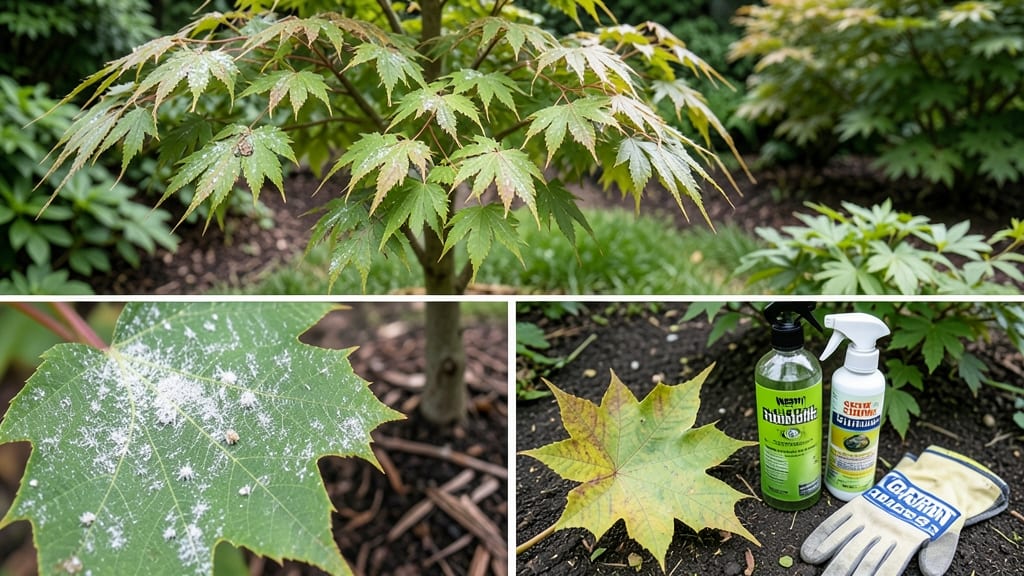
That white powdery coating on your maple leaves isn’t just unsightly—it’s a fungal infection that weakens your tree over time. 🌳 I’ve battled powdery mildew on my sugar maple for years, and copper spray isn’t just a quick fix—it’s the most effective organic weapon in your arsenal when applied correctly.
The problem starts with thick, white spots that eventually turn leaves yellow and crispy, stunting growth. High humidity, poor airflow, and dense foliage create the perfect breeding ground. Most gardeners reach for chemical sprays first, but copper—when used right—stops the fungus without harming bees or beneficial insects.
With proper timing (early spring and late summer) and a few simple adjustments—like pruning for airflow—you’ll see fresh green leaves within weeks. The key is consistency: one spray won’t cure it, but a season of prevention will keep your tree thriving year after year.
Works for all maple varieties, from towering silver maples to compact Japanese maples. Let’s get your tree back to its full glory without harsh chemicals.
Understanding Fungal Blight Triggers
Powdery mildew on maple trees isn’t just a random nuisance—it’s a fungal infection with specific triggers that create the perfect storm for outbreaks. By understanding these causes, you can take proactive steps to protect your trees before the problem spreads. Here’s why this fungal blight loves targeting your maples:
Powdery mildew thrives in stagnant air because spores need stillness to settle and infect leaves. Maple trees with thick, dense foliage or overcrowded branches trap moisture and block airflow, creating ideal conditions for fungal growth.
- Why it happens: Fungal spores (like Podosphaera or Microsphaera species) rely on humidity and lack of wind to germinate.
Without airflow, spores land on leaves, germinate, and form white, powdery colonies within 24–48 hours. - Actionable insight: Prune your maple tree in late winter or early spring to improve airflow. Remove crossing branches and thin out the canopy by 20–30% to reduce humidity pockets.
Maple trees love moisture, but too much humidity or prolonged leaf wetness turns a lush canopy into a fungal buffet. Powdery mildew spores germinate best when leaves stay damp for more than 6–8 hours, especially in warm (60–80°F) but humid conditions.
- Why it happens: Morning dew, overhead irrigation, or shady, damp microclimates keep leaves wet longer.
Fungal hyphae (thread-like structures) penetrate leaf surfaces through stomata (pores) when conditions are right. - Actionable insight: - Water at the base (not overhead) to avoid wetting foliage. - Avoid mulching too close to the trunk (keep it 3–4 inches away) to prevent soil moisture from wicking up and increasing humidity near the canopy. - Choose sun-loving maple varieties (like Acer rubrum or Acer saccharum) if your climate is naturally humid.
Powdery mildew isn’t a cold-weather problem—it peaks in spring and early summer when temperatures hover between 60–80°F (15–27°C) with high humidity (70%+). These conditions create a sweet spot for fungal spores to spread exponentially.
- Why it happens: Fungal growth slows below 50°F (10°C) and accelerates in warm, moist air. Spores can travel miles on wind currents, but they need surface moisture to infect.
Rain followed by warm, sunny days (like a "perfect mildew day") triggers outbreaks. - Actionable insight: - Monitor local weather forecasts and apply preventive fungicides (like copper spray) before humidity spikes. - Mulch with organic materials (like wood chips) to regulate soil temperature and reduce sudden humidity swings.
Stressed maple trees are weakened hosts—their compromised immune systems make them far more susceptible to powdery mildew.
Common stressors include: - Nitrogen deficiency (yellowing leaves, poor growth) - Over-fertilization (burnt roots, salt buildup) - Drought or waterlogging (root stress) - Pests (e.g., aphids, spider mites) that damage leaves, creating entry points for fungi
- Why it happens: Fungal pathogens exploit weakened cellular defenses. For example, nitrogen-deficient maples produce thinner cuticles, making it easier for spores to penetrate.
Meanwhile, aphid honeydew (a sticky residue) can trapped spores directly onto leaves. - Actionable insight: - Test soil pH (ideal range: 6.0–7.0 for maples) and amend with compost or lime if needed. - Apply balanced fertilizer (e.g., 10-10-10) in early spring to avoid overfeeding. - Inspect for pests and treat with neem oil or insecticidal soap before mildew appears.
Not all maples are equally vulnerable. Some species—like Norway maples (Acer platanoides)—are highly susceptible to powdery mildew, while others, like sugar maples (Acer saccharum), are more resistant but can still fall victim under the right conditions.
- Why it happens: Genetic predisposition plays a role. Some maples have thinner leaf wax layers or higher stomatal density, making them easier targets.
Additionally, young or newly planted maples have underdeveloped defenses. - Actionable insight: - Choose resistant varieties if planting new maples (e.g., Autumn Blaze® or Crimson King®). - Strengthen mature trees with regular pruning, proper watering, and mulching to boost natural resistance.
Powdery mildew doesn’t disappear—it overwinters on fallen leaves, buds, and bark, ready to reinfect the next season. If you don’t clean up infected debris, spores can recolonize your tree within weeks.
- Why it happens: Fungal spores survive dormant buds, leaf litter, and even the ground in mycelial structures.
When spring arrives, wind, rain, or garden tools can redistribute spores onto fresh foliage. - Actionable insight: - Rake and remove fallen leaves in late fall or early winter. - Disinfect pruning tools with 70% isopropyl alcohol between cuts to avoid spreading spores. - Apply dormant-season fungicide (like copper fungicide) in late winter before buds swell.
Quick Fixes for Fungal Foes
Powdery mildew on maple trees isn’t just unsightly—it weakens your tree’s health, stunts growth, and can even kill branches if left unchecked. The good news? With the right approach, you can reverse the damage and prevent future outbreaks using simple, effective methods.
Below, we’ll break down solutions by cause, so you can target the root of the problem and restore your maple tree’s vibrant green canopy.
Cause: Dense foliage or nearby structures block airflow, trapping moisture and creating the perfect mildew paradise.
Fix It:
- Prune strategically 🔪: Remove 10–20% of the tree’s branches, focusing on:
- Crossing or rubbing branches (they create wounds where mildew thrives).
- Overly dense areas (aim for an "open vase" shape to improve airflow).
- Dead or diseased branches (cut them back to healthy wood).
- Thin out lower branches to reduce humidity near the trunk.
- Space out young saplings—maples need 6–10 feet of clearance from other plants or structures.
Prevention Tip: 💡 Prune in early spring (before mildew season peaks) or late winter when the tree is dormant. Avoid heavy pruning in summer, as it stresses the tree and invites pests.
Cause: Overwatering, poor drainage, or frequent leaf wetness (from rain or sprinklers) fuels mildew spores.
Fix It:
- Water deeply but less often 💧: Maple trees prefer 1–1.5 inches of water per week (including rain). Let the top 2–3 inches of soil dry out between waterings.
- Water at the base (not overhead) to avoid wetting leaves.
- Improve drainage if your soil is clay-heavy:
- Add 2–3 inches of compost or organic matter to the root zone.
- Consider a French drain if water pools near the trunk.
- Avoid mulch volcanoes—keep mulch 3–4 inches deep and 6 inches away from the trunk to prevent rot.
Pro Tip: 🌡️ If your maple is in a shady spot, reduce watering slightly—shade increases humidity, which mildew loves.
Cause: Mildew spores overwinter on dead leaves, twigs, and mulch, ready to reinfect next season.
Fix It:
- Rake up all debris 🍂 before winter (or as soon as leaves fall).
- Remove fallen leaves from the lawn and compost them separately (or bag them—don’t leave them near the tree).
- Sanitize pruning tools with 70% isopropyl alcohol or a 10% bleach solution to avoid spreading spores.
- Replace old mulch with fresh, coarse bark or pine straw (avoid fine mulch, which holds moisture).
Prevention Tip: ✨ Set up a leaf blower on a dry day to speed up cleanup—wet leaves stick to tools and spread spores faster.
Cause: If mildew is already spreading (white powder on leaves, yellowing, or leaf drop), you’ll need active treatment.
Option 1: Copper-Based Fungicide (Best for Severe Cases)
- Why? Copper disrupts fungal cell walls and is highly effective against powdery mildew.
- How to apply:
- Use a ready-to-use copper fungicide spray (like Bordeaux mixture or copper sulfate).
- Spray thoroughly (both top and bottom of leaves) on a dry, calm day (early morning is best).
- Reapply every 7–14 days until new growth is mildew-free.
- Follow label instructions—copper can burn leaves if overused.
Option 2: Baking Soda Spray (Budget-Friendly & Safe)
- Why? A mild alkaline solution inhibits spore germination without harsh chemicals.
- DIY recipe:
- Mix 1 tsp baking soda + 1 tbsp horticultural oil + 1 tsp soap (dish or castile) in 1 quart of water.
- Spray leaves until damp (avoid wetting the trunk).
- Reapply every 7–10 days or after rain.
Option 3: Neem Oil (Organic & Preventative)
- Why? Neem oil smothers spores and disrupts fungal growth naturally.
- How to use:
- Mix 1 tbsp neem oil + 1 tsp soap in 1 quart of water.
- Spray in the evening (avoid direct sunlight, which can burn leaves).
- Reapply every 2 weeks during mildew season (spring–fall).
Warning: ⚠️ Avoid spraying when bees are active—neem oil can harm them.
Cause: Weakened trees (from stress, poor nutrition, or disease) are more susceptible to mildew.
Fix It:
- Fertilize in early spring with a balanced, slow-release fertilizer (look for 10-10-10 or 8-3-9).
- Test your soil—maples prefer slightly acidic to neutral pH (6.0–7.0). Adjust with lime (to raise pH) or sulfur (to lower pH) if needed.
- Choose resistant varieties if replanting: Some maples (like Norway maples) are more mildew-prone, while Japanese maples or sugar maples are tougher.
- Install a drip irrigation system to water at the roots (avoids leaf wetness).
Pro Tip: 🎯 Plant marigolds or garlic near your maple—their strong scents repel fungal spores naturally!
If you notice:
- Heavy defoliation (more than 30% of leaves drop).
- Blackened or mushy branches (signs of advanced rot).
- No improvement after 4 weeks of treatment.
A certified arborist can assess if your tree needs deep pruning, soil amendments, or systemic fungicides.
Final Reminder: 🌟 Consistency is key—mildew won’t disappear overnight, but with proactive care, your maple can bounce back stronger than ever!
Frequently asked questions
Will copper spray harm my maple tree if I use too much?
Copper spray is effective but can cause leaf burn if overapplied. Stick to the label instructions—typically 1-2 applications every 7-14 days during mildew season. Always spray in the early morning on calm days to allow leaves to dry quickly. If you notice brown spots or crispy edges, dilute your mixture or reduce frequency.
Can I still harvest maple syrup if my sugar maple has powdery mildew?
Yes, but only from healthy branches. Powdery mildew primarily affects leaves, not the tree's sap production. Focus your taps on disease-free branches and avoid collecting sap from heavily infected areas. The fungus doesn't directly impact syrup quality, but maintaining tree health ensures better sap flow and stronger syrup flavor.
How do I know if my maple tree has powdery mildew or just dust?
Powdery mildew appears as a white, powdery coating that's easily rubbed off with your finger, leaving a grayish residue. Unlike dust, it typically starts on undersides of leaves and spreads to upper surfaces. You'll also notice yellowing leaves or leaf curling—signs that distinguish it from harmless dust or pollen.
Is there a best time of year to treat powdery mildew on maples?
The ideal treatment window is early spring (before buds swell) and late summer (after summer heat peaks). Apply preventive sprays like copper fungicide when you spot the first signs of mildew or when humidity rises above 70%. Fall treatments should focus on cleaning up debris rather than spraying, as spores overwinter in fallen leaves.
Will pruning alone eliminate powdery mildew from my maple?
Pruning improves airflow and helps prevent future outbreaks, but it won't cure an existing infection. Remove heavily infected branches and thin the canopy by 20-30% to reduce humidity. Combine pruning with fungicidal sprays for best results. The key is creating an environment where mildew can't thrive while treating the active infection.