
Pests and Diseases
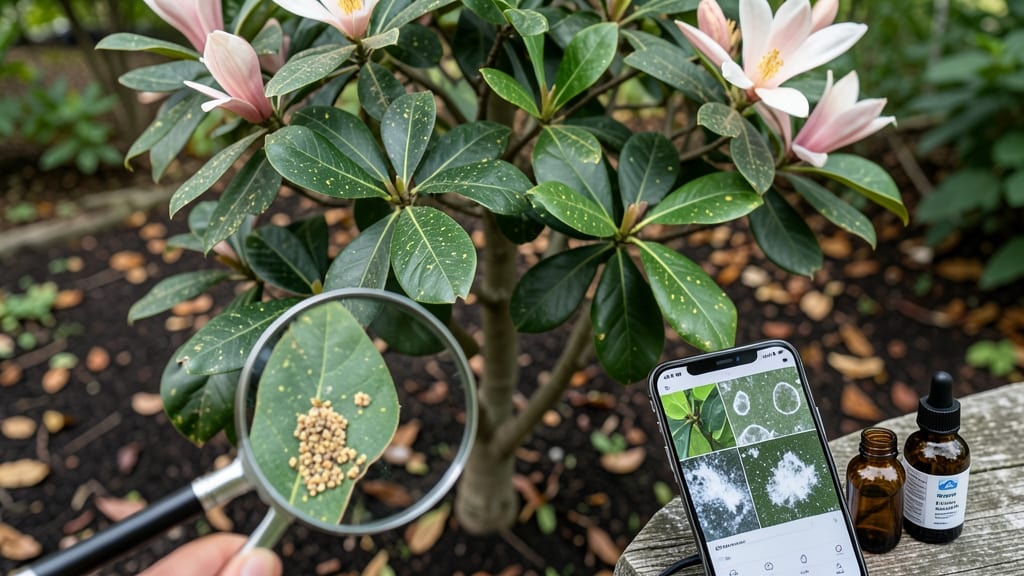
White spots on magnolia leaves mean your tree is fighting fungal blight—and it’s fixable. ✨ I’ve battled this exact issue with my 12-year-old Southern magnolia, and the key is acting fast before the spots spread.
What looks like harmless dust is often powdery mildew, but it can weaken your tree if ignored.
The culprit? Too much shade, crowded branches, or even overhead watering that keeps leaves damp. My tree’s spots cleared up within weeks once I thinned the canopy and switched to a morning watering routine.
The good news? Organic fixes like neem oil or baking soda spray work just as well as harsh chemicals.
By next spring, your magnolia’s leaves will be smooth and glossy again—no more white powder ruining the show. The secret is catching it early, cleaning up fallen leaves, and giving your tree better airflow. Trust me, your magnolia will thank you with fresh, vibrant foliage.
This works for all magnolia types, from dwarf varieties to towering specimens. The same principles apply whether you’re dealing with powdery mildew, rust, or even environmental stress. Let’s get those leaves healthy again!
Root Causes of Leaf Spots
White spots on magnolia leaves aren’t just unsightly—they’re often a cry for help from your tree. Understanding the why behind these blemishes is the first step to restoring your magnolia’s lush, healthy foliage. Below, we break down the most common culprits, backed by science and actionable insights.
🍄 Fungi like Gloeosporium (causing anthracnose) or Cercospora (linked to leaf spot diseases) thrive in damp, warm conditions. These pathogens penetrate leaf tissue through natural openings (like stomata) or wounds, triggering white, gray, or even pinkish spots—often with yellow halos.
Over time, spots may develop dark centers or drop out entirely, leaving "shot-hole" patterns.
Key Triggers:
- Poor Air Circulation – Dense foliage or overcrowded planting traps moisture, creating fungal hotspots.
- Overhead Watering – Wet leaves for prolonged periods (e.g., early morning watering) mimic a fungal buffet.
- Stress from Heat or Drought – Weakened trees are prime targets for fungal colonization.
Pro Tip: 💡 Early detection is critical. Scrape a spot gently—if it leaves a powdery residue, it’s likely fungal. Act fast before spores spread!
🐜 While not always visible, pests like magnolia scale, spider mites, or whiteflies can leave behind white, waxy residue or stippled damage. These critters feed on sap, injecting toxins that cause leaf discoloration.
Scale insects, for example, excrete honeydew—a sugary film that fosters sooty mold (a black fungal layer), further stressing the tree.
Red Flags:
- Sticky Leaves – Honeydew is a dead giveaway.
- Webbing – Spider mites spin fine silk threads between leaves.
- New Growth Deformities – Pests often target tender shoots first.
Warning: 🔥 Mites thrive in dry heat—check undersides of leaves with a magnifying glass if your area is drought-prone.
☀️🌧️ Magnolias are tough, but extreme conditions can trigger physiological leaf spots—white patches caused by non-infectious stress.
These often appear as: - Sunburn Spots – Pale, crispy patches on leaves exposed to harsh afternoon sun (common after pruning or transplanting). - Cold Injury – Frost or late-spring freezes can cause white, water-soaked spots that later turn brown. - Chemical Burn – Over-fertilizing (especially with high salt content) or using harsh herbicides near the tree’s drip line.
Quick Fix: 🌡️ Adjust care routines—mulch heavily in winter, avoid afternoon pruning, and test soil pH before fertilizing (ideal: 5.0–6.5 for magnolias).
🦠 While less common, bacteria (Xanthomonas spp.) or viruses (e.g., magnolia mosaic virus) can cause white, greasy spots or vein clearing. These are often spread by sap-sucking insects or contaminated tools. Unlike fungi, bacterial spots may ooze when wet, and viral infections spread systemically (affecting new growth).
How to Confirm:
- Bacterial Leaf Spot – Look for water-soaked lesions that enlarge rapidly.
- Viral Symptoms – Stunted growth, distorted leaves, or yellowing between veins.
Critical Note: ✨ No cure exists for viral infections. Focus on prevention: sterilize pruners with rubbing alcohol, remove infected leaves promptly, and monitor for pest vectors.
📊 While less likely to cause white spots directly, magnesium or calcium deficiencies can weaken leaves, making them susceptible to other stressors.
For example: - Magnesium Deficiency – Causes interveinal chlorosis (yellowing between veins), which can mimic fungal spots if severe. - Calcium Deficiency – Leads to blossom end rot in new leaves (white, dead patches at leaf margins).
Diagnose with a Soil Test – A simple kit can reveal imbalances. Amend soil with Epsom salt (magnesium sulfate) or lime (calcium) as needed.
👨🍳 Overwatering or Compacted Soil – Poor drainage forces roots to suffocate, starving leaves of nutrients. White, mushy spots may appear as leaves "drown" from excess moisture.
Fix It:
- Improve drainage with organic matter (compost or pine bark).
- Water deeply but infrequently—magnolias hate soggy feet!
Key Takeaway: White spots are rarely a single issue. Start by identifying whether the problem is biological (fungal/bacterial), pest-related, environmental, or nutritional. Once you pinpoint the cause, you can target treatments effectively—without resorting to harsh chemicals.
Stay tuned for our next section on organic remedies to bring your magnolia back to vibrant health!
Quick Fixes for Leaf Spots
White spots on your magnolia tree’s leaves don’t have to mean the end of its beauty—with the right approach, you can restore its health and prevent further damage. Below, we break down targeted solutions based on the most likely causes, from fungal infections to environmental stress.
Each fix is designed to be practical, organic-friendly, and easy to implement, even for gardening beginners.
Fungal spores thrive in damp, shaded conditions, turning your magnolia’s leaves into a buffet. Here’s how to combat them:
🔥 Step 1: Prune for Better Airflow
Fungi love crowded, humid spaces. Thin out dense branches to improve airflow and sunlight penetration.
- When: Early morning on a dry day (avoid pruning wet leaves).
- How: Use clean, sharp pruners to remove only infected leaves or small branches (never more than 25% of the tree at once).
- Pro Tip: 💡 Sterilize your tools with rubbing alcohol between cuts to prevent spreading spores.
🍳 Step 2: Apply Organic Fungicides
Skip the harsh chemicals—these natural alternatives work just as well:
| Solution | How to Use | Frequency |
|---|---|---|
| Baking Soda Spray (1 tsp baking soda + 1 quart water + ½ tsp soap) | Spray undersides of leaves (fungi love hiding there!). | Every 7–10 days until spots disappear. |
| Neem Oil (1 tbsp neem oil + 1 quart water + ½ tsp soap) | Shake well and spray thoroughly, including stems. | Weekly until symptoms fade, then monthly as prevention. |
| Copper Fungicide (organic copper-based spray) | Follow label instructions—reapply after rain. | Every 2–3 weeks during wet seasons. |
🌡️ Step 3: Adjust Watering Habits
Overhead watering spreads fungal spores like wildfire. Switch to:
- 💧 Drip irrigation or soaker hoses at the base of the tree.
- ⏰ Water early morning so leaves dry by sunset.
- 🌧️ Avoid watering after rain—wait until the soil is slightly dry.
✨ Prevention for Next Season
Break the fungal cycle with these long-term strategies:
- 🌿 Mulch properly: Use 2–3 inches of organic mulch (like pine straw or wood chips) but keep it away from the trunk.
- ☀️ Increase sunlight: Thin nearby trees/shrubs to let light reach your magnolia.
- 🧹 Clean up debris: Rake and dispose of fallen leaves far from the tree (composting them is fine if they’re disease-free).
Tiny invaders can weaken your magnolia, making it susceptible to white spots. Here’s how to evict them:
👨🍳 Step 1: Blast Them Off
Pests hate motion and pressure. Try these DIY methods:
- Hose them down: Use a strong spray nozzle to dislodge scale or mites from leaves (do this in the early morning).
- Insecticidal soap: Mix 2 tbsp castile soap with 1 quart water, spray until dripping, and repeat every 5–7 days.
🔪 Step 2: Introduce Natural Predators
Let nature do the work! Attract beneficial insects like:
- 🐞 Ladybugs (eat aphids and mites).
- 🕷️ Spiders (control whiteflies).
- 🐝 Parasitic wasps (target scale insects).
How to invite them: Plant companion flowers like marigolds, dill, or yarrow nearby.
🎯 Prevention Tips
Keep pests from moving in with these habits:
- 🌿 Inspect new plants: Quarantine any additions for 2 weeks before introducing them to your magnolia.
- 🚫 Avoid broad-spectrum pesticides: They kill beneficial insects too.
- 🌧️ Monitor humidity: Pests thrive in dry, dusty conditions—mist leaves occasionally if your climate is arid.
White spots can also signal your magnolia is struggling with too much sun, poor soil, or thirst. Fix these issues:
🌿 Step 1: Check the Soil
Magnolias prefer acidic, well-draining soil (pH 5.0–6.0). Test your soil with a kit and amend if needed:
- 📊 Too alkaline? Add sulfur or peat moss.
- 💪 Too sandy? Mix in compost or leaf mold.
- 🍎 Nutrient-deficient? Feed with an organic acid-loving plant fertilizer (like cottonseed meal) in early spring.
🌞 Step 2: Adjust Sun Exposure
If your magnolia is getting too much harsh afternoon sun, provide shade with:
- 🌳 A nearby tree or lattice screen (30% shade cloth works well).
- 🏡 Relocate potted magnolias to a morning-sun spot.
💧 Step 3: Water Wisely
Magnolias hate soggy roots but also dry spells. Aim for:
- 💧 1–1.5 inches of water per week (including rain).
- 🌱 Deep watering (soak the root zone, not just the surface).
- 🚰 Drainage check: If water pools around the base, amend the soil with perlite or plant on a slight mound.
Remember: Consistency is key. Monitor your magnolia weekly, and don’t hesitate to repeat treatments until the white spots vanish. With patience and these organic fixes, your tree will bounce back—and next season, it’ll be even more resilient! 🌿💚
Frequently asked questions
Are white spots on magnolia leaves always caused by fungus?
Not always! While fungal diseases like powdery mildew are common culprits, white spots can also result from pest damage (like spider mites or scale insects), environmental stress (sunburn or frost), or even mineral deficiencies. Always check for powdery residue (fungal) or sticky honeydew (pests) to narrow it down.
Will pruning infected leaves help stop the spread?
Pruning removes the infection source and improves airflow, which is crucial for preventing fungal spread. Always use sterilized tools and dispose of infected leaves far from your tree. For severe cases, remove only 25% of the canopy at once to avoid stressing the tree further.
How often should I apply neem oil to treat fungal spots?
Apply neem oil weekly until the spots disappear, then switch to monthly applications as prevention during humid seasons. For best results, spray in the early morning when leaves are dry, and avoid applying if rain is forecasted within 24 hours.
Can I still use my magnolia leaves for tea if they have white spots?
It's not recommended. Fungal-infected leaves may harbor harmful spores, and pest-damaged leaves can contain toxins. Always use only healthy, spot-free leaves for culinary or medicinal purposes. If your tree has significant damage, focus on treatment first.
Why do white spots keep coming back even after treatment?
Recurring spots often mean underlying conditions aren't addressed. Check for persistent moisture (overwatering or poor drainage), crowded branches blocking airflow, or unbalanced soil pH. Fungal spores can also survive in fallen leaves—always clean up debris around your tree.