
Pruning
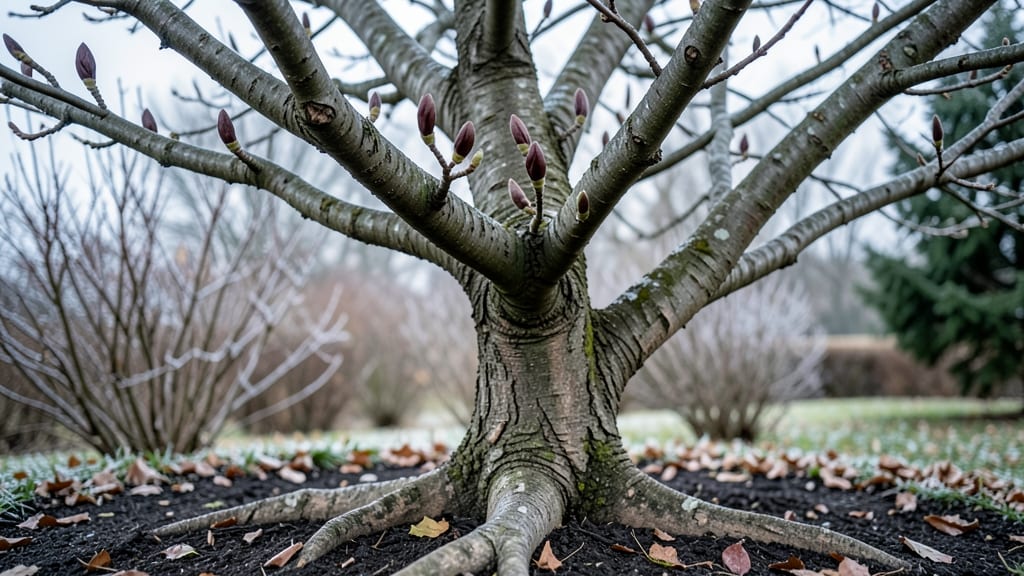
Those plump, velvety magnolia tree buds in winter are nature’s promise—hiding next year’s showstopper blooms. 🌸 I’ve watched mine shiver through icy winds, only to burst into life when spring arrives, and the key to keeping them healthy lies in understanding their winter quirks.
These buds are tougher than they look, built to survive frost down to 10°F for most varieties, but they’re not invincible. Overly wet mulch or late-season pruning can trigger rot, while dry winds might cause buds to shrivel.
The trick is to let them rest—no trimming until after blooms fade in spring—and keep the base wrapped in 2-3 inches of mulch to shield roots.
You’ll know they’re thriving when buds stay firm and plump, not mushy or cracked. A light inspection in late winter reveals their secrets: swollen buds mean strong growth ahead, while dried-out ones signal stress from winter’s extremes. Prune only dead wood now—save shaping for spring.
This care routine turns winter’s dormancy into a setup for healthier blooms next season. The payoff? Magnolias that burst into life earlier, with bigger flowers and fewer surprises. Let’s protect those buds—they’re worth it.
📚 In This Guide
- What you need
- Instructions
- Tips and common mistakes
- Wrapping up and next steps
What you need
- ● Pruning shears: Bypass pruners (for small branches, 2–3" diameter) – 1 pair (look for ergonomic, stainless-steel blades for clean cuts).
- ● Loppers: Bypass or anvil type (for branches 3–6" diameter) – 1 pair (extendable handles are a plus for taller trees!).
- ● Pruning saw: Curved-tooth or folding saw (for branches 6"+ diameter) – 1 (avoid rust—opt for carbon steel or stainless steel).
- ● Gloves: Heavy-duty, cut-resistant (e.g., leather or Kevlar) – 1 pair (protects from thorns and splinters!).
- ● Disinfectant: 70% isopropyl alcohol or bleach solution (1 part bleach to 9 parts water) – small bottle or spray (prevents disease spread between cuts).
- ● Rubbing alcohol or hand sanitizer – travel-sized (for cleaning tools between cuts).
- ● Tarp or drop cloth – medium-sized (to collect debris and protect the ground).
- ● Ladder or step stool – stable, rated for your height/weight (if tree exceeds 6 feet tall).
- ● Pole pruner: Adjustable-length (for high branches without a ladder) – 1.
- ● Sealing wax or pruning paint – small tube (for large cuts >2" diameter to prevent disease).
- ● Marking twine or flags – small spool (to tag branches for removal if needed).
- ● Work boots or closed-toe shoes (for stability on uneven ground).
- ● Safety glasses (to shield eyes from debris).
- ● Check your local pruning guidelines—some regions restrict winter pruning for magnolias (e.g., avoid heavy pruning if buds are already forming!).
- ● Choose a dry, mild day (avoid frost or extreme cold to prevent stress on the tree).
- ● Have a plan: Sketch or mentally map out branches to remove (aim for no more than 25% of the tree’s canopy in one session).
Instructions for pruning magnolia buds in winter
Here's how I prepare my magnolias for vibrant spring blooms—timing and technique matter most.
✂️ Step 1: Time Your Pruning for Dormancy
Wait until after your first hard frost when the tree is fully dormant but before new growth begins—typically mid to late winter in most climates. This timing ensures you won't accidentally remove next year's flower buds, which form during dormancy. I always prune after a 20°F night when the tree has been cold for at least a week.
Look for brown, brittle leaves and closed buds as your signals. If you see any green growth or open buds, wait another week. Pruning too early can stimulate premature growth that won't survive late frosts, while pruning too late risks damaging buds already set for spring.
✂️ Step 2: Identify and Preserve Flower Buds
Magnolia flower buds form in clusters along the branches—these look like small, plump, cone-shaped swellings (about the size of a pea) while the tree is dormant. These are your primary buds that will bloom next spring. Secondary buds form below them and can produce flowers if the main bud is damaged.
Use sharp pruning shears to make clean cuts at a 45-degree angle, leaving ¼ inch above a bud you want to preserve. Never cut into a bud cluster—always cut just above the highest bud you're keeping. I mark my cuts with a piece of chalk to avoid over-pruning in the excitement.
✂️ Step 3: Remove Dead, Weak, or Crossing Branches
Start by removing any dead branches (they'll be dry, brittle, and snap easily when bent). Next, look for weak, thin branches growing inward or crossing others—these compete for energy and can create entry points for disease. Cut these back to the main trunk or a strong lateral branch.
For thicker branches, use three-cut pruning technique: First, make an undercut about 6 inches from the trunk, then a top cut just outside that, and finally twist to separate cleanly. This prevents bark from tearing. I always step back after each cut to visualize the tree's new shape—balance is key.
⏰ Step 4: Clean and Protect the Tree
After pruning, sterilize your tools with 70% rubbing alcohol to prevent spreading disease between cuts. Remove all fallen branches and debris from under the tree—this reduces hiding spots for pests and fungal spores. I also apply a dormant oil spray (like horticultural oil) to protect against overwintering pests.
Mulch the base with 2-3 inches of organic mulch (like shredded bark) to insulate roots from temperature swings. Keep mulch 6 inches away from the trunk to prevent rot. Water deeply if winter has been particularly dry, but avoid overwatering—magnolias prefer slightly dry soil in winter.
🌿 Step 5: Monitor for Spring Readiness
In early spring, check for new growth (tiny green shoots) and swollen buds—these confirm your pruning was successful. If you see yellowing leaves or wilting, you may have pruned too late or cut into flower buds. At this point, the tree is committed to blooming, so focus on keeping the area weed-free and well-drained.
I avoid heavy fertilization in the first spring after pruning—magnolias are sensitive to overfeeding after major cuts. Instead, I add compost around the drip line in late spring to provide slow-release nutrients. The goal now is to support the tree's energy as it prepares for its spectacular bloom season.
Tips & tricks for pruning magnolia buds in winter
These simple tricks will help you prune with confidence and keep your magnolia thriving for years to come.
Timing is Everything: I can't stress this enough—waiting for that 20°F night after the first hard frost is crucial. Check your local weather patterns, and if you're unsure, err on the side of waiting longer. The tree's dormant state is what protects those delicate flower buds from damage. If you're in a warmer climate where winters are milder, look for closed buds and brown, brittle leaves as your visual cues rather than relying solely on temperature.
Visual Cues for Success: In Step 2, when identifying those pea-sized flower buds, think of them as little treasure chests for next spring's blooms. If you accidentally cut into one, don't panic—secondary buds below can often take over. I keep a small notepad nearby to sketch the tree's structure before I start cutting. This helps me visualize where each bud cluster is located and prevents over-pruning in the excitement of the moment.
Precision Cutting Technique: That ¼ inch above the bud is more important than it seems. Use a sharp pair of pruning shears to make clean cuts—dull blades crush the tissue and can introduce disease. For thicker branches, the three-cut technique isn't just about preventing bark tearing; it's also about maintaining the tree's natural shape. I like to imagine I'm making surgical incisions rather than random cuts, which helps me stay precise and intentional with each movement.
Post-Pruning Care: After you've finished cutting, the work isn't over. That 2-3 inches of organic mulch isn't just decoration—it's insulation for the roots. I've seen many gardeners make the mistake of piling mulch right against the trunk, which can cause rot. Always keep it 6 inches away and create a slight depression in the center to encourage water drainage. This small detail makes a huge difference in preventing root diseases during the wet winter months.
Pro Tips for Magnolia Tree Buds In Winter
- These simple tricks will help you prune with confidence and keep your magnolia thriving for years to come.
- Timing is Everything: I can't stress this enough—waiting for that 20°F night after the first hard frost is crucial.
- Visual Cues for Success: In Step 2, when identifying those pea-sized flower buds, think of them as little treasure chests for next spring's blooms.
Frequently asked questions
Got questions about caring for magnolia buds during winter?
Here are the most common inquiries—plus straightforward answers to keep your tree thriving for stunning spring blooms.
Can I prune magnolia tree buds in winter, or should I wait?
Winter is actually a great time to prune magnolia buds—just avoid extreme cold snaps (below 20°F). Prune after the first frost but before heavy blooming to minimize stress. Focus on dead, diseased, or crossing branches first, and save shaping for early spring if needed.
Why are my magnolia buds turning brown or mushy in winter?
Brown or mushy buds often signal bud rot or frost damage. Ensure proper air circulation, avoid overhead watering, and mulch the base (3–4 inches deep) to insulate roots. If buds are already damaged, prune them out in late winter—new growth will emerge from healthy buds.
How do I know when magnolia buds are safe to prune in late winter?
Wait until the risk of hard frost has passed (check your USDA hardiness zone). Buds should feel firm when gently squeezed—not soft or shriveled. In most regions, late February to early March is ideal. If unsure, prune after the last frost date for your area.
Will pruning magnolia buds now affect next year’s flowers?
Pruning correctly won’t hurt blooms—it may even improve them! Magnolias bloom on old wood, so avoid heavy cuts. Remove only dead wood or weak growth, and never prune more than 20–30% of the canopy at once. Patience pays off for bigger, healthier flowers!
What’s a good alternative if my magnolia buds freeze before blooming?
If buds freeze, don’t panic! Many magnolias (like Magnolia grandiflora) produce secondary blooms later in the season. For extra insurance, choose early-blooming varieties (e.g., Magnolia stellata) or plant in a microclimate with winter sun protection (e.g., south-facing walls).
| Quick Troubleshooting | Solution |
|---|---|
| Bud rot or mold | Trim affected buds, improve airflow, and apply fungicide (copper-based). |
| No new buds forming | Fertilize lightly in early spring with acidic soil mix (pH 5.0–6.0). |
| Over-pruned last year | Skip heavy cuts this year—focus on maintenance pruning only. |
Wrapping up and next steps
Winter is the perfect time to nurture your magnolia tree’s potential—pruning dormant buds now ensures stunning spring blooms! 🌸 By following the right techniques, you’ll encourage healthier growth, prevent disease, and set the stage for a breathtaking floral display.
Remember, patience and precision pay off—your magnolia will thank you with vibrant, abundant flowers.
Ready to take action? Grab your pruners and review the essentials one last time before diving in. Happy pruning—your garden’s spring masterpiece starts with the cuts you make today! ✂️🌿