
Pests and Diseases
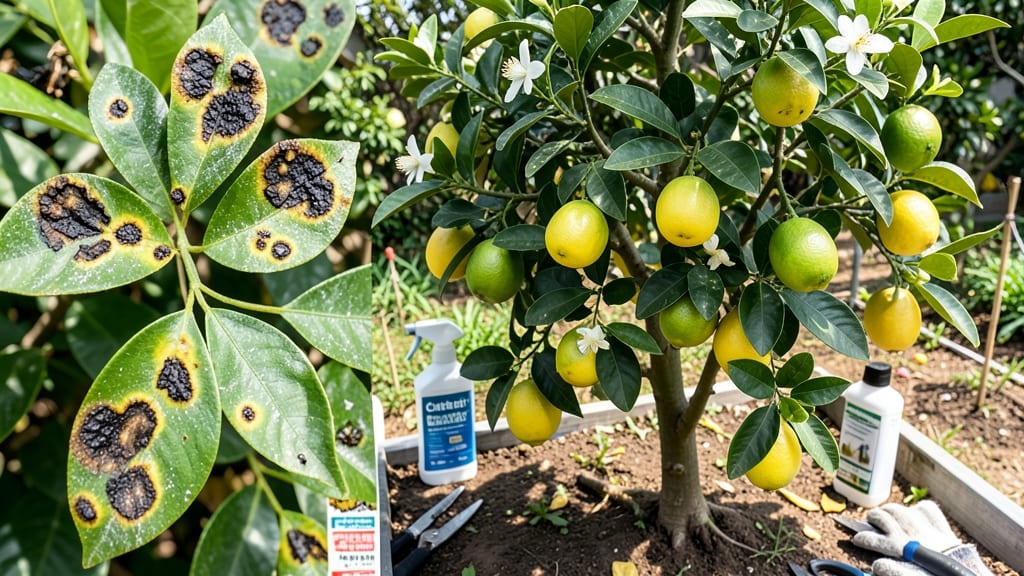
Your lemon tree’s yellow leaves or sticky stems aren’t just cosmetic—they’re SOS signals from lemon tree diseases and pests. 🌿 I’ve watched citrus canker and scale insects turn thriving trees into sad skeletons, but the good news? Most problems have fast fixes if you catch them early.
The real enemy isn’t just pests or diseases—it’s the conditions that invite them: soggy soil, crowded branches, or ignoring those first weird spots. My first lemon tree nearly died from root rot because I assumed it just needed more water.
(Spoiler: it needed less.) With the right tools—neem oil, copper spray, or even a simple pruning session—you’ll nip issues in the bud before they spread. Think of it like a health checkup for your tree: 30 minutes now saves weeks of panic later.
Works for backyard trees, container citrus, or even that potted Meyer lemon on your patio. Let’s get your tree back to producing those zesty, fragrant fruits—without the stress.
Root Causes Of Lemon Tree Struggles
Lemon trees—those vibrant, citrus-scented powerhouses—can fall victim to diseases and pests due to a mix of environmental, biological, and even human factors. Understanding why these issues arise is the first step to preventing them. Let’s break down the science behind the most common culprits.
Lemon trees thrive in specific conditions, and when those conditions shift, their defenses weaken, making them susceptible to pests and diseases.
- Temperature Extremes:
Lemon trees prefer moderate climates (60–85°F). Frost damage weakens bark, creating entry points for fungal infections like Phytophthora, while heat stress (above 95°F) can scorch leaves, reducing their ability to resist spider mites or aphids.
- Poor Drainage:
Soggy soil is a breeding ground for root rot (caused by Fusarium or Phytophthora fungi). When roots suffocate, they can’t absorb nutrients, leaving the tree vulnerable to secondary infections or pest infestations.
- Humidity & Rain Overload:
High humidity (above 70%) creates the perfect environment for fungal spores (like Citrus Canker) to germinate. Prolonged leaf wetness also encourages sooty mold, a black fungal growth that thrives on honeydew left by sap-sucking pests.
💡 Pro Tip: Monitor your tree’s microclimate—mulch properly (2–4 inches of organic mulch) to regulate soil temperature and reduce evaporation, which helps prevent stress-related vulnerabilities.
Pests and diseases don’t just appear—they exploit weaknesses. Here’s how they gain the upper hand.
- Weakened Immunity from Poor Nutrition:
Lemon trees deficient in nitrogen, zinc, or iron produce weak, yellowing leaves that attract aphids and scale insects. A lack of potassium also reduces the tree’s ability to fight off bacterial canker.
- Pest Life Cycles:
Many pests, like citrus leaf miners or mealybugs, thrive in warm, dry conditions and multiply rapidly. A single female mealybug can lay 600 eggs in her lifetime—if left unchecked, they’ll drain sap and spread viruses like Tristeza.
- Fungal & Bacterial Hitchhikers:
Diseases like Citrus Greening (HLB) are spread by Asian citrus psyllids, which inject bacteria while feeding. Once inside the tree, the bacteria disrupt nutrient transport, causing yellowing leaves and fruit drop—a death sentence for many trees.
✨ Key Insight: Many pests and diseases hitch rides on wind, water, or human activity (like contaminated tools). Quarantine new plants and sterilize pruning tools with 70% isopropyl alcohol to break the chain.
Even the most resilient lemon tree can succumb to poor care practices. Here’s how we accidentally invite trouble.
- Overwatering or Underwatering:
While underwatering stresses the tree, overwatering is far more damaging. It compacts soil, cuts off oxygen to roots, and invites root rot. A simple finger test (inserting your finger 2 inches into the soil) can reveal if it’s too wet.
- Improper Pruning:
Cutting too late in the season (after June) or using dirty tools can introduce bacterial canker. Always prune during dormancy (winter) and sterilize blades between cuts.
- Ignoring Early Signs:
Pests like citrus rust mites start as tiny specks on leaves. By the time you see silver stippling or curled leaves, the infestation is often irreversible. Weekly inspections (especially undersides of leaves) catch problems early.
🎯 Prevention Hack: Keep a plant journal to track watering, fertilizing, and pruning schedules. Consistency is the best defense against cultural mistakes.
By addressing these root causes—whether it’s adjusting your watering routine, improving air circulation, or catching pests before they spread—you’ll give your lemon tree the fighting chance it deserves. 🍋💪
Fixing Lemon Tree Troubles Fast
Now that you’ve identified the issue, it’s time to roll up your sleeves and restore your lemon tree to its healthy, fruit-bearing glory! 🌿💪 Below are practical, step-by-step solutions for common diseases and pests, along with prevention tips to keep your tree thriving long-term.
Think of this as your lemon tree’s emergency repair manual—no green thumb required!
🔥 Powdery Mildew: Scrub and Spray
Fix: 1. Prune infected branches 🔪—cut off any leaves or stems covered in white powdery spots, then dispose of them in the trash (not your compost!). This prevents spores from spreading.
- Clean up debris ⏰—remove fallen leaves and weeds around the base of the tree, as they harbor fungal spores.
- Apply neem oil or sulfur spray 🌿—mix 1 teaspoon of neem oil per quart of water with a drop of dish soap (as a natural emulsifier).
Spray early in the morning (to avoid burning leaves) and repeat every 7–10 days until the mildew disappears. 4. Improve airflow 🌬️—thin out dense foliage or space trees farther apart to reduce humidity near the leaves.
Prevention:
- Water at the base (not overhead) to keep leaves dry.
- Space trees 6–8 feet apart for better airflow.
- Avoid overhead irrigation—drip systems are your best friend!
🍳 Citrus Canker: Sterilize and Seal
Fix:
- Prune infected areas aggressively 👨🍳—cut 6 inches below any canker lesions (the sunken, oozing sores) using sterilized pruners (wipe with rubbing alcohol between cuts).
- Dispose of pruned material properly—burn or trash it do not compost—to prevent reinfection.
- Apply copper fungicide 🛡️—spray a copper-based fungicide (like Bordeaux mixture) every 2–3 weeks during wet seasons. Copper disrupts fungal growth without harming the tree.
- Sanitize tools and hands ⏰—wash pruners with bleach water (1 part bleach to 9 parts water) after each use.
Prevention:
- Avoid wounding the tree—use sharp tools for pruning to prevent tears.
- Plant in well-draining soil—waterlogged roots weaken the tree’s defenses.
- Rotate fungicides if canker persists—don’t rely on the same treatment repeatedly.
🥘 Root Rot: Save the Roots
Fix:
- Stop watering immediately 💦—let the soil dry out completely for 3–5 days to reduce fungal activity.
- Improve drainage 🏗️—amend the soil with compost or perlite to loosen heavy clay.
Consider raising the tree’s base with a mound of gravel if drainage is chronically poor. 3. Apply hydrogen peroxide (3%) 🧪—water the soil with a 1:10 dilution of 3% hydrogen peroxide to kill fungi in the roots. Repeat every 2 weeks for a month.
- Fungicide treatment 🛡️—use mycorrhizal fungi or beneficial bacteria (like Trichoderma) to outcompete the rot-causing pathogens.
Prevention:
- Water deeply but infrequently—lemon trees hate soggy feet!
- Mulch properly—use 2–3 inches of organic mulch (like wood chips) but keep it 6 inches away from the trunk to prevent rot.
- Choose the right pot—if growing in containers, ensure pots have drainage holes and use cactus/succulent mix for better aeration.
🌡️ Aphids and Scale: Soap and Oil Attack
Fix: 1. Blast them off 💦—spray the tree with a strong stream of water to dislodge aphids/scale from leaves and stems.
- Neem oil or insecticidal soap 🌿—mix 1 tablespoon of neem oil or insecticidal soap per quart of water and spray every 5–7 days until pests vanish.
- Introduce beneficial insects 🐞—release ladybugs or lacewings (available at garden centers) to eat aphids naturally.
Prevention:
- Encourage natural predators—plant marigolds or dill nearby to attract beneficial bugs.
- Inspect new plants—quarantine newly purchased trees for 2 weeks before introducing them to your garden.
- Avoid over-fertilizing—aphids love soft, nitrogen-rich new growth.
🎯 Citrus Leaf Miner: Suffocate the Larvae
Fix: 1. Handpick visible mines 👆—look for white, serpentine tunnels in leaves. Gently scrape off infested leaves and drop them in soapy water to drown the larvae.
- Apply kaolin clay or horticultural oil 🏺—spray kaolin clay (Surround WP) or horticultural oil to smother larvae and deter egg-laying. Reapply every 7–10 days.
- Use yellow sticky traps 🎯—place yellow cards coated with Tanglefoot near the tree to catch adult moths.
Prevention:
- Remove fallen leaves—larvae pupate in leaf litter, so clean up debris regularly.
- Prune for sunlight—leaf miners thrive in shaded, humid conditions.
- Spray preventive oils—apply horticultural oil in early spring before adults emerge.
✨ Mealybugs: Alcohol and Oil Combo
Fix: 1. Wipe them off with rubbing alcohol 🧴—dab 70% isopropyl alcohol on a cotton swab and kill adult mealybugs directly. Do this on a calm day so the alcohol doesn’t evaporate too fast.
- Spray systemic insecticide 💉—use imidacloprid (systemic) or neem oil for severe infestations. Follow label instructions carefully.
- Release parasitic wasps 🐝—tiny Aphytis melinus wasps hunt mealybugs without harming your tree.
Prevention:
- Inspect new plants—mealybugs hitchhike on nursery plants.
- Avoid overwatering—they love damp, hidden crevices.
- Keep trees healthy—stressed trees attract more pests!
- Test your soil 📊—use a pH test kit to ensure your lemon tree has the right balance (ideal: 6.0–7.0).
- Rotate treatments 🔄—don’t use the same pesticide/fungicide repeatedly to prevent resistance.
- Quarantine new plants 🏝️—keep them separate for 30 days before merging into your garden.
- Monitor regularly 👀—check undersides of leaves and new growth weekly for early signs of trouble.
Your lemon tree is tougher than you think—with these targeted fixes, you’ll have it back to healthy, fruiting perfection in no time. 🍋✨ And remember: prevention is the best cure! A little vigilance now saves hours of cleanup later. Happy tree-saving!
Frequently asked questions
Why do my lemon tree leaves turn yellow even when I water regularly?
Yellow leaves often signal overwatering or nutrient deficiencies. Check soil moisture—if it stays soggy for more than 24 hours, you’re likely drowning the roots. Also test for iron or nitrogen deficiency (common in alkaline soils) and adjust with chelated iron or a balanced citrus fertilizer.
Can I use the same treatment for both fungal diseases and pests?
No—fungicides (like copper or neem oil) target diseases, while insecticides (like horticultural oil or insecticidal soap) handle pests. Mixing them can harm your tree. For example, neem oil works for both, but copper fungicide won’t kill aphids. Always match the treatment to the specific problem.
How often should I inspect my lemon tree for pests?
Check your tree weekly during growing seasons (spring-fall), focusing on leaf undersides and new growth. Early detection is key—pests like scale insects or leaf miners spread rapidly. Use a 10x magnifying glass for tiny signs (like white webbing or tiny tunnels).
Is it safe to use homemade remedies like garlic spray on lemon trees?
Yes, but dilute carefully! Blend 1 clove garlic per quart of water, strain, and add a drop of dish soap. Spray on leaf undersides to deter pests like aphids. However, homemade sprays are less potent than commercial options—reapply every 3–5 days for best results. Test on a small area first.
What’s the fastest way to revive a severely stressed lemon tree?
Start with pruning dead branches (sterilize tools first!) and reducing water to prevent root rot. Apply a balanced citrus fertilizer (10-10-10) and mulch with 2 inches of organic material to retain moisture. If roots are healthy, new growth should appear in 4–6 weeks.