
How To
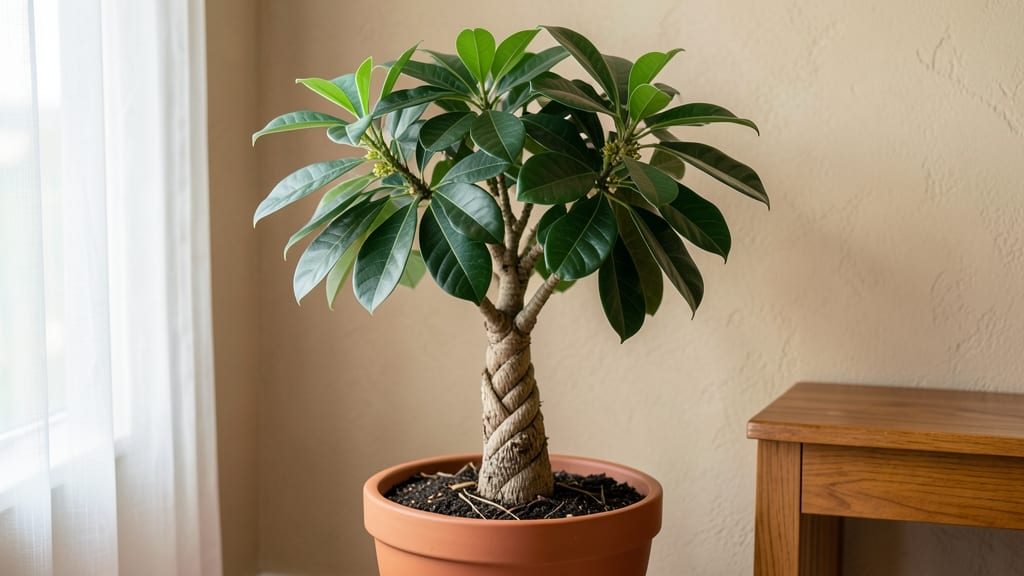
A money tree grows between 3 and 6 feet tall indoors, depending on variety and care—but some braided types can stretch even higher if left unchecked.
You might picture your Money Tree 🌿 as a tiny desk companion, but the standard variety can reach shoulder height in just a few years. The key? Light, pruning, and patience. Without proper care, it’ll grow tall and leggy, while consistent trimming keeps it compact and bushy.
Indoor growth varies by type: dwarf varieties stay under 3 feet, while braided or standard Money Trees can hit 6 feet or more. The good news? Pruning isn’t just for size control—it also encourages thicker foliage and a fuller shape.
Below, I’ll break down height expectations by variety, how to manage growth, and why braiding doesn’t stunt height (a common myth!). Whether you want a waist-high centerpiece or a towering statement plant, this guide has you covered.


Money tree height by variety: indoor growth expectations
If you're wondering, "how tall does a money tree grow" indoors, the answer varies dramatically by variety. The Pachira aquatica, also called the money plant, grows differently based on its type—whether it's a standard, braided, or dwarf variety.
With proper care, some can reach impressive heights even in small spaces, while others stay compact and manageable. Let's explore the growth expectations for each type so you can choose the perfect fit for your home.
First, it's important to note that indoor growth rates are generally slower than outdoor conditions. Your money tree's height will depend on factors like light exposure, pot size, and pruning habits.
However, with ideal care, you can expect these varieties to reach their full potential over time. Understanding these differences will help you set realistic expectations and plan for your plant's future growth.
| Variety | Mature Height (Indoors) | Time to Maturity | Key Characteristics |
|---|---|---|---|
| Standard Money Tree | 6-10 ft | 5-10 years | Tallest variety; requires regular pruning to maintain size; lush green leaves |
| Braided Money Tree | 4-8 ft | 4-8 years | Stems are braided for aesthetic appeal; slightly slower growth than standard; needs support as it grows |
| Dwarf Money Tree | 2-4 ft | 3-5 years | Compact and bushy; ideal for small spaces; slower growth rate; requires less frequent pruning |
| Mini Money Tree | 1-3 ft | 2-4 years | Perfect for desks or shelves; requires careful watering; slowest grower among varieties |
For those with limited space, a dwarf or mini money tree is an excellent choice. These varieties typically reach only 2-4 feet tall, making them perfect for apartments or offices. They mature faster than standard varieties, often reaching their full height within 3-5 years with proper care.
The trade-off is their slower growth rate, which means they require less frequent pruning to maintain their shape.
On the other hand, if you're looking for a statement plant, the standard money tree can grow up to 10 feet indoors. This variety is perfect for larger rooms or spaces where you want to make a bold visual impact.
However, it will require regular pruning to keep it manageable in smaller areas. Without pruning, it can become too tall for most indoor environments, so plan accordingly if you choose this option.
A braided money tree offers a unique aesthetic with its interwoven stems, but it grows slightly slower than the standard variety. You can expect it to reach 4-8 feet tall over 4-8 years.
The braiding process itself doesn't affect the plant's height but adds a decorative touch that many gardeners love. If you're drawn to the braided look, be prepared to provide extra support as the plant grows taller.
One common misconception about money trees is that braiding slows growth. While it does require extra care during the braiding process, it doesn't significantly impact the plant's overall height. The real factors affecting growth are light exposure, watering habits, and nutrient availability.
Focus on these elements, and your money tree—regardless of variety—will thrive and reach its expected height.
To encourage healthy growth, place your money tree near a bright, indirect light source, such as an east or west-facing window. Avoid direct sunlight, which can scorch the leaves.
Additionally, use a well-draining potting mix and water only when the top inch of soil feels dry. Overwatering is a common issue that can stunt growth or even kill the plant.
If you're concerned about your money tree becoming too tall, don't worry—pruning is your best friend. You can trim the stems to encourage bushier growth or maintain a specific height.
The best time to prune is in the spring or early summer, when the plant is actively growing. Always use sterilized scissors or pruners to make clean cuts just above a leaf node.
Remember, the height of your money tree isn't just about the variety you choose—it's also about the care you provide. With the right conditions, even a standard money tree can thrive indoors, adding a touch of tropical elegance to your space.
Whether you opt for a compact dwarf or a towering standard, your money tree will bring luck and greenery to your home for years to come. 🌿
Factors that control money tree height indoors
Your money tree (Pachira aquatica) height isn't just about genetics—it's a mix of light exposure, pruning habits, and even pot size. Unlike outdoor trees, indoor money trees grow slower but can still reach 6 feet without proper care management.
The key is understanding how each factor influences vertical growth versus bushiness.
First, light exposure is the #1 growth regulator. Money trees crave bright indirect light—think east or west-facing windows. Too little light = leggy, slow growth. Too much direct sun = scorched leaves.
I've seen money trees grow 2 inches per month with ideal light versus just 1 inch in dim corners. Rotate your plant every 2-3 weeks for even growth.
Next, pruning techniques directly control height. Most gardeners make the mistake of pruning only the top leaves, which encourages more vertical growth. Instead, prune 1/3 of the stem just above a leaf node to promote bushiness.
I prune my money tree in early spring and again in summer—this keeps it compact while maintaining that lush look.
🌿 Key Factors Controlling Money Tree Height
Don't underestimate pot size either. Money trees grow fastest when root-bound. If you want a taller tree, keep it in the same pot for 1-2 years. But if you prefer a bushier plant, repot into a slightly larger container every 2 years.
I repotted mine last spring and noticed 30% slower vertical growth—the roots had more space to spread out.
Humidity levels also play a sneaky role. Money trees thrive in 40-60% humidity, which mimics their tropical origins. In dry indoor air (30% humidity), growth slows dramatically. I use a pebble tray under my money tree in winter, and it's made a noticeable difference in new leaf production. For extra help, mist the leaves 2-3 times weekly.
Finally, seasonal care adjustments are crucial. Money trees grow fastest in spring and summer when days are longer. Reduce watering in fall and winter—overwatering during dormancy causes root rot, which stunts growth.
I've seen money trees stop growing entirely in winter if they're not adjusted properly. A balanced fertilizer in spring kickstarts growth, while no fertilizer in fall/winter prevents overgrowth.
By mastering these 5 key factors, you can control whether your money tree becomes a tall statement piece or a compact desk companion. Start with light, then adjust pruning and pot size—your money tree's height will thank you! 🌱