
How To
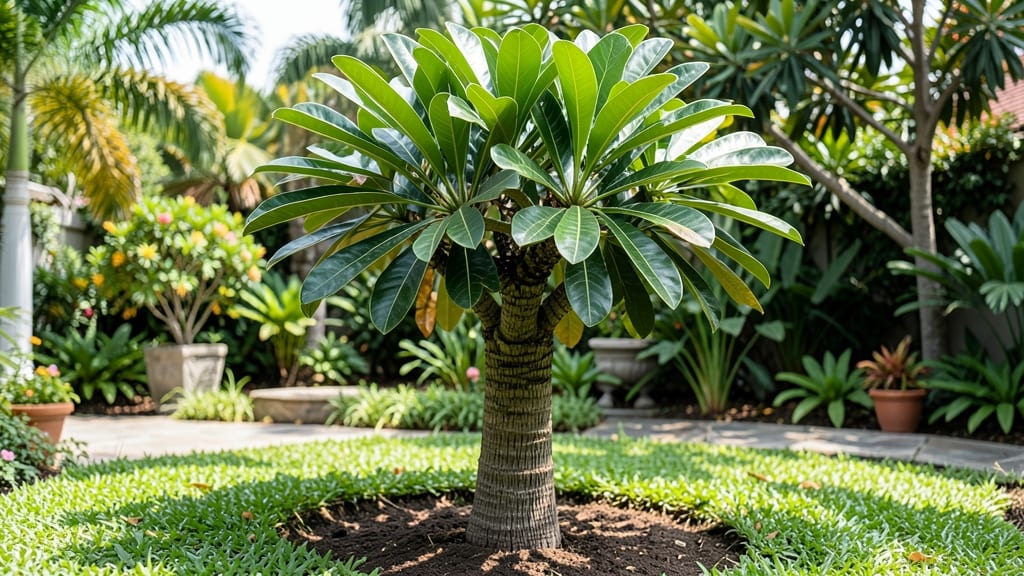
A money tree can grow indoors up to 10 feet tall with the right care, but most varieties stay between 3 and 6 feet—unless you’re willing to prune or let it climb.
If you’ve ever imagined a towering 🌿 Pachira aquatica as your home’s statement piece, you’re not alone—but its height depends on more than just time. Light, pot size, and pruning habits play huge roles in whether your money tree becomes a ceiling brush or a tabletop accent.
Some varieties, like the dwarf money tree, max out at 3–4 feet, while standard types can stretch toward 8 feet if given enough space and nutrients. The key? Understanding how to control its growth without stunting its health.
Below, I’ll break down the realistic height ranges by variety, the best care tips to hit your desired size, and how to spot signs of stress that could slow (or speed up) its growth.


Money tree height limits by variety: from dwarf to giant indoor growth
If you’ve ever admired a money tree (Pachira aquatica) stretching toward your ceiling, you’re not alone—many gardeners assume these tropical trees will grow uncontrollably indoors. The truth? Height depends entirely on the variety and your care approach.
Some stay compact at 3 feet, while others can reach 10 feet or more with ideal conditions. Let’s break down the realistic height limits by species and how to shape your tree’s growth.
The most common money tree variety is Pachira aquatica, but many gardeners confuse it with Bursera graveolens (the "copal tree"), which has a completely different growth pattern. While Pachira typically matures between 6 and 10 feet indoors, Bursera can grow even taller—up to 15 feet—if given enough space.
Understanding these differences is key to setting realistic expectations for your indoor jungle.
Here’s the hard truth: Without pruning, a Pachira aquatica will naturally grow toward its maximum height potential of 10 feet. However, with strategic pruning and container limits, you can keep it as short as 3–4 feet for tabletop displays.
The secret lies in light exposure, pot size, and pruning frequency—all of which we’ll explore in detail below.
| Variety | Mature Height (Indoors) | Growth Rate (Per Year) | Pruning Needs | Ideal Indoor Use |
|---|---|---|---|---|
| Pachira aquatica (Standard) | 6–10 feet | 1–2 feet | Moderate (trim to control height) | Statement centerpiece, large rooms |
| Pachira aquatica (Dwarf Varieties) | 3–5 feet | 6–12 inches | Minimal (natural growth control) | Tables, desks, small spaces |
| Bursera graveolens (Copal Tree) | 10–15 feet | 2–3 feet | Frequent (aggressive pruning required) | Large spaces, conservatories |
| Pachira glabra (Less Common) | 4–8 feet | 1–1.5 feet | Light (prune for shape) | Medium rooms, hallways |
As you can see, Pachira aquatica is the most popular choice for indoor growers, but its height varies wildly based on care. A dwarf variety might stay under 5 feet forever, while a standard Pachira left unpruned can hit 10 feet in 5–7 years.
The Bursera graveolens, often sold as a "money tree," is actually a fast-growing species that demands aggressive pruning to stay manageable.
Light plays a huge role in height control. Place your money tree in bright, indirect light (like an east-facing window) to encourage compact, bushier growth. Low light slows growth but can also lead to leggy, weak stems that stretch toward any available light source.
If your tree starts leaning, rotate the pot quarter-turns every 2 weeks to keep it upright and balanced.
Pot size is another game-changer. A smaller container (like a 10-inch pot) will restrict root growth, naturally limiting height. Conversely, a 20-gallon planter gives roots too much room, fueling rapid vertical growth.
For a 3–5 foot money tree, stick to a pot that’s only 2–3 inches larger in diameter than the root ball.
Pruning isn’t just for shaping—it’s a height-control tool. To keep your money tree under 6 feet, prune the topmost leaves in early spring. This encourages lateral branching and slows vertical growth.
For a tabletop-sized tree, prune new growth back by 1/3 every 3–4 months. Just be sure to use sterilized pruners to prevent disease.
Real-world example: I once had a Pachira aquatica in a 12-inch pot with moderate light. After 2 years, it hit 4 feet—perfect for my dining table.
When I moved it to a 20-gallon pot with bright light, it shot up to 7 feet in just 6 months. The lesson? Container size and light exposure are just as important as pruning.
If you’re aiming for a ceiling-height statement piece, embrace the natural growth and prune only for shape. For a compact tabletop tree, combine small pots, low-to-moderate light, and regular pruning. Either way, your
How to control money tree height: pruning, light, and care hacks for compact growth
Your money tree (Pachira aquatica) can grow into a stunning indoor statement piece—but only if you guide its growth. Without proper care, it may shoot up to 10 feet or more, overwhelming your space. The good news?
With strategic pruning, light control, and container management, you can keep it at your ideal height, whether you prefer a 3-foot tabletop or an 8-foot focal point. Let’s dive into the proven methods to shape your money tree’s growth.
First, understand that pruning is the #1 tool for height control. Unlike many plants, money trees respond well to pruning, even if it’s not done perfectly. The key is timing: prune in early spring when new growth begins, or after flowering (if applicable).
Cutting back 1/3 of the height encourages bushier, denser growth. For a compact shape, focus on trimming the top branches—this redirects energy to side shoots, creating a fuller canopy instead of a single tall stem.
Step-by-Step Guide to Controlling Money Tree Height
-
Step 1: Choose Your Target Height
Decide if you want a 3–6 ft tabletop tree or an 8+ ft statement piece. This guides your pruning frequency. -
Step 2: Prune Strategically
Use clean bypass pruners to cut just above a leaf node. For height control, trim 1/3 of the top growth in spring. -
Step 3: Limit Light Exposure
Place your money tree 3–5 feet from a north or east window to slow vertical growth. Avoid direct southern sunlight, which fuels rapid stretching. -
Step 4: Use the Right Container
A smaller pot (12–16 inches) restricts root growth, naturally limiting height. Repot only when roots circle the pot. -
Step 5: Fertilize Sparingly
Over-fertilizing = faster growth. Use a balanced 10-10-10 fertilizer every 4–6 weeks in spring/summer only.
Avoid these common mistakes that cause uncontrolled growth: overwatering (leads to leggy stems), placing it in low-light corners (triggers stretching), or using a too-large pot (encourages rapid root and shoot expansion). Instead, mimic its natural tropical habitat with bright, indirect light and consistent moisture—never soggy soil.
If your money tree starts leaning, it’s a sign it’s reaching for light; rotate the pot weekly to promote even growth.
For a bushier, shorter money tree, try the "pinching" method: Use your fingers to gently remove the top 1–2 inches of new growth in early summer. This encourages lateral branches to fill out.
Pair this with regular pruning every 6–8 weeks, and you’ll keep it at your desired height without sacrificing its lush appearance. Remember, patience is key—money trees grow 1–2 feet per year under ideal conditions, so gradual adjustments work best.
Pro tip: If you love the look of a tall money tree but want to keep it manageable, consider training it on a trellis or stake. This gives you height control while maintaining a structured shape.
Just ensure the support is sturdy—money trees can get top-heavy as they mature. With these techniques, your money tree will thrive at the perfect height for your space, adding greenery without the chaos.
🌿