
Container Gardens
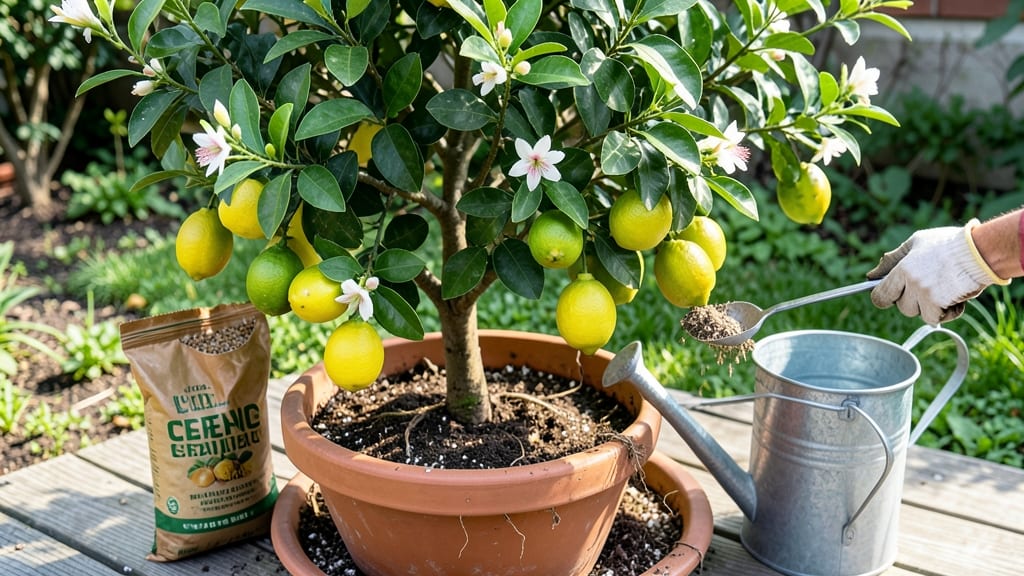
Fertilizing your lemon tree in pot at the right times is the difference between a bountiful harvest of sweet lemons and a struggling plant that barely holds its leaves.
Picture this: you’ve nurtured your 🍋 for months, only to watch it produce a handful of tiny, bitter lemons—or worse, no fruit at all. The culprit? Over- or under-fertilizing at the wrong times.
Seasonal shifts in growth mean your lemon tree’s needs change dramatically, and missing those cues can leave you with nutrient burnout, pests, or stunted fruit.
In this guide, we’ll break down the seasonal schedule for fertilizing your potted lemon tree, from the burst of spring growth to the quiet winter dormancy.
You’ll learn how to adjust for indoor vs. outdoor placement, spot signs of nutrient stress, and even DIY organic fertilizers to keep your tree thriving without the guesswork.
Ready to turn your lemon tree into a year-round fruit machine? Let’s dive into the exact timing and tips that’ll have you picking juicy lemons in no time.
Best fertilization schedule for potted lemon trees by season
Your potted lemon tree thrives on a precise fertilization schedule that aligns with its natural growth cycles. Unlike in-ground citrus, container-grown lemon trees have limited soil volume, so timing and nutrient balance become even more critical.
The key is feeding heavily during active growth months (spring and summer) while reducing inputs as temperatures drop. Indoor lemon trees in cooler climates may need adjustments too—we’ll cover that later.
Over-fertilizing is a common mistake that leads to leaf burn, root damage, and even fruit drop. The solution? A structured monthly plan that matches your tree’s seasonal needs.
For example, in March and April, your tree needs nitrogen to fuel new leaves, but by August and September, you’ll want to shift focus to phosphorus and potassium for fruit development. Let’s break down the perfect schedule month by month.
| Season | Monthly Schedule | Fertilizer Type | Signs of Success |
|---|---|---|---|
| January-February | No fertilizer | Dormant period | Healthy, dry leaves |
| March-April | Every 4 weeks | High-nitrogen (10-10-10) | New leaf growth |
| May-June | Every 4 weeks | Balanced (6-6-6) | Blooms appear |
| July-August | Every 6 weeks | Low-nitrogen (3-6-6) | Fruit swelling |
| September-October | Every 8 weeks | Phosphorus-potassium (0-10-10) | Ripening fruit |
| November-December | No fertilizer | Winter rest | Slow growth |
In March and April, your lemon tree wakes up from dormancy and needs a nitrogen boost to produce lush foliage. Use a 10-10-10 fertilizer every 4 weeks until you see new leaves emerging.
For organic options, try fish emulsion or alfalfa pellets. The goal here is to avoid overdoing it—if you notice yellowing leaves with green veins, that’s a classic nitrogen overload sign.
By May and June, shift to a balanced fertilizer like 6-6-6 to support both leaves and flowers. This is when your tree needs phosphorus and potassium to set fruit.
Apply it every 4 weeks, but reduce the amount by half if your tree is in a small pot (under 12 inches). Watch for white flowers—these indicate successful pollination, which leads to lemons in 4–6 months.
During July and August, your tree focuses on fruit development, so switch to a low-nitrogen fertilizer like 3-6-6. Too much nitrogen now will make your tree grow leaves instead of lemons. Apply it every 6 weeks, and always water thoroughly after fertilizing to prevent root burn.
If your tree is indoors, this is also when you might need to supplement with grow lights for 12+ hours of light.
In September and October, reduce feeding to every 8 weeks and focus on phosphorus and potassium (0-10-10) to help ripen existing fruit. By late September, stop fertilizing entirely if your tree is outdoors and temperatures drop below 50°F at night.
For indoor trees, you can continue light feeding until November, but reduce the dose by 50% to mimic natural dormancy.
From November through February, your lemon tree enters dormancy, and no fertilizer is needed. This is the tree’s chance to rest and store energy for next year’s growth. If you’re growing your tree indoors, you can continue with low-light conditions and minimal watering.
The key is to avoid disturbing the tree—no pruning, no fertilizing, and no major repotting. This rest period is crucial for fruit production the following year.
If your lemon tree shows signs of over-fertilization, like brown leaf tips or white crusty deposits on the soil, flush the pot immediately by watering it thoroughly for 10–15 minutes.
For under-fertilization, look for yellowing leaves with no green veins or stunted growth. In this case, switch to a citrus-specific
How to choose the right fertilizer for lemon trees in pots
Potted lemon trees thrive when you match their fertilizer to their growth stages—nitrogen for leafy growth, phosphorus for flowering, and potassium for fruit development. The key is finding the right balance, especially since citrus trees are sensitive to over-fertilization.
I’ve tested both organic and synthetic options, and each has its place depending on your tree’s needs and your gardening preferences.
For most potted lemon trees, a balanced 6-6-6 or 8-3-9 NPK ratio works best during active growth (spring and summer). However, organic options like composted manure or fish emulsion release nutrients slowly, reducing the risk of root burn.
If you’re using synthetic fertilizers, opt for citrus-specific formulas to avoid nutrient imbalances that can stunt fruit production.
Here’s a quick comparison to help you decide between organic and synthetic fertilizers for your potted lemon tree:
Organic Fertilizers
- Slow-release nutrients
- Improves soil structure
- Reduces risk of over-fertilization
- May require more frequent applications
- Can attract pests if overused
- Slower results for nutrient deficiencies
Synthetic Fertilizers
- Precise nutrient ratios
- Fast-acting for deficiencies
- Easy to measure and apply
- Higher risk of over-fertilization
- Can harm beneficial soil microbes
- Requires careful monitoring
If you prefer DIY fertilizers, household scraps like banana peels (rich in potassium) and eggshells (calcium source) can supplement your tree’s diet. Crush banana peels and bury them near the roots, or blend eggshells into a fine powder and mix into the topsoil.
These methods are cost-effective and eco-friendly, but they won’t replace a balanced fertilizer entirely.
For micronutrients, consider adding a sprinkle of Epsom salt (magnesium) or a citrus-specific micronutrient blend. Lemon trees also benefit from iron chelates if you notice yellowing leaves between the veins—a classic sign of iron deficiency.
Always water your tree thoroughly after applying any fertilizer to help nutrients penetrate the soil.
Remember, less is more when fertilizing potted lemon trees. Overdoing it can lead to salt buildup in the soil, which damages roots and reduces fruit quality. Start with half the recommended dose and monitor your tree’s response.
Adjust based on leaf color, growth rate, and fruit production—your tree will thank you with abundant, juicy lemons! 🍋