
Watering
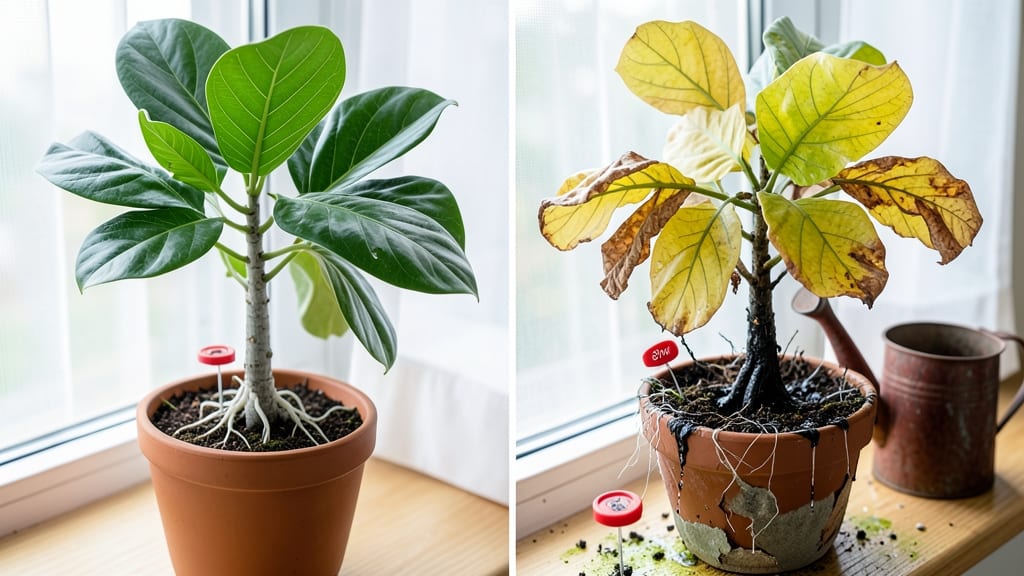
What does an overwatered ficus tree look like? That drooping, yellowing mess isn’t just a bad hair day—it’s a cry for help. 🌱 I’ve seen this exact look after my own overwatering mishap, where soggy roots turned my once-vibrant plant into a sad, wilted shadow. The key difference from underwatering? Yellowing starts at the bottom and spreads upward, while leaves stay soft and mushy to the touch. The real giveaway is the soil: it smells sour, feels compacted, and stays clammy for days after watering. Root rot sets in fast, cutting off oxygen to the roots. My ficus went from lush to lifeless in just two weeks—don’t let that happen to yours. The fix starts with proper drainage and a strict watering schedule, but we’ll get to that. What you’ll end up with is a plant that perks up within days of adjusting care. New growth appears firm and green, and the soil returns to that perfect crumbly texture. Trust me, your ficus can bounce back—if you catch it early. Here’s the game-changer: stick your finger in the soil before watering. If the top inch feels damp, wait another day. That simple check saved my plant (and countless others). Let’s turn this around!
Why it happens
Ficus trees—like the popular Ficus elastica (rubber plant) or Ficus benjamina—are resilient, but they’re not drought-proof. When they get too much water, their roots and foliage send distress signals faster than you might expect.
Let’s break down the root causes (pun intended) of overwatering and why your ficus might be drowning instead of thriving.
🌱 Poor Drainage in the Soil or Pot
Ficus trees need well-draining soil to avoid soggy roots. When planted in heavy clay or compacted soil—or when their pots lack drainage holes—the water pools at the root zone instead of draining away. Over time, this creates anaerobic conditions (low oxygen), where roots suffocate and can’t absorb nutrients efficiently.
- Science behind it: Roots require oxygen for cellular respiration. When soil stays waterlogged, oxygen levels drop, and harmful anaerobic bacteria thrive, producing toxins like ethanol and acetaldehyde that poison the roots.
- Actionable fix: Use a fast-draining potting mix (e.g., 60% peat or coconut coir, 30% perlite/pumice, 10% orchid bark). For indoor ficus, ensure pots have drainage holes and elevate them on saucers to prevent water logging.
- Pro tip: 💡 Test drainage by filling the pot with water—if it doesn’t drain within 10–15 minutes, your soil mix is too dense.
💧 Watering on a Schedule, Not by Need
Many plant owners fall into the trap of watering every Tuesday or Thursday, assuming consistency is key. But ficus trees are metabolic—they drink water based on transpiration rates (how fast they lose moisture through leaves), temperature, humidity, and pot size. Overwatering happens when you ignore these variables.
- Science behind it: Excess water in the soil displaces oxygen in the root zone, triggering hypoxia (oxygen deprivation). Roots switch to fermentation for energy, producing ethanol—a byproduct toxic to the plant.
- Actionable fix: Use the finger test: Stick your index finger 1–2 inches into the soil. If it’s damp, wait. If it’s bone-dry, water thoroughly until it drains from the bottom. Adjust frequency based on:
- 🌡️ Season: Water less in winter (slow growth = less thirst).
- 🏡 Location: South-facing windows or dry air? Water more often.
- 🏺 Pot size: Smaller pots dry out faster.
- Pro tip: ✨ Try a moisture meter for precision—no guesswork!
🌧️ Environmental Stressors Amplifying the Problem
Ficus trees don’t just drown from your watering habits—humidity, temperature swings, and poor airflow can turn a "normal" watering routine into a death sentence. Here’s how:
| Factor | How It Worsens Overwatering | Solution |
|---|---|---|
| High Humidity (e.g., bathrooms, kitchens) | Slows evaporation, keeping soil wet longer. Roots rot faster in stagnant moisture. | Water less frequently and use a dehumidifier if needed. |
| Cold Drafts (near AC vents, drafty windows) | Chills roots, reducing their ability to absorb water efficiently. Leads to edema (water blisters on leaves). | Keep ficus in stable temps (65–80°F) and away from vents. |
| Stagnant Air (no airflow, crowded spaces) | Traps moisture around leaves, increasing fungal/bacterial risks (e.g., Phytophthora root rot). | Place near a fan or open windows for gentle airflow. |
Pro tip: 🌡️ Monitor your home’s relative humidity—ideal for ficus is 40–60%. Use a hygrometer if unsure.
🌿 Choosing the Wrong Pot Material
Not all pots are created equal. Terracotta breathes, plastic suffocates, and ceramic can trap moisture like a sponge. The material you pick directly impacts how quickly (or slowly) water evaporates from the soil.
- Science behind it:
- Terracotta: Porous, allows transpiration (water evaporates through pot walls). Reduces risk of overwatering.
- Plastic: Impermeable—water stays trapped, mimicking a greenhouse effect that keeps soil damp.
- Glazed ceramic: Non-porous, similar to plastic in moisture retention.
- Actionable fix: Opt for unglazed terracotta or fabric grow bags (which wick moisture away). If using plastic, water less often and ensure multiple drainage holes.
- Pro tip: 🔥 Repot if your ficus is in a plastic container—terracotta can save its roots!
Reviving Your Ficus Tree: Step-by-Step Fixes
Overwatering can feel like a death sentence for your ficus, but don’t panic—many trees bounce back with the right care. Below, we’ll tackle the most common signs of overwatering and match them with practical, actionable fixes to nurse your ficus back to health.
Plus, we’ll share prevention tips to keep your tree thriving long-term.
If your ficus has mushy, brown roots or a foul smell when you check the soil, root rot is likely the culprit. This is the most critical issue and requires immediate attention.
🔥 Step 1: Remove the Tree from Its Pot
Gently take the ficus out of its container and shake off excess soil to inspect the roots. Healthy roots are firm and white or tan, while rotten roots are dark, mushy, and may crumble.
🍳 Step 2: Trim the Damaged Roots
Use sterilized pruning shears (or clean scissors) to cut away any black, soft, or slimy roots. Focus on the worst-affected areas, but don’t overdo it—leave enough healthy roots to support the plant.
👨🍳 Step 3: Repot in Fresh, Well-Draining Soil
- Choose a pot with drainage holes (if it doesn’t have them, drill some).
- Use a lightweight, fast-draining potting mix designed for ficus or tropical plants.
Avoid heavy garden soil, which retains too much moisture. - Add a layer of perlite or orchid bark (about 20%) to improve aeration.
🥘 Step 4: Let It Dry Out Before Watering Again
After repotting, wait 5–7 days before watering. This gives the roots time to heal and prevents further rot. Only water when the top 1–2 inches of soil are completely dry.
⏰ Prevention Tip:
💡 Test the soil moisture with your finger before watering. If it’s still damp, wait. Overwatering is the #1 cause of root rot—when in doubt, don’t water!
If your ficus has yellow leaves (especially lower ones) or wilting foliage, it’s likely suffering from overwatering stress or compaction. These issues are less severe than root rot but still need attention.
🔥 Step 1: Stop Watering Immediately
Cut off all water until the soil dries out. This can take 3–5 days, depending on humidity and pot size.
🍳 Step 2: Check Drainage & Pot Size
- If your pot has no drainage holes, repot into one that does.
- If the pot is too large, the excess soil stays wet too long.
Choose a container that’s only 1–2 inches larger in diameter than the root ball.
👨🍳 Step 3: Improve Soil Aeration
If the soil feels compacted or clay-heavy, mix in perlite, sand, or coconut coir to loosen it up. This helps water drain faster and roots breathe.
🥘 Step 4: Water Only When Necessary
- Stick your finger 1–2 inches into the soil—if it’s dry, water thoroughly until it drains from the bottom.
- Empty the saucer after watering to prevent soggy roots.
- Water less in winter (ficus growth slows down, so it needs less moisture).
⏰ Prevention Tip:
💡 Group plants with similar water needs and water them together. Ficus trees prefer moderate moisture—think of a sponge that’s damp but not dripping.
Ficus trees are tropical and hate cold drafts or dry air, which can worsen water stress.
🔥 Step 1: Move to a Warmer, Humid Spot
- Keep your ficus away from AC vents, windows, or doors that open to cold air.
- Ideal temps: 65–80°F (18–27°C).
- If your home is dry (common with heaters or AC), increase humidity with:
- A humidifier near the plant.
- A pebble tray (fill a tray with water and pebbles, place the pot on top).
- Misting (but avoid wetting the leaves too much—this can cause fungal issues).
🍳 Step 2: Prune Damaged Leaves
If leaves are yellow, brown, or crispy, trim them off with clean shears. This helps the plant focus energy on new growth.
👨🍳 Step 3: Fertilize Lightly (If Needed)
If your ficus is struggling, it might be nutrient-deficient from overwatering. Use a balanced, water-soluble fertilizer (like 10-10-10) diluted to half strength every 4–6 weeks in spring/summer. Avoid fertilizing in fall/winter.
⏰ Prevention Tip:
✨ Rotate your ficus every few months so all sides get even light. Uneven light can weaken the tree and make it more susceptible to stress.
If your ficus is severely drooping, losing leaves fast, or smells bad, it may need intensive recovery care:
- Propagate a cutting (if the main plant is beyond saving):
- Take a 4–6 inch cutting from a healthy stem.
- Dip the end in rooting hormone (optional but helpful).
- Plant in sphagnum moss or perlite and keep moist (not soggy).
- Place in bright, indirect light and wait for roots to form (2–4 weeks).
- Mist lightly daily to help the plant recover while you wait for new growth.
- Be patient—some ficus trees take weeks to months to bounce back after severe overwatering.
Final Thought: Reviving an overwatered ficus is all about draining excess moisture, improving airflow, and adjusting your watering routine. With these steps, your tree should start showing signs of recovery in 2–4 weeks—new leaves, firmer stems, and a happier, healthier look! 🌿✨
Frequently asked questions about overwatered ficus trees
How can I tell if my ficus has root rot from overwatering?
Check the roots—healthy ones are firm and light-colored, while rotten roots are mushy, dark brown/black, and may smell foul. If you see these signs, trim away the bad roots immediately and repot in fresh, well-draining soil.
Why do the leaves turn yellow first at the bottom?
Yellowing at the base happens because older leaves get less energy from the roots when they're waterlogged. The roots can't absorb nutrients properly, so the plant sheds these leaves first. This is your ficus's way of conserving energy!
Can I save my ficus if the stems feel soft and squishy?
Yes, but act fast! Soft stems mean severe overwatering. Stop watering immediately, check for root rot, and repot in fresh soil. If the damage is extreme, you may need to propagate healthy cuttings while saving the main plant.
How often should I water my ficus after fixing overwatering?
Wait until the top 1-2 inches of soil are completely dry before watering again. In summer, this might be every 7-10 days, while winter care could stretch to every 2-3 weeks. Always use the finger test!
What's the fastest way to improve drainage for my ficus?
Add perlite or orchid bark (20% of your potting mix) and ensure your pot has drainage holes. For urgent fixes, place your pot on a bed of pebbles to elevate it and improve airflow to the roots.