
Watering
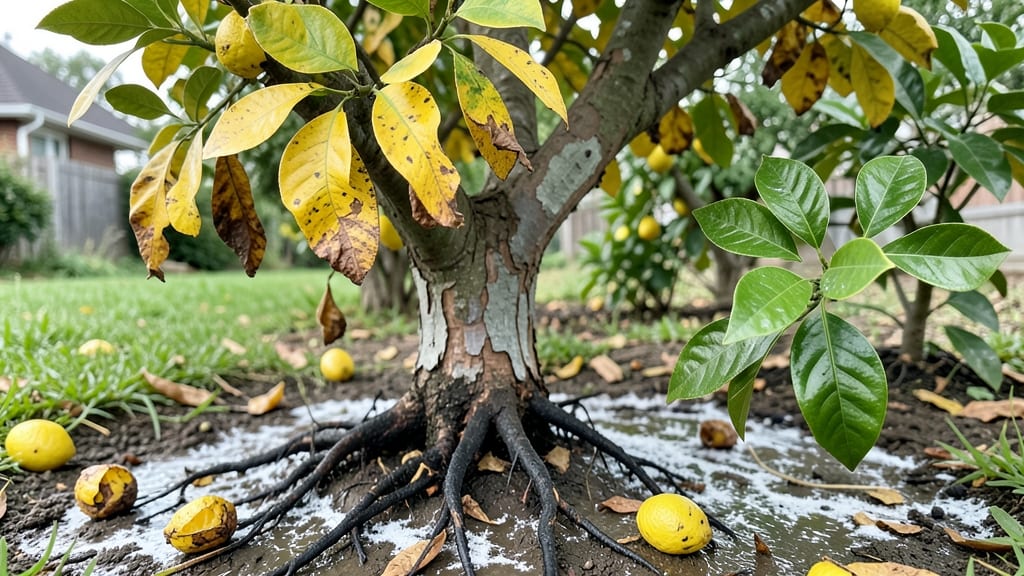
What does an overwatered citrus tree look like? It starts with yellow leaves that feel soft and mushy to the touch—like soggy lettuce. 🌱 I’ve seen this happen when well-meaning gardeners water on a schedule instead of checking soil moisture. The roots suffocate, turning brown and smelly, while the canopy droops even when the soil looks damp. The real giveaway? Leaves that yellow from the bottom up and fall off easily. Worse, the soil stays clumpy and smells like wet socks. My first citrus tree nearly died this way—until I stopped watering until the top 2 inches felt dry. What you’ll end up with is a tree that recovers within weeks if you adjust watering and improve drainage. Cut back to watering only when the soil is bone-dry 3 inches down, and use pots with drainage holes if growing in containers. This works for lemons, limes, and oranges alike—just don’t wait until the roots rot. Here’s how to fix it before it’s too late.
Root Causes of Overwatering
Overwatering a citrus tree isn’t just about giving it too much water—it’s a cascade of environmental, soil, and human factors working together. Understanding these root causes helps you adjust your care routine before the damage becomes irreversible.
Let’s break down the science behind why your citrus tree might be drowning in its own pot.
Citrus trees thrive in well-draining soil because their roots are sensitive to waterlogged conditions. When drainage fails, excess water pools around the roots, cutting off oxygen and triggering anaerobic conditions—a silent killer for plants.
- Compacted or clay-heavy soil holds water like a sponge, preventing it from draining away. Citrus trees prefer sandy loam or loamy soil with a mix of organic matter (like perlite or compost) to create air pockets. - Containers without drainage holes trap water, turning the pot into a swamp.
Even if you water lightly, the roots suffocate because they can’t "breathe." - Hardpan layers (dense soil layers beneath the surface) act as a barrier, forcing water to pool above them.
Actionable fix: Amend heavy soil with coarse sand, perlite, or pumice (20-30% by volume). If potted, always use containers with drainage holes and elevate them on saucers or stands to prevent water from sitting at the bottom.
Even with good drainage, watering too frequently or in large volumes overwhelms the roots. Citrus trees are drought-tolerant once established—they’d rather be underwatered than overwatered.
- No "set schedule" works for all climates. Citrus trees need water when the top 2-3 inches of soil are dry (stick your finger in to test!).
In hot, dry climates, this might mean watering every 3-5 days; in humid or rainy seasons, once a week or less may suffice. - Automatic irrigation systems (like drip lines or timers) can be miscalibrated, delivering too much water per cycle, especially if the soil is already moist. - Watering at the wrong time (e.g., late afternoon or evening) increases evaporation and encourages fungal growth, which weakens roots.
Actionable fix: Use the "finger test" before watering. If the soil feels damp, wait. For potted citrus, water deeply but infrequently—until water runs out the drainage holes. Consider a moisture meter for accuracy.
Young citrus trees have shallow, delicate root systems that can’t handle excess water. Unlike mature trees with deep roots, they lack the resilience to recover quickly from waterlogging.
- Newly planted trees take 6-12 months to establish a strong root network.
During this time, their roots are highly susceptible to rot if overwatered. - Transplant shock weakens roots temporarily, making them more vulnerable to phytoftora root rot (a fungal disease thriving in soggy conditions). - Repotted citrus trees (even if mature) experience root disturbance, slowing their ability to absorb water efficiently.
Actionable fix: For young trees, reduce watering by 50% for the first 2 months after planting. Use root stimulator (like mycorrhizal fungi) to encourage faster root growth. If repotting, water lightly for 10 days to let roots recover.
Citrus trees evolved in Mediterranean climates—they love sun, warmth, and dry air. But when humidity spikes or temperatures drop, the same watering routine can become deadly.
- High humidity (above 70%) slows evaporation, keeping soil wet longer. In tropical or coastal areas, this means roots stay saturated for days, inviting rot. - Cold snaps or frost reduce a tree’s metabolic rate, making it less efficient at processing water.
Overwatering in these conditions drowns the roots instead of hydrating them. - Shade without airflow (e.g., under dense foliage or near walls) creates a microclimate where moisture lingers, promoting fungal growth.
Actionable fix: Adjust watering based on weather forecasts. In humid climates, water in the morning to allow soil to dry faster. If temperatures drop below 50°F (10°C), reduce watering by 30-50% to prevent shock.
The container your citrus tree lives in plays a huge role in water dynamics. A pot that’s too small or made of the wrong material can turn watering into a death sentence.
- Small pots dry out faster, tempting you to water too often—but the roots have nowhere to expand, leading to root binding (where roots circle the pot and suffocate).
- Terracotta pots dry out quickly but can crack in freezing temps, allowing water to seep in unpredictably. Plastic pots retain moisture longer, increasing overwatering risks if not monitored.
- No mulch layer in pots means water evaporates directly from the soil surface, but the roots below stay waterlogged.
Actionable fix: Choose pots 10-20% larger in diameter than the root ball (but not too big—this encourages overwatering). Use mulch (like bark or straw) on top of potting mix to slow evaporation. If using terracotta, move pots indoors in winter to prevent cracks.
When roots sit in wet conditions for too long, pathogens move in.
Two of the most common culprits are: - Phytophthora root rot (a water mold) – Thrives in anaerobic, waterlogged soil, causing roots to turn brown and mushy. - Pythium – Another fungus that blocks water uptake, leading to wilting even when the soil is wet.
These infections spread rapidly in overwatered conditions, often going unnoticed until the tree’s leaves yellow and drop.
Actionable fix: If you suspect root rot, stop watering immediately and let the soil dry out completely. For severe cases, repot in fresh, sterile soil and treat with copper fungicide. Avoid wetting foliage when watering to prevent spore spread.
Sometimes, overwatering is purely a case of misreading the plant’s signals. Citrus trees don’t "ask" for help—they show signs, and many gardeners miss them.
- Yellowing leaves (especially lower ones) are often misdiagnosed as nutrient deficiency when they’re actually root suffocation.
- Drooping canopy can mean both underwatering and overwatering—but if the soil is soggy, it’s the latter.
- Mushy stems or blackened roots are late-stage warnings that the tree has been drowning for weeks.
Actionable fix: Check the soil before watering—don’t guess. If leaves feel slimy or roots smell rotten, it’s too late for half-measures. Act fast with pruning dead roots and adjusting care.
Pro Tip: 🌡️ Weigh your pot! A dry pot feels light; a wet one feels heavy. This instant feedback helps you track watering needs without digging.
Revive Your Citrus Tree Step by Step
Overwatering can feel like a silent killer for citrus trees—until it’s too late. But don’t worry! With the right approach, you can nurse your tree back to health and prevent future waterlogging.
Below, we’ll break down cause-specific fixes tailored to your citrus tree’s symptoms, plus pro tips to keep it thriving.
Yellowing leaves are often the first sign of overwatering, but they can also indicate nutrient deficiencies or poor drainage. Here’s how to tackle them:
1️⃣ Adjust Watering Immediately
- Stop watering for 3–5 days to let the soil dry out.
Check moisture by sticking your finger 2–3 inches deep—if it’s damp, wait longer. - Water deeply but less often: Once the top 2–3 inches of soil are dry, water thoroughly until it drains from the bottom.
Avoid shallow, frequent watering. - Use the "squeeze test": Grab a handful of soil—if it forms a tight clump, it’s too wet. If it crumbles easily, it’s ready for water.
2️⃣ Improve Drainage
- Aerate compacted soil: Loosen the top 6–8 inches of soil around the tree with a garden fork to help roots breathe.
- Add organic matter: Mix in compost or aged manure (1–2 inches) to improve soil structure and drainage.
Avoid fresh manure—it can burn roots. - Raise the tree (if needed): If your tree sits in a low spot where water pools, consider planting it on a mound or raised bed next time.
3️⃣ Fertilize for Recovery
Overwatering leaches nutrients, so give your tree a boost:
- Use a balanced citrus fertilizer (e.g., 6-6-6 or 8-3-9) with micronutrients like iron and zinc to prevent chlorosis (yellowing).
- Apply a slow-release fertilizer in early spring and mid-summer to avoid overfeeding, which can worsen root stress.
- Try a foliar spray: A liquid iron supplement (like Iron Chelate) can help restore green color quickly.
💡 Pro Tip:
If yellowing persists, test your soil’s pH (ideal: 6.0–7.0). Overwatering can make soil too acidic—lime can help neutralize it.
A wilting or drooping citrus tree is a red flag for root rot or oxygen deprivation. Act fast to save it!
1️⃣ Check for Root Rot
- Gently inspect roots (if possible): Healthy roots are white or light tan; mushy, black, or smelly roots mean rot.
- Trim affected roots with sterilized pruners if you can access them. Healthy roots should be firm and fibrous.
2️⃣ Repot or Transplant (If Necessary)
- For container-grown trees: Remove the tree, trim rotten roots, and repot in fresh, well-draining soil (cactus/succulent mix works well).
- For in-ground trees: Dig a hole around the base to aerate roots, then backfill with a 50/50 mix of native soil and perlite/pumice.
3️⃣ Adjust Watering Forever
- Water only when the top 3–4 inches of soil are bone-dry. Citrus trees are drought-tolerant—better to underwater slightly than overdo it.
- Use a moisture meter to avoid guesswork. Aim for 40–60% moisture in the root zone.
4️⃣ Mulch Correctly
- Apply 2–3 inches of organic mulch (straw, wood chips) around the base, but keep it 3–4 inches away from the trunk to prevent rot.
- Mulch helps regulate soil temperature and reduce evaporation, but too much can suffocate roots.
⚠️ Warning:
If your tree is severely drooping and roots are 50% rotten, it may not recover. Consider propagating from healthy branches if the tree is young.
If roots are soft, black, and smelly, root rot has set in. This is critical—act now!
1️⃣ Emergency Root Pruning
- Remove the tree from the pot or dig it up carefully.
- Trim all mushy, black roots with sterilized shears, leaving only firm, white roots.
- Soak roots in a fungicide solution (like copper fungicide or hydrogen peroxide 3%) for 10 minutes to kill pathogens.
2️⃣ Repot in Sterile, Fast-Draining Soil
- Use a new pot (if container-grown) or a freshly amended hole (if in-ground).
- Mix 60% cactus/succulent soil + 30% perlite/pumice + 10% compost.
- Water lightly after repotting to avoid shocking the roots.
3️⃣ Adjust Care Post-Rot
- No watering for 5–7 days to let roots recover.
- Move to a sunnier spot (citrus needs 6+ hours of sun/day).
- Avoid fertilizing for 4–6 weeks—stressed roots can’t absorb nutrients yet.
🔥 Pro Tip:
If repotting isn’t an option, dig a trench around the tree, fill it with perlite or gravel, and backfill with amended soil to improve drainage.
Once your tree is on the mend, keep these habits to avoid overwatering:
✅ Water deeply but infrequently—citrus trees store water in their trunks and roots. ✅ Use drip irrigation or soaker hoses to deliver water directly to the root zone (avoids leaf wetness). ✅ Plant in well-draining soil—amend clay soil with sand, perlite, or gypsum. ✅ Choose the right pot—if container-grown, ensure it has drainage holes and isn’t too large (root-bound trees dry out faster). ✅ Monitor weather—adjust watering during rainy seasons or high humidity (citrus needs less water then). ✅ Prune for airflow—thin out dense foliage to reduce humidity around the tree.
Final Thought: Overwatering is reversible, but prevention is the best cure. With these fixes, your citrus tree should bounce back—and you’ll gain the confidence to keep it happy for years to come! 🍋💚
Frequently asked questions
What's the first sign my citrus tree is overwatered?
Look for yellowing leaves starting at the bottom—they’ll feel soft and mushy, like soggy lettuce. The leaves may also drop easily when touched, and the soil will stay clumpy even days after watering. This happens because roots suffocate from excess moisture.
Can I save a citrus tree with black, smelly roots?
Yes, but act fast! Trim all mushy, black roots and repot in sterile, fast-draining soil (60% cactus mix + 30% perlite). Let the soil dry completely before watering again. For severe cases, soak healthy roots in copper fungicide for 10 minutes to kill pathogens.
Why does my citrus tree droop after watering?
Drooping after watering usually means root rot or oxygen deprivation. If the soil stays soggy, roots can’t absorb water properly. Wait until the top 3-4 inches of soil are bone-dry before watering again. Use a moisture meter to avoid guesswork—aim for 40-60% moisture.
How often should I water my potted citrus tree?
Water when the top 2-3 inches of soil are dry—typically every 5-7 days in summer, but adjust for humidity. Weigh your pot: a dry pot feels light, while a wet one feels heavy. Never let water sit in saucers for more than 30 minutes to prevent root rot.
Will overwatering kill my citrus tree quickly?
Not immediately, but chronic overwatering leads to root rot within 2-4 weeks. The tree may survive months with yellow leaves, but once roots turn black and mushy, recovery becomes difficult. Prevention is key—always check soil moisture before watering!