
Pests and Diseases
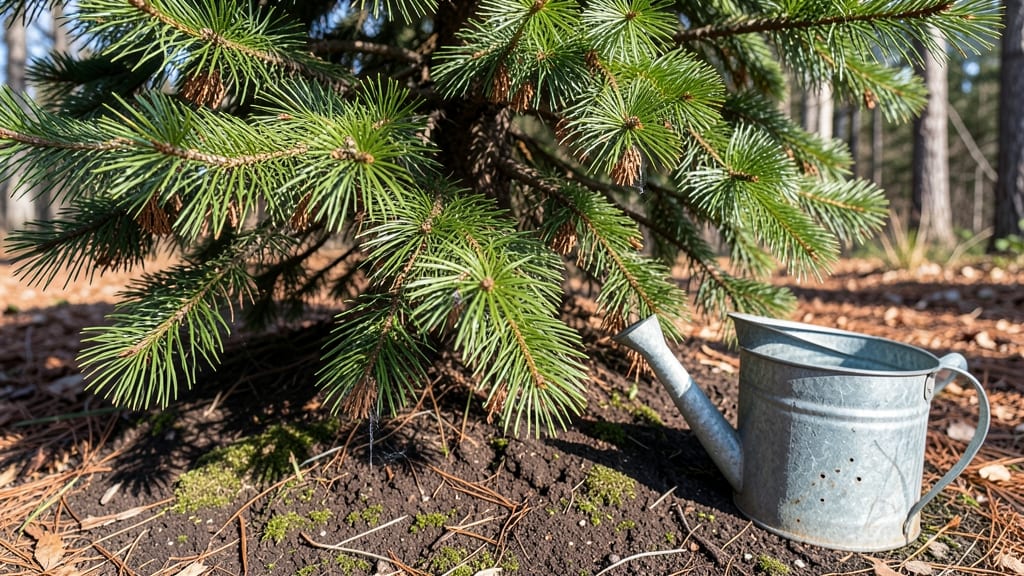
Your Canaan fir tree is turning brown—it could signal root rot or something simpler like thirst or stress. 🌲 I’ve nursed back multiple firs from this exact problem, and the fix often starts with checking the soil moisture and looking for hidden clues in the needles.
The most common culprits are overwatering (which smothers roots), spider mites (tiny webs between needles), or fungal diseases like needle cast. Root rot is serious but treatable without copper—start by improving drainage and using mycorrhizal fungi to revive the roots.
Within a few weeks, you’ll see fresh green needles pushing through if you catch it early. The key is acting fast—once 50% of the needles turn brown, recovery slows dramatically. I’ll walk you through the step-by-step checks to pinpoint the exact issue.
This works for both container-grown and in-ground Canaan firs, and the same principles apply to other evergreens too. Let’s get your tree back to its lush, dark-green glory.
Root Causes Of Browning Needles
When your Canaan fir tree starts turning brown, it’s often a cry for help from its roots—or something else entirely. Understanding the why behind the discoloration is the first step to saving your tree.
Below, we break down the most common culprits, backed by science, so you can diagnose the issue with confidence.
If your Canaan fir’s roots are sitting in soggy soil for too long, they can’t breathe—and that’s a recipe for disaster. Phytophthora root rot, caused by waterlogged conditions, is a silent killer.
This fungal pathogen thrives in saturated soil, blocking water and nutrient uptake, which leads to browning needles as the tree struggles to survive.
How to spot it:
- Yellowing or browning needles starting from the inner branches (a classic sign of root stress).
- Mushy, discolored roots when you gently dig around the base.
- Soil that stays damp for days after watering.
Science behind it: Overwatering deprives roots of oxygen, forcing them to rely on anaerobic respiration—a process that produces toxic byproducts like ethanol. The tree’s defense mechanisms kick in, shedding needles to conserve energy, but the damage is already done.
While root rot is the most notorious fungal foe, other pathogens like Armillaria mellea (honey fungus) or Cylindrocladium can also turn your Canaan fir’s needles brown. These fungi attack the root system, disrupting nutrient flow and causing systemic decline.
Key indicators:
- Brown, brittle needles that crunch when touched (a sign of fungal invasion).
- White, fan-like fungal growth at the base of the tree (common with honey fungus).
- Stunted growth or dieback in specific branches.
Why it happens: Fungal spores lurk in soil, mulch, or even nearby infected plants. Once they infect roots, they release enzymes that break down cell walls, cutting off the tree’s access to water and nutrients. The browning is the tree’s last-ditch effort to shed infected foliage.
Not all browning is caused by disease—sometimes, it’s Mother Nature’s doing. Extreme heat, drought, or even winter desiccation can stress a Canaan fir, causing needles to dry out and turn brown.
These trees are native to Mediterranean climates, so they’re adapted to dry conditions, but prolonged stress pushes them past their limits.
Signs of environmental damage:
- Needles browning from the tips inward (a classic drought symptom).
- Premature needle drop, especially in hot, dry spells.
- Soil pulling away from the roots (indicating severe moisture loss).
The science: When soil moisture drops below 30%, roots can’t absorb water efficiently. The tree responds by closing stomata (pores on needles) to retain moisture, but this also halts photosynthesis. Without energy, needles dry out and turn brown.
A Canaan fir with brown needles might be starving—not for food, but for essential nutrients. Deficiencies in nitrogen, iron, or manganese are common culprits, often leading to chlorosis (yellowing) before browning sets in. Poor soil quality or compacted roots can exacerbate the problem.
Deficiency symptoms:
Nutrient
Needle Discoloration
Other Clues
Nitrogen (N)
Pale green or yellow needles, followed by browning
Stunted growth, sparse foliage
Iron (Fe)
Yellowing between veins (interveinal chlorosis), then browning
Common in alkaline soils
Manganese (Mn)
Brown spots on needles, often with yellow halos
Similar to iron deficiency but more localized
Why it happens: Nutrients like iron and manganese become unavailable in alkaline or waterlogged soils. Even if they’re present, the roots can’t access them, leading to metabolic shutdowns in the needles.
While pests like spider mites or bark beetles get the spotlight, root-feeding insects (such as root weevils or grubs) can silently devastate your Canaan fir’s health. These pests chew on roots, reducing their ability to absorb water and nutrients, which triggers browning as the tree weakens.
How to identify pest-related browning:
- Needles browning unevenly, often in patches.
- Visible insect activity (grubs, larvae, or frass near the base).
- Soft, spongy roots when inspected.
The science: Root damage disrupts the mycorrhizal fungi that help trees absorb nutrients. Without this symbiotic relationship, the tree’s immune system weakens, leading to secondary infections and browning.
Revive Your Fir Tree Naturally
If your Canaan fir tree is turning brown, don’t panic—there are practical, copper-free solutions to restore its health and prevent further damage. Below, we’ve mapped out targeted fixes based on the most common causes, from environmental stressors to hidden pests.
Follow these steps to nurse your tree back to life and keep it thriving for years to come.
If your fir tree’s roots are suffocating from excess moisture, act quickly to save it.
- 🔥 Step 1: Check the Soil Dig around the base of the tree (6–12 inches deep) to assess drainage. If the soil feels soggy or smells like wet rot, drainage is the issue.
- 🍳 Step 2: Improve Soil Aeration Mix in coarse sand, perlite, or compost (avoid heavy clay) to loosen compacted soil. For severe cases, consider raising the planting bed slightly to encourage runoff.
- 👨🍳 Step 3: Adjust Watering Habits
- Water deeply but infrequently—only when the top 2–3 inches of soil are dry.
- Avoid overhead watering (use drip irrigation or soaker hoses to keep foliage dry).
- Install a French drain if water pools near the roots.
- ⏰ Step 4: Monitor Recovery Yellowing or browning should slow within 2–4 weeks. If not, root rot may be deeper—see the next section.
> 💡 Pro Tip: Mulch 3–4 inches thick (but keep it 6 inches away from the trunk) to regulate moisture without smothering roots.
If your tree shows signs of mushrooms at the base, blackened roots, or a foul odor, root rot is likely. Here’s how to combat it without copper fungicides.
- 🔪 Step 1: Prune Damaged Roots
- Carefully dig around the root zone and trim any black, mushy roots with sterilized pruners.
- Dispose of infected debris far from the tree (do not compost).
- 🌡️ Step 2: Apply a Natural Fungicide Mix 1 part hydrogen peroxide (3%) to 10 parts water and lightly spray the root zone (avoid foliage). Repeat every 7–10 days for 4 weeks. Alternative: Use neem oil (1 tsp per gallon of water) as a preventative spray.
- 🎯 Step 3: Boost Soil Health
- Amend soil with mycorrhizal fungi (available at garden centers) to promote root resilience.
- Add biochar or coconut coir to improve microbial activity.
- ✨ Step 4: Prevent Future Rot
- Space mulch 6+ inches from the trunk to prevent moisture buildup.
- Water in the morning to allow foliage to dry quickly.
> 💡 Pro Tip: If the tree is severely compromised, consider air-layering healthy branches to propagate new growth while the old tree recovers.
Brown needles on one side of the tree? It’s likely sun scorch or windburn. Adjust its environment to protect it.
- 🌿 Step 1: Provide Afternoon Shade
- Install lightweight shade cloth (30–50%) on the sun-exposed side.
- Plant fast-growing shrubs (like arborvitae) as a windbreak if needed.
- 💧 Step 2: Increase Humidity
- Mist the tree daily in extreme heat (early morning or evening).
- Place a tray of water and pebbles near the base to raise local humidity.
- 🍃 Step 3: Fertilize Gently
- Use a slow-release, organic fertilizer (like fish emulsion) to strengthen recovery.
- Avoid high-nitrogen fertilizers, which can stress the tree further.
> 💡 Pro Tip: Prune lightly to improve airflow—remove only dead or damaged branches to avoid shocking the tree.
If brown needles are accompanied by sawdust-like frass, tiny holes, or webbing, pests like fir tip moths or spider mites may be the culprit.
- 🕷️ Step 1: Identify the Pest
- Fir tip moths? Look for brown, webbing-like nests in new growth.
- Spider mites? Check for fine webbing on undersides of needles.
- 🧴 Step 2: Apply Organic Pesticides
- For fir tip moths: Spray with neem oil + insecticidal soap (mix 1 tbsp neem + 1 tsp soap per gallon of water).
- For spider mites: Use a strong spray of water to dislodge them, then apply horticultural oil.
- 🌿 Step 3: Encourage Natural Predators
- Plant marigolds or dill nearby to attract ladybugs and lacewings, which eat pests.
- Install birdhouses to welcome insect-eating birds.
> 💡 Pro Tip: Prune and destroy infested branches immediately to stop the spread.
Once your Canaan fir is back in green, keep it healthy with these low-maintenance habits:
- ✅ Test soil every 2 years—aim for pH 5.0–6.5 (fir trees love acidic soil).
- ✅ Mulch annually with pine bark or cedar chips (avoid fresh wood chips).
- ✅ Water deeply but less often—fir trees hate soggy feet!
- ✅ Inspect monthly for pests or early browning (catch issues before they spread).
- ✅ Avoid heavy pruning—only trim dead wood or overgrowth in late winter.
With the right care, your Canaan fir can bounce back from browning and stand tall for decades. Start with the fixes that match your tree’s symptoms, and soon you’ll see those needles turning a vibrant green again! 🌿💚
Frequently asked questions
Why are my Canaan fir needles turning brown from the inside out?
This classic pattern often signals root rot or fungal disease. When roots suffocate from overwatering, they can't absorb nutrients, causing inner needles to brown first as the tree's energy reserves deplete. Check for mushy roots or mushrooms at the base to confirm.
Can I save my Canaan fir if half the needles are already brown?
You can still revive it, but recovery slows dramatically past 50% browning. Focus on improving drainage, applying mycorrhizal fungi, and pruning dead branches. For severe cases, consider air-layering healthy branches to propagate new growth while the old tree recovers.
What's the fastest way to tell if my fir tree has spider mites?
Look for fine webbing on needle undersides or between branches. Hold a white sheet under the tree and shake branches—mites will drop onto it. They thrive in dry conditions, so daily misting can help dislodge them before treating with horticultural oil.
Is it safe to use hydrogen peroxide on fir tree roots?
Yes! A 3% hydrogen peroxide solution (1 part to 10 parts water) is a safe, copper-free fungicide. Lightly spray the root zone every 7-10 days for 4 weeks. Avoid foliage contact, and always mix fresh—peroxide breaks down quickly in sunlight.
How often should I water my Canaan fir to prevent browning?
Water deeply but infrequently—only when the top 2-3 inches of soil are dry. Overwatering is worse than underwatering for firs. Use drip irrigation to keep foliage dry, and always water in the morning to allow needles to dry before nightfall.