
How To
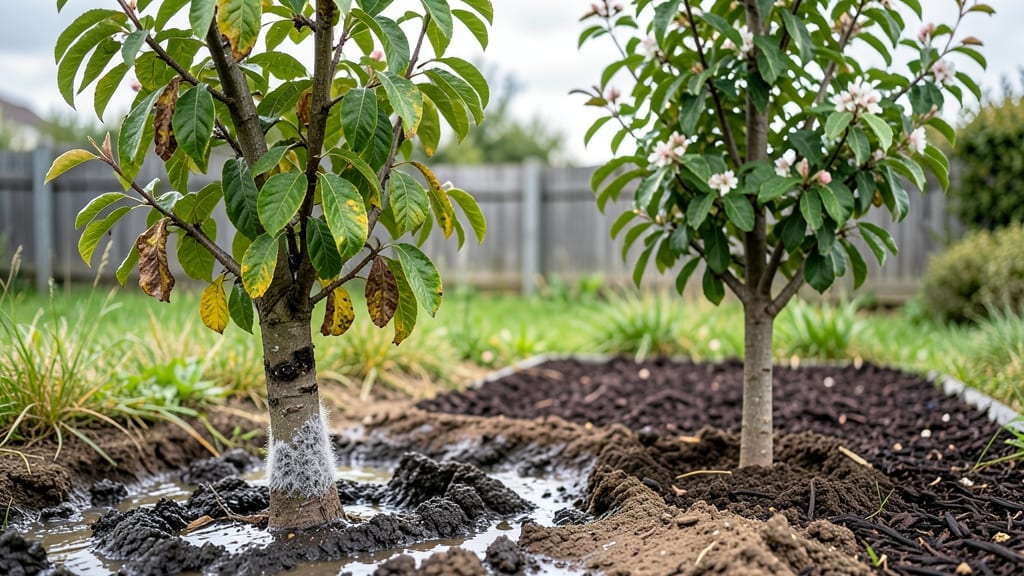
Your peach tree’s drooping leaves and mushy roots scream "too much water" — and the good news is, you can still save it. 🌱 Overwatering smothers roots with oxygen starvation, leading to yellowing foliage, fungal rot, and stunted fruit.
The first step? Stop watering immediately and let the soil dry out completely before acting.
Start by checking the soil: if it’s soggy 2 inches down, your tree’s roots are drowning. Improve drainage by adding 3-4 inches of coarse sand or gravel to the root zone, then prune any blackened or mushy branches to prevent further rot.
A 5-gallon bucket of water every 7-10 days (depending on heat) is safer than daily sprinkling.
Within 2-3 weeks, you’ll see new green growth as roots recover. Mulch with 2-3 inches of wood chips to retain moisture without suffocating roots, and avoid watering in the evening to prevent fungal growth. The key is balance — your tree needs hydration, not a swamp.
For long-term health, test soil moisture weekly with a screwdriver: if it pushes in easily, hold off. Overwatered peach trees bounce back faster than you’d think, but only if you act now. Let’s get those roots breathing again.
When Roots Drown in Excess
Overwatering a peach tree isn’t just about soggy soil—it’s a silent killer that disrupts the delicate balance of root health, nutrient uptake, and even the tree’s ability to breathe. Understanding the root causes (pun intended) of this problem helps you take corrective action before it’s too late.
Here’s why your peach tree might be drowning in too much water.
Peach trees thrive in well-draining soil, but if your garden has clay, compacted, or heavy loam soil, water pools around the roots instead of draining away. This creates an anaerobic (oxygen-deprived) environment, where roots suffocate and harmful microbes thrive.
- Why it happens: Clay particles bind tightly, trapping water and blocking air pockets. Even organic matter-rich soil can compact over time, reducing porosity.
- Science behind it: Roots need 10–20% oxygen to function. Water displaces air, forcing roots into survival mode—slowing growth and increasing vulnerability to rot-causing pathogens like Phytophthora.
- Actionable sign: If water sits in saucers under pots or puddles form after rain for more than 24 hours, drainage is likely the issue.
While peach trees love consistent moisture, daily or excessive watering—especially without checking soil moisture—can flood the root zone. This is a common mistake for new gardeners or those following rigid schedules.
- Why it happens:
- Assuming "more water = better growth" (it doesn’t).
- Ignoring weather conditions (e.g., watering during heavy rain or high humidity).
- Using automatic irrigation systems without soil moisture sensors.
- Science behind it: Overwatering leaches nutrients (like nitrogen and potassium) from the root zone, while saturated soil prevents oxygen diffusion, leading to root asphyxiation.
- Actionable sign: Wilting leaves, even when soil is wet, or a musty smell near the base of the tree.
Peach trees are drought-tolerant once established, but prolonged rain or poor landscape planning can turn your garden into a swamp. Low-lying areas or slopes directing water toward the tree worsen the issue.
- Why it happens:
- Planting peach trees in natural depressions where water collects.
- Ignoring microclimates (e.g., shaded spots stay wet longer).
- Using mulch too thickly (over 3–4 inches) or with water-retentive materials like untreated grass clippings.
- Science behind it: Excessive moisture triggers ethylene production in roots, a stress hormone that accelerates cell death. Fungal diseases like root rot exploit this weakened state.
- Actionable sign: Yellowing leaves with brown, mushy edges or a tree that looks "drunk" (leaning unnaturally).
Peach trees in pots or raised beds are especially vulnerable because their root systems are confined. Without proper drainage holes or overflow systems, water has no escape—and roots suffocate quickly.
- Why it happens:
- Using containers without drainage holes or a cascade system.
- Overfilling pots with water-retentive potting mix (e.g., peat-heavy blends).
- Neglecting to check soil moisture daily in containers (they dry out faster but also flood faster).
- Science behind it: Confined roots compete for oxygen in saturated soil, leading to anaerobic respiration—a process that produces toxic byproducts like ethanol, further damaging cells.
- Actionable sign: Roots growing out of drainage holes or a sour, vinegar-like odor from the soil.
Automatic sprinklers, drip systems, or soaker hoses can be overkill if not calibrated correctly. Misaligned sprinklers or clogged emitters might deliver too much water in short bursts, mimicking a downpour.
- Why it happens:
- Setting timers for longer than needed (e.g., 30+ minutes at a time).
- Using high-pressure sprinklers that saturate the root zone too quickly.
- Ignoring runoff—water pooling around the tree instead of soaking in evenly.
- Science behind it: Rapid water absorption displaces soil air, creating pockets where roots can’t access oxygen. This triggers hypoxia, slowing metabolic processes.
- Actionable sign: Soil crusting on top or water running off the sides of raised beds.
💡 Pro Tip: Test your soil’s drainage by digging a 12-inch hole near the tree, filling it with water, and timing how long it takes to drain. If it’s still damp after 6 hours, your soil is too dense—amend it with compost or perlite to improve aeration.
Fixing Overwatered Peach Trees
Overwatering can drown your peach tree’s roots, stunt growth, and even kill it—but the good news is, recovery is possible with the right steps. Below, we’ll map out practical fixes based on the root cause of your tree’s water woes, plus prevention tips to keep it thriving.
If your peach tree is already showing signs of overwatering—like yellowing leaves, mushy stems, or soggy soil—halt all watering for at least 3–5 days. This gives the roots a chance to dry out and prevents further damage.
- Check soil moisture: Stick your finger 2–3 inches into the soil. If it’s damp, wait longer.
- Avoid rainwater: If heavy rain is forecast, consider covering the tree with a tarp (secured loosely) to protect it.
Poor drainage is often the culprit behind overwatering. Fix it with these easy adjustments:
🔧 Quick Fixes for Compacted or Clay Soil
- Add organic matter: Mix in compost, peat moss, or coconut coir (6–12 inches deep) to loosen heavy soil.
This improves aeration and water flow. - Raise the planting bed: If your tree is in a low spot, mound soil around the base to create a slight slope, encouraging water runoff. - Install drainage tiles: For severe cases, bury perforated drainage pipes near the root zone to redirect excess water.
🌡️ Adjust Watering Habits
- Water deeply but infrequently: Peach trees prefer 1–1.5 inches of water per week (including rain).
Use a soaker hose or drip irrigation to deliver water slowly at the base. - Water in the morning: This reduces evaporation and fungal risks (like root rot). - Avoid wetting foliage: Water at the drip line (where the branches extend) to keep leaves dry.
If roots are suffocating in waterlogged soil, they need oxygen. Try these methods:
- Manual aeration: Use a garden fork to gently loosen soil around the root zone (avoid damaging roots). - Sand top dressing: Spread a 2–3 inch layer of coarse sand over the root area to improve drainage (best for clay-heavy soil). - Mulch properly: Apply 2–4 inches of organic mulch (wood chips, straw) 3–4 inches away from the trunk.
This regulates moisture and insulates roots.
Overwatering invites root rot, powdery mildew, or bacterial infections. Act fast with these remedies:
| Problem | Solution |
|---|---|
| Root Rot | Remove infected roots (sterilize tools with rubbing alcohol), repot in fresh soil, and apply fungicide (copper-based or neem oil). |
| Powdery Mildew | Spray leaves with baking soda mix (1 tsp baking soda + 1 quart water + a drop of dish soap) or neem oil. |
| Bacterial Spot | Prune infected branches, sterilize cuts with copper fungicide, and improve airflow. |
Pro Tip 💡: Never water overhead—use drip irrigation or a watering wand at the base to prevent fungal spores from splashing onto leaves.
Stressed trees often shed leaves or branches. Prune carefully to redirect energy:
- Remove dead/dying branches: Cut back to healthy wood (sterilize pruners between cuts).
- Thin the canopy: Open the center to improve airflow and sunlight penetration.
- Avoid heavy pruning: Stick to light trimming (no more than 25% of foliage) to reduce stress.
Once your peach tree recovers, lock in these habits to prevent future overwatering:
✅ Test your soil: Use a moisture meter or the finger test before watering. ✅ Choose the right spot: Plant peach trees in well-draining soil with full sun (6+ hours/day). ✅ Upgrade your pot (if potted): Ensure containers have drainage holes and use cactus/succulent mix for better aeration. ✅ Monitor weather: Adjust watering during heavy rain or humidity—trees need less water when it’s damp. ✅ Mulch annually: Refresh mulch every spring to maintain moisture control.
Final Thought 🎯: Recovery takes time, but with consistent care, your peach tree can bounce back stronger. Start with drainage fixes, adjust watering, and keep an eye on root health—your future harvest depends on it!
Frequently asked questions
How do I know if my peach tree has too much water?
Look for yellowing leaves, especially on lower branches, and check for soggy soil that stays wet for more than 24 hours. Other signs include mushy stems, wilting despite damp soil, or a musty odor near the base. If the tree leans unnaturally or has brown, mushy roots when dug up, it’s definitely overwatered.
Can I save a peach tree with root rot from overwatering?
Yes, but act fast! First, stop watering immediately and let the soil dry out. Prune any blackened or mushy branches, then improve drainage by adding 3-4 inches of coarse sand or compost to the root zone. Apply a copper-based fungicide to prevent further rot and avoid watering in the evening to reduce fungal growth.
How often should I water a peach tree after fixing overwatering?
Once recovered, water deeply but infrequently—about 1-1.5 inches per week (including rain). Use a soaker hose or drip irrigation at the base in the morning, and check soil moisture with your finger: if the top 2-3 inches are dry, it’s time to water. Avoid wetting leaves to prevent fungal diseases.
What’s the best mulch to use for a peach tree to prevent overwatering?
Use 2-3 inches of organic mulch like wood chips or straw, but keep it 3-4 inches away from the trunk to prevent rot. Avoid thick layers (over 4 inches) or water-retentive mulches like untreated grass clippings. Mulch helps regulate soil temperature and moisture while improving drainage over time.
Will my peach tree produce fruit if it was overwatered?
Possibly, but recovery takes time. Focus on reviving the roots first—healthy roots mean better nutrient uptake and fruit production later. If the tree is young (2-3 years old), it may skip fruiting that season while recovering. Older trees should bounce back within 1-2 years with proper care.