
Pruning
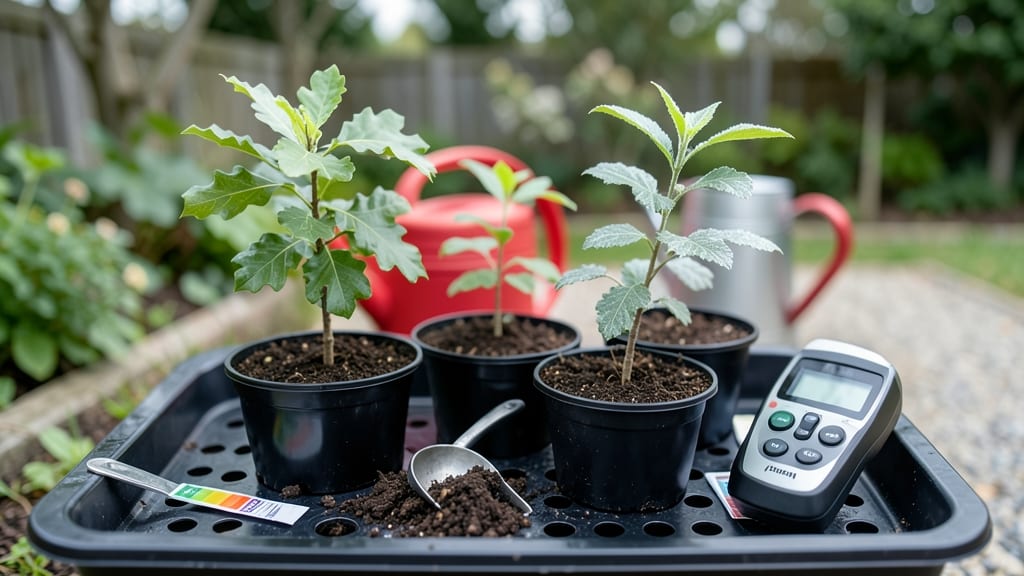
Tree seedling identification can feel like solving a puzzle—until you spot those telltale leaf shapes and bark textures. 🌱 I’ve spent years mislabeling seedlings (yes, even oak vs. hickory), but these simple visual clues cut my guesswork by 90%. Start with leaf edges: smooth, lobed, or serrated? That’s your first clue.
The bark’s texture matters just as much as leaves—smooth and silvery for birch, rough and furrowed for oak, or peeling like paper for sycamore. Pair that with growth patterns: fast vertical shooters are often maples, while sprawling seedlings might be willows.
My #1 tip? Compare against a trusted field guide or app like LeafSnap—it’s like having a botanist in your pocket.
You’ll quickly spot the differences between similar species, like ash vs. mountain ash (compound leaves vs. single), or hackberry vs. sugar maple (toothed edges vs. lobed). Within a week of practice, you’ll recognize seedlings on sight—no more guessing games when planting or weeding.
Still stuck? Consult a local arborist or university extension service for tricky cases. Most common species reveal themselves with these clues, but rare natives or hybrids need expert eyes. The faster you learn, the sooner your landscape thrives with the right trees.
What Tricks Seedlings Play
Identifying tree seedlings can feel like solving a botanical puzzle—especially when nature throws in a few sneaky twists. Misidentification often happens because seedlings don’t always follow the "rules" of their mature counterparts. Here’s why confusion strikes, and how to spot the culprits before they grow up to fool you.
Seedlings and full-grown trees can resemble distant cousins rather than the same species. Why? Because early growth stages prioritize survival over resemblance.
- Leaf shape shifts: Young leaves often start simple (single, undivided) before developing lobes or serrations. For example, a white oak seedling might have smooth-edged leaves, while mature trees sport rounded lobes. Pro tip: Compare seedling leaves to a seedling-specific field guide—adult-focused ones will mislead you!
- Bark is deceptive: Seedling bark is usually smooth (a temporary shield against pests), while adult bark develops texture, ridges, or peeling layers. A sycamore seedling’s silky bark bears no relation to its mature tree’s patchy, exfoliating trunk.
- Growth habits vary: Some seedlings grow prostrate (sprawling along the ground) to maximize sunlight, while their adult forms stand tall. Willows and maples are notorious for this—what looks like a weed might be your next shade tree!
💡 Actionable fix: Study seedling-specific traits (like cotyledons—the first leaves) and cross-reference with regional seedling databases. Snap a photo and compare it to both juvenile and adult profiles.
Harsh conditions can warp a seedling’s appearance, making it mimic another species entirely. Think of it as a botanical disguise.
| Stressor | Effect on Seedling | Example |
|---|---|---|
| Drought | Leaves shrink, edges curl, or turn brittle—resembling a different genus. | A red maple under drought might look like a black cherry seedling. |
| Poor Soil | Stunted growth, yellowing leaves, or odd leaf patterns. | White pine seedlings in clay soil may develop needle clusters like spruce seedlings. |
| Shade | Leaves grow larger and thinner to capture light, altering shape. | A sugar maple seedling in deep shade might resemble a boxelder. |
💡 Actionable fix: Observe the habitat. Healthy seedlings in ideal conditions are your best bet for accurate ID. If a seedling looks "off," note the soil, sunlight, and nearby mature trees—it might be adapting, not impersonating.
Not all seedlings play by the species rulebook. Hybridization (crossbreeding) or mutations can create seedlings that defy classification.
- Hybrids: When two species cross-pollinate, offspring can inherit a mix of traits. For example, a shagbark hickory × mockernut hickory hybrid might have leaves that don’t match either parent. Watch for: Intermediate leaf shapes, bark, or growth habits.
- Chimeras: Rare genetic quirks cause parts of the seedling (like leaves or bark) to develop differently. A chimeric sweetgum might sport star-shaped leaves on one branch and lobed leaves on another.
- Polyploidy: Extra sets of chromosomes can alter size and structure. A triploid oak seedling might have abnormally large leaves.
🔥 Pro tip: If a seedling doesn’t match any species in your guide, check for hybrids in your region. Use USDA’s Silvics Manual to cross-reference potential parent species.
Even the most seasoned gardeners trip up by focusing on the wrong clues. Here’s how:
- Ignoring cotyledons: The first leaves (cotyledons) are species-specific. A beech seedling’s smooth, oval cotyledons are unmistakable, but many guides skip this step.
- Bark bias: Relying on bark too early—seedling bark is often featureless until years 3–5. Wait for bud scales or leaf arrangement instead.
- Seasonal blindness: Spring flushes can make leaves look different from summer growth. A birch seedling’s spring leaves are triangular, but summer leaves are more rounded.
✨ Quick fix: Grab a hand lens and inspect:
- Leaf venation (parallel vs. netted).
- Stem hairiness (pubescence).
- Bud shape (pointy, rounded, or sticky).
Quick fixes for seedling ID confusion
Struggling to match a seedling to its species can feel like solving a puzzle with missing pieces—but don’t worry! With the right tools and techniques, you can turn confusion into confidence.
Below, we break down common challenges in tree seedling identification and provide actionable solutions, from quick fixes to long-term strategies. Plus, we’ll share prevention tips to avoid future headaches.
If two seedlings look nearly identical at first glance, focus on these micro-details to narrow it down:
🍃 Step 1: Examine Leaf Arrangement
- Opposite vs. Alternate Leaves:
- Opposite: Leaves grow directly across from each other (e.g., maple, dogwood).
- Alternate: Leaves spiral up the stem (e.g., oak, pine).
- Pro Tip: 💡 Hold the seedling at a 45° angle to spot subtle patterns.
🍂 Step 2: Check Leaf Margins and Texture
- Serrated vs. Lobed vs. Smooth:
- Serrated: Sharp, tooth-like edges (e.g., hickory).
- Lobed: Deep indentations (e.g., oak).
- Smooth: Entire margins (e.g., beech).
- Texture Test: Rub a leaf between your fingers—sandy (rough) vs. smooth (glossy) can hint at species.
🌿 Step 3: Use a Magnifying Glass for Vein Patterns
- Pinnate (feather-like): Veins branch from a central stem (e.g., walnut).
- Palmate (hand-like): Veins radiate from a single point (e.g., maple).
- Pro Tip: ✨ Snap a close-up photo with natural light for later comparison.
📸 Prevention Tip:
Keep a seedling ID journal with sketches or photos of key traits. Label samples with location notes—soil type, sunlight, and nearby mature trees can provide clues!
Bark can be tricky for seedlings since it’s often smooth or thin. Try these tricks:
🔪 Scratch Test for Hidden Bark Clues
- Gently scrape a small section of the stem with a knife or fingernail.
- Orange-brown underneath? Likely an oak or hickory.
- Greenish or white? Could be a willow or birch.
- Warning: ⏰ Avoid damaging young seedlings—limit scratches to tiny areas.
🌡️ Temperature and Moisture Tricks
- Damp Bark: If the seedling’s bark feels sticky or peels easily, it may be a willow or alder.
- Dry, Flaky Bark: Common in birch or beech seedlings.
📊 Prevention Tip:
Compare seedlings to mature trees in your area. Bark texture often develops with age—note if nearby adults have distinctive patterns (e.g., shaggy vs. smooth).
Not all seedlings have developed enough traits. Here’s how to work around it:
👨🍳 Wait and Observe (If Possible)
- Root System: Dig gently to expose roots—taproots (e.g., oak) vs. fibrous roots (e.g., maple) differ.
- Growth Rate: Fast growers (e.g., willow) vs. slow growers (e.g., pine) can hint at species.
🔥 Use a Field Guide or App
- Apps like LeafSnap or PictureThis let you upload photos for AI-assisted ID.
- Field Guides: Carry a regional tree ID book with seedling-specific sections.
🎯 Prevention Tip:
Plant a few known reference seedlings (e.g., labeled nursery stock) nearby. Compare unknowns side-by-side under the same lighting.
Remember: Patience and practice are key! The more seedlings you identify, the sharper your eye becomes. Start with easy species (like maple or pine), then tackle the trickier ones.
Frequently asked questions
What are the first things to look for when identifying a tree seedling?
Start with leaf arrangement (opposite vs. alternate) and leaf shape (lobed, serrated, or smooth). Check the cotyledons (first leaves) and stem hairiness—these are often species-specific. For example, maple seedlings have opposite leaves, while oak seedlings have alternate leaves with lobed edges.
How can I tell the difference between similar-looking seedlings like ash and mountain ash?
Ash seedlings have compound leaves (multiple leaflets on one stem), while mountain ash seedlings have single, serrated leaves with clusters of small white flowers. Also, ash bark is smooth and gray, while mountain ash bark develops horizontal stripes as it matures.
Is it safe to use a knife to check bark color on a young seedling?
Yes, but only make a tiny scratch—never damage more than 1/4 inch of the stem. Look for color clues: orange-brown suggests oak or hickory, while greenish or white hints at willow or birch. Always avoid deep cuts to protect the seedling’s growth.
What’s the best app for identifying tree seedlings on the go?
Try LeafSnap or PictureThis—both use AI to analyze leaf shapes, bark, and growth patterns. For offline use, download USDA’s Trees: Identification app or carry a regional field guide with seedling-specific sections.
Why do some seedlings look different from their mature trees?
Seedlings prioritize survival over resemblance! Their leaves may start simple (undivided) before developing lobes or serrations. For example, a white oak seedling might have smooth-edged leaves, while mature oaks have rounded lobes. Always compare to seedling-specific guides.