
Size
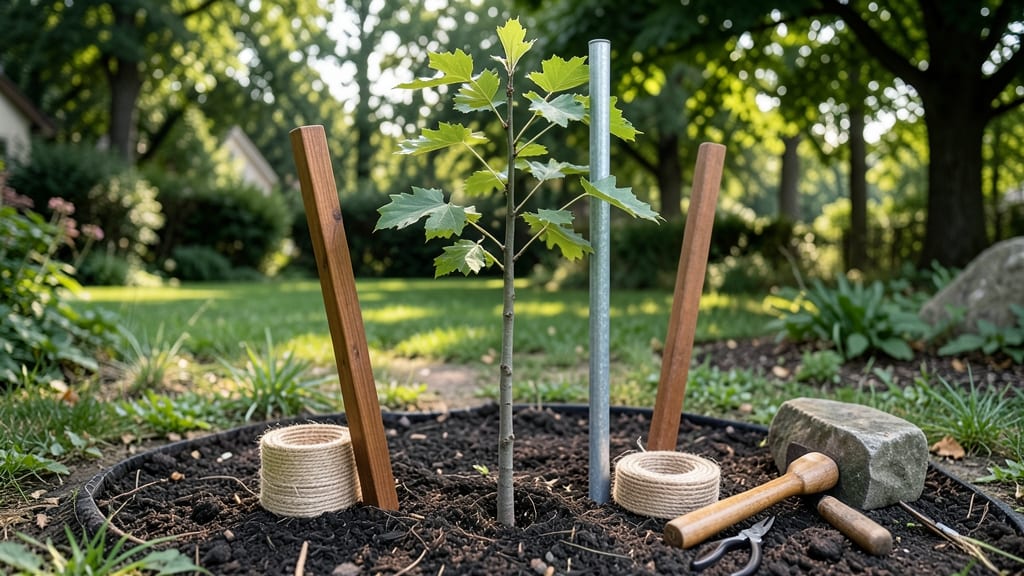
To stake a tree to grow straight, position 2-3 stakes at 45-degree angles around the trunk in a triangle formation, use soft fabric ties to prevent girdling, and adjust support as the tree grows to avoid restricting roots or damaging the bark. Begin staking during the tree's first growing season for best alignment results.
Staking isn't just about propping up a tree—it's about guiding its natural growth while preventing wind damage or bending. 🌳 The triangle method distributes pressure evenly, and using flexible ties (like tree straps) lets the trunk sway slightly, which actually strengthens it over time.
I've seen young trees with proper staking develop straighter trunks by their third year, while improperly staked trees often develop weak spots where the ties cut into the bark. The key is checking ties every 3-6 months to loosen them as the trunk thickens.
One common mistake is leaving stakes in too long—once the tree can stand on its own (usually after 1-2 years), removing support prevents the trunk from growing thicker at the stake points.
For heavy winds or weak species, consider burlap wraps instead of rigid stakes to allow more natural movement while still providing stability.
💡 In This Article
- When and How to Install Tree Stakes Properly
- Maintaining Staked Trees: Adjustments and Common Mistakes
When and how to install tree stakes properly
The best time to install stakes is during the tree's first growing season, typically in early spring when new shoots emerge. This timing allows the young trunk to develop strength while the stakes provide support.
The triangle method is critical—place 2-3 stakes at 45-degree angles, about 6-12 inches from the trunk, forming an equilateral triangle. This distribution prevents uneven pressure that could cause the trunk to bend or split.
Stake depth matters too: drive them 12-18 inches into the soil for stability, but leave 6-8 inches above ground to attach the ties. Wooden stakes (like 2x2-inch cedar) are ideal because they're lightweight yet sturdy, while metal stakes can corrode over time.
The ties should be made from soft, flexible materials like tree straps or wide fabric strips—never wire or narrow straps, which can girdle the trunk as it thickens.
Here's what's actually happening: the stakes create a stable anchor while the ties allow 10-15% sway in windy conditions. This slight movement strengthens the trunk's natural resilience, similar to how gymnasts develop core strength through controlled balance exercises.
Without this flexibility, trees become weak and prone to snapping at the base when mature. 🌱 The key is adjusting the ties as the trunk grows—loosening them every 3-6 months prevents constriction.
For heavy soils or windy locations, consider burlap wraps instead of rigid stakes. These allow more natural movement while still providing support, reducing stress on the young tree's developing vascular system.
The wrap method is especially useful for species like willows or poplars, which have flexible trunks but shallow roots that need extra protection from wind rock.
One nuance often overlooked is stake placement relative to prevailing winds. Position the strongest stake upwind of the tree to absorb the most force, while the other stakes provide lateral support. This setup mimics how trees naturally lean slightly into wind patterns to distribute stress.
For example, a 4-foot-tall oak sapling in a 15 mph wind zone benefits from this triangular arrangement more than a single stake.
When installing, avoid burying the trunk base—keep it 2-3 inches above soil level to prevent rot. The stakes should be angled outward, not inward, to create an outward pressure that gently guides the trunk upward rather than pushing it sideways.
This subtle difference makes a huge impact on long-term growth patterns. 🌳