
Pruning
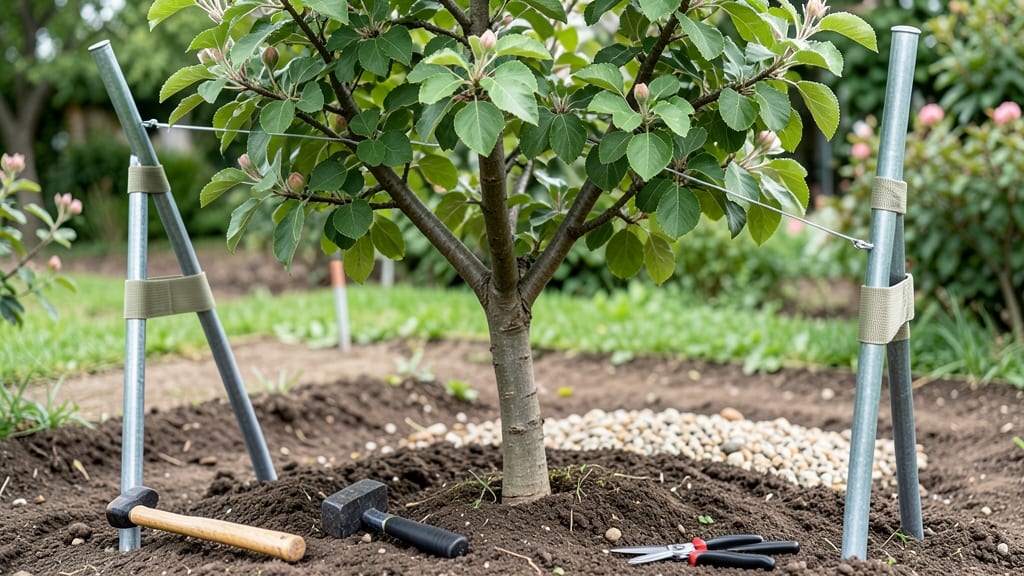
A leaning tree isn't just an eyesore—it's a safety hazard waiting to happen. 🌳 I've seen trees topple in storms because their roots couldn't anchor them, and the fix starts with understanding why they lean in the first place.
Whether it's wind, poor planting, or shallow roots, the causes are usually easier to spot than you'd think.
First, check the soil around the base—if it's loose or compacted, that's your first clue. Dig down about 12 inches to see if roots are shallow or circling. You might also notice cracks in the trunk or leaning branches, which are red flags for structural weakness.
Most leaning trees can be stabilized without cutting them down, but timing matters.
Staking is the simplest fix for young trees, but older ones need more support—think cables or braces. Pruning the top to lower the center of gravity can help too, though you'll want to do that in late winter when the tree isn't actively growing.
The goal is to make the tree self-supporting again, not just prop it up temporarily.
When in doubt, call an arborist. Some leans are fixable, others signal deeper problems like root rot or disease. But if you catch it early, you can save the tree—and your yard—without losing it to a storm. Let's get that trunk standing straight again.
Root of the Problem
When your tree starts to lean like a drunkard after a long night, it’s rarely a sign of laziness—it’s a cry for help from its very foundation. Understanding why a tree leans is the first step to fixing it.
Below, we break down the most common causes, backed by science, so you can diagnose the issue like a pro.
A tree’s roots are its anchor, and if they’re not strong or deep enough, even a gentle breeze can send it toppling. This often happens with:
- Young trees: Their roots haven’t had time to establish a deep network. Without proper depth, the tree relies on surface roots, which are easily disturbed by wind or soil shifts.
- Poor soil conditions: Compacted, rocky, or waterlogged soil restricts root growth. Roots struggle to penetrate, leaving the tree unstable.
- Improper planting: If a tree is planted too shallowly, its roots can’t grip the soil securely. Over time, this leads to a wobbly, leaning stance.
🔍 Actionable insight: Test your tree’s stability by gently pulling on the trunk near the base. If it moves more than a few inches, the roots are likely the culprit. Amending the soil with compost or mulch can encourage deeper root growth over time.
Trees aren’t built to handle constant wind like a sailboat. Chronic exposure to strong winds or storms can gradually bend a tree’s trunk or even uproot it. Here’s how it happens:
- Uneven wind pressure: Wind pushes harder on one side of the tree, causing the trunk to bend over time. This is especially true for trees with a single dominant leader (main upward-growing branch).
- Storm damage: A single high-impact event (like a hurricane or ice storm) can snap roots or break the trunk, leaving the tree leaning or lopsided.
- Exposed locations: Trees planted in open areas with no windbreaks (like other trees, fences, or buildings) are far more likely to lean.
💡 Pro tip: If your tree is leaning due to wind, consider planting windbreaks like shrubs or installing a tree brace (a temporary support system) to reduce stress until the tree stabilizes.
Sometimes, a tree leans because its internal structure is compromised. Decay, cracks, or weak wood can cause the trunk to bend or split, leading to an uneven silhouette. Common signs include:
- Fungal or bacterial rot: Decay weakens the trunk’s integrity, making it more prone to bending. Look for conks (shelf-like fungi) at the base or cracks filled with dark, crumbly wood.
- Lightning strikes: A bolt can split the trunk or cause internal damage, leading to a lean over time.
- Poor pruning practices: Over-pruning or improper cuts can create weak points, making the tree more susceptible to leaning.
⚠️ Warning: If decay is severe, the tree may be unsafe and require removal. Consult an arborist to assess the damage before attempting a fix.
What’s happening below ground can dramatically affect a tree’s stability. Soil erosion, shifting, or uneven settlement can cause one side of the root system to lose support, leading to a lean. This is common in:
- Sloped or unstable terrain: Gravity pulls soil away from one side, leaving roots unsupported.
- Construction or excavation nearby: Digging for foundations, sewer lines, or landscaping can disturb roots, causing the tree to tilt.
- Water runoff: Heavy rains or poor drainage can erode soil on one side, creating an imbalance.
🌡️ Fix it fast: If soil erosion is the issue, redirect water flow with swales (shallow trenches) or install retention walls to stabilize the base. Adding mulch can also help retain moisture and protect roots.
Now that you know the why, the next step is the how. Stay tuned for our section on diagnosing the lean and choosing the right stabilization techniques!
Practical Fixes for Wobbly Trees
Now that you understand why your tree might be leaning, it’s time to take action! The right approach depends on the root cause—whether it’s shallow roots, wind exposure, soil erosion, or structural damage.
Below, we’ll break down step-by-step solutions tailored to each issue, plus prevention tips to keep your tree standing strong for years to come.
If your tree’s roots aren’t deep enough to anchor it, it’s like trying to balance on one foot—unstable! Here’s how to reinforce them:
🔨 Step 1: Assess Root Depth
Before digging, gently probe the soil around the tree’s base with a trowel or stick. If roots are mostly within 12 inches of the surface, they’re likely too shallow. Avoid digging too deep—you don’t want to damage existing roots.
🌱 Step 2: Add Support with Root Pruning & Mulching
- Root Pruning (For Young Trees): Carefully trim any girdling roots (roots circling the trunk) with sterilized pruners.
This encourages outward growth. - Mulch Properly: Spread 2–4 inches of organic mulch (wood chips, bark) in a 3-foot diameter circle around the base.
Keep mulch 6 inches away from the trunk to prevent rot. - 💡 Pro Tip: Water deeply after mulching to help roots absorb nutrients and grow downward.
🪵 Step 3: Install Root Tabs or Mycorrhizal Fungi
For extra reinforcement, use root tabs (slow-release fertilizer) or mycorrhizal fungi (natural root boosters) to stimulate deeper root growth. Follow package instructions for application.
🚫 Prevention Tips:
✔ Plant trees at the right depth—the root flare (where roots meet the trunk) should be visible above soil level. ✔ Avoid compacted soil—amend heavy clay with compost before planting. ✔ Water deeply but infrequently to encourage roots to grow downward.
If wind is the culprit, your tree needs physical support to prevent toppling. Here’s how to brace it safely:
🪵 Step 1: Choose the Right Support System
- For Small Trees (Under 10 ft): Use tree stakes and ties (soft fabric or rubber straps).
- For Medium/Large Trees (10+ ft): Install a tree brace (metal or wooden) or guy wires (for heavy canopies).
- For Mature Trees at Risk: Consider soil anchors (like helical piers) for extreme cases.
🔧 Step 2: Install Stakes or Guys Correctly
- Stakes: Bury stakes 1/3 of their length into the ground at a 45-degree angle, then attach one or two ties to the trunk (never too tight—allow for trunk movement).
- Guy Wires: Anchor wires to sturdy posts (not the tree itself) and adjust tension so the tree sways slightly (like a pendulum).
- 💡 Pro Tip: Check supports every 6 months—tighten ties if they loosen, but don’t strangle the trunk!
🌿 Step 3: Improve Soil Stability
- Add gravel or sand to the root zone to improve drainage (if soil is too dense).
- Plant windbreak shrubs on the exposed side to reduce wind force.
🚫 Prevention Tips:
✔ Plant wind-resistant species (e.g., oaks, maples, pines) in exposed areas. ✔ Prune deadwood—less weight = less leverage for wind. ✔ Avoid planting near structures that block wind flow (like fences or buildings).
If the lean is due to uneven growth or damage, you may need to redistribute weight or prune strategically:
✂️ Step 1: Prune for Balance
- Remove heavy branches on the leaning side to shift the center of gravity.
- Thin the canopy on the upright side to encourage even growth.
- 💡 Pro Tip: Never remove more than 25% of the canopy in one season—this stresses the tree.
🪵 Step 2: Use Cabling or Bracing (For Large Trees)
If the trunk is cracked or splitting, install steel cables (like a tree “suspension bridge”) to support weak points. A professional arborist should handle this.
🌱 Step 3: Encourage Straight Growth in Young Trees
- Tie young trees to stakes at a slight angle (opposite the lean) to guide growth.
- Avoid over-fertilizing—too much nitrogen causes top-heavy growth.
🚫 Prevention Tips:
✔ Plant trees with proper spacing—crowded roots lead to weak structures. ✔ Inspect for pests/disease—weakened wood leans more easily. ✔ Avoid heavy pruning on one side—this disrupts balance.
If your tree is already leaning dangerously, act fast:
- Call an arborist if the trunk is cracked or splitting.
- Remove heavy branches near structures or power lines.
- Install temporary guy wires to slow the lean while planning removal.
- 💡 Pro Tip: If the tree is dead or dying, removal is safer than stabilization.
Final Thought: Most leaning trees can be saved with patience and the right techniques. Start with root support and pruning, then reinforce with physical bracing if needed. With time, your tree can grow stronger and straighter—just like a well-anchored ship in a storm! 🌲💪
Frequently asked questions
How do I know if my leaning tree is safe to fix myself?
Check for cracks in the trunk, mushroom-like fungi at the base, or a trunk that moves more than 6 inches when pulled gently. If you see these signs, the tree may have internal rot or severe root damage—call an arborist immediately. For healthy trees, DIY fixes like staking or pruning work well.
Can I straighten a leaning tree by planting it at an angle?
No, planting a tree at an angle won’t fix an existing lean. The roots will follow the natural growth pattern, and the tree will continue leaning. Instead, use stakes or guy wires to guide growth while reinforcing roots. For young trees, this can help redirect growth over time.
How long does it take for staking to stabilize a leaning tree?
Most trees show improvement within 6-12 months if staked correctly. Young trees adapt faster, while mature trees may take 2-3 years. Check ties every 6 months—too-tight straps can girdle the trunk and cause damage. Patience is key!
Will mulching really help a wobbly tree?
A 3-foot mulch ring (2-4 inches deep) improves soil structure and encourages deeper root growth. Just keep mulch 6 inches away from the trunk to prevent rot. Combine mulching with deep watering for best results.
Can I use concrete to weigh down a leaning tree?
Never use concrete or heavy weights near tree roots—it can suffocate them by blocking oxygen and moisture. Instead, use gravel or sand to improve drainage, or install tree braces for support. These methods protect roots while stabilizing the tree.