
Pruning
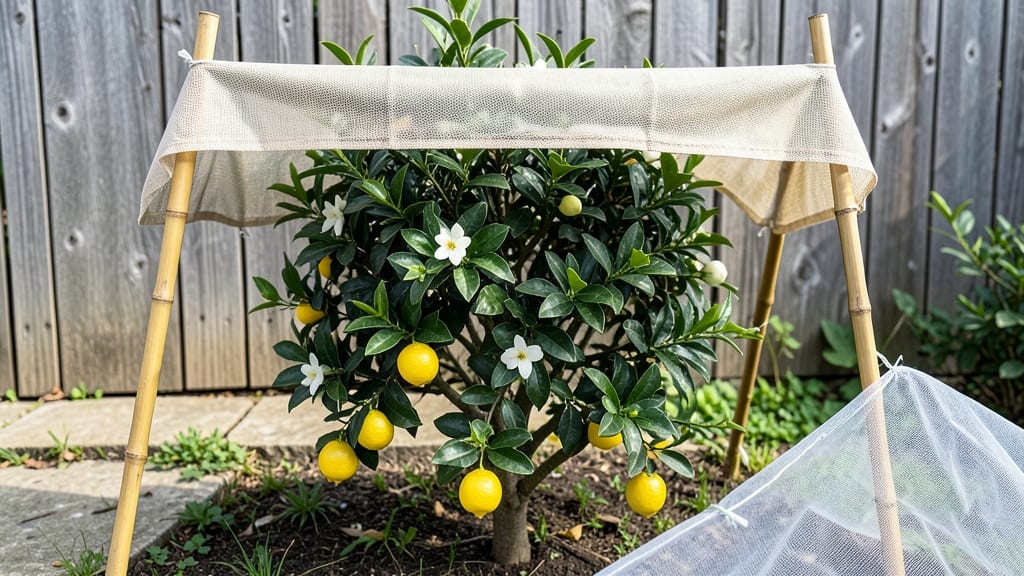
Whether you should cover your lemon tree in winter depends on your climate zone: hardy varieties like Meyer lemons tolerate temperatures down to 25°F, while tender types need protective coverings in zones 8-10. Plastic sheets should be avoided as they promote rot, and damaged branches should be pruned in spring to encourage new growth.
Deciding whether to protect your citrus tree isn't just about temperature—it's about understanding your specific variety's resilience. 🌱 Most commercial lemons (like Eureka or Lisbon) struggle below 28°F, while Meyer lemons can handle slightly colder snaps thanks to their hybrid genetics.
The key is monitoring your local frost dates: covering too early can trap heat and encourage new growth that won't survive, while waiting too long risks cold damage to tender new shoots.
I always recommend installing protective coverings in late fall, once nighttime temperatures consistently drop below 40°F, and removing them during the day to prevent overheating.
For physical protection, breathable materials like frost cloth (rated for your zone) or burlap work best—they allow airflow while blocking harsh winds. Avoid plastic entirely, as condensation buildup creates a damp environment that invites fungal diseases.
If you're in zone 9 or warmer, focus on wrapping the trunk with insulating foam or bubble wrap to protect the vascular system from freeze-thaw cycles. Remember, the goal isn't just survival—it's setting your tree up for a vigorous spring rebound.
💡 In This Article
- Climate Zones and Lemon Tree Winter Hardiness
- Step-by-Step Lemon Tree Winter Protection Guide
Climate zones and lemon tree winter hardiness
Lemon trees belong to the Citrus genus, which evolved in subtropical climates where temperatures rarely drop below 28°F.
The USDA divides citrus hardiness into three main categories: native varieties (like Meyer lemons) tolerate down to 25°F thanks to their hybrid genetics, while commercial types (Eureka, Lisbon) struggle below 28°F.
This difference stems from Meyer's cold-resistant parentage—Citrus ichangensis, a Chinese citrus species adapted to 18°F conditions. 🌡️ The critical threshold isn't just air temperature, but how quickly the tree's cells freeze: rapid drops (10°F/hour) cause ice crystals to form in cell walls, rupturing them and killing tissue.
Root systems are particularly vulnerable because they absorb water from frozen soil, creating internal ice formation. In zone 8, where winter lows reach 10-15°F, even hardy Meyers need protection—especially if planted in windy areas where cold air accelerates heat loss.
The bark's ability to insulate the vascular cambium (growth layer) also varies: Meyer lemons have thicker bark than Eureka varieties, which is why they survive slightly colder snaps.
What most gardeners miss is that leaf damage (from 32°F+) doesn't kill the tree, but repeated cold snaps weaken its ability to photosynthesize in spring.
Your local microclimate matters more than the official zone designation. Trees planted near south-facing walls or in sheltered valleys may experience 5-10°F warmer conditions than open areas. This is why I recommend installing a minimum-maximum thermometer near your tree—it reveals the true stress points.
For example, a zone 9 tree might survive -2°F in a protected spot but die in an exposed garden bed. The science here is about thermal inertia: soil, mulch, and windbreaks all act as insulation layers, raising the effective survival temperature by 3-8°F.
Cold damage manifests in predictable ways: brown, mushy stems indicate freeze damage to the vascular system, while blackened leaves show cellular dehydration. The tree's recovery depends on how much meristem tissue (growth centers) survives—this is why pruning damaged branches in late winter (when new growth begins) stimulates regrowth.
What surprises many is that root damage often appears as leaf yellowing in spring, not immediate dieback. This delayed symptom is why a root zone insulation of 4-6 inches of organic mulch (like straw) is critical.
Here's what the research shows about recovery rates: Meyer lemons exposed to 20°F for 24 hours had a 70% survival rate with proper post-winter care, while Eureka varieties dropped to 30% under the same conditions. The difference?
Meyer's higher sugar content in leaves acts as a natural antifreeze, lowering the freezing point of cell fluids. This is why feeding your tree potassium-rich fertilizer in late summer builds cold resistance—potassium strengthens cell membranes, reducing ice crystal formation.
One common mistake is assuming all citrus trees need the same protection. For instance, Calamondin oranges (a hybrid) survive to 20°F, while Kumquats can handle 15°F—yet both are often lumped with lemons in care guides.
The key is matching your variety to your hardiness zone map and adjusting for elevation (every 1,000 feet up adds 3-5°F of cold stress). For example, a zone 9b tree at 3,000 feet might face zone 7 conditions. 🌡️