
Container Gardens
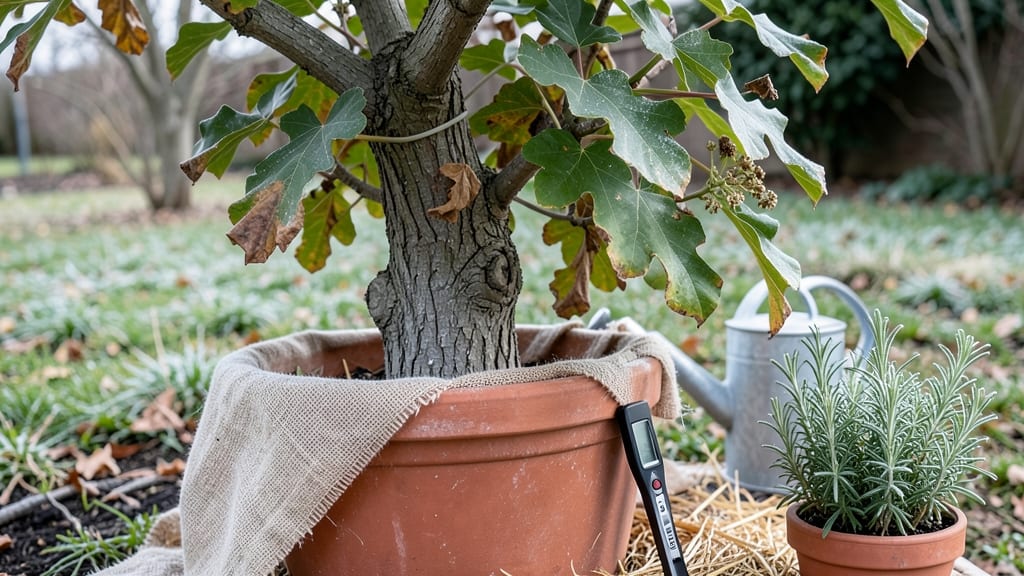
Your potted fig tree winter care survival hinges on three smart moves—and I’ve perfected them after losing two trees to frostbite. 🌱 Figs in containers are finicky in cold climates, but with the right adjustments, you’ll wake up to a thriving tree come spring.
The key? Mimicking their natural dormancy cycle while protecting them from sudden freezes.
Start by moving your tree to a garage, shed, or unheated sunroom before temperatures drop below 40°F. If that’s not possible, wrap the pot in bubble wrap or frost cloth and group it with other containers to share warmth.
Watering shifts too—reduce it to once every 3-4 weeks (only when soil feels bone-dry), because overwatering in cold roots is a silent killer. Prune dead branches now, but hold off on heavy cuts until spring.
By spring, you’ll see new growth within 4-6 weeks if you’ve kept the soil slightly moist and the tree out of drafts. The real payoff? Figs rewarded with heavier fruit loads the following season after a proper winter rest.
Just avoid the mistake of fertilizing now—wait until late March when new shoots appear. That’s when the real growth begins.
This method works for all container figs, from dwarf varieties to standard trees, as long as you adjust for your zone’s lowest temps. For zones 7-9, a sheltered porch works; zones 5-6 need extra insulation.
The secret? Consistency—figs hate temperature swings more than cold itself. Stick with this routine, and your tree will thank you with lush foliage and sweet fruit next summer.
📚 In This Guide
- What you need
- Instructions
- Tips and common mistakes
- Wrapping up and next steps
What you need
- ● Insulating wrap: 1 roll of burlap or frost cloth (20–30 sq. ft., depending on pot size).
- ● Mulch: 2–3 gallons of straw, pine needles, or shredded leaves (organic, weed-free).
- ● Cold-hardy container: A durable, insulated pot (if repotting; 1–2 sizes larger than current pot).
- ● Potting mix: 5–10 gallons of well-draining, organic-rich soil (add perlite or sand for aeration).
- ● Watering can: 1 gallon capacity with a rose attachment for gentle hydration.
- ● Pruning shears: 1 pair of sterilized, sharp shears (for trimming dead/brittle branches).
- ● Thermometer: 1 soil or air thermometer (to monitor temps below 32°F).
- ● Heating mat (for pots in freezing zones; 12" x 24" size).
- ● Grow lights (if indoors; full-spectrum LED, 12–16 hours/day).
- ● Anti-desiccant spray (e.g., Wilt-Pruf to protect leaves).
- ● Pot feet or casters (to elevate pots off cold ground; 4–6 units).
- ● Fertilizer (balanced 10-10-10 or slow-release granules, ½ cup per pot).
Step-by-Step guide to overwintering your potted fig tree
Here's how I protect my container figs through winter—keeping them healthy and ready to burst back into growth.
🪴 Step 1: Move to a Sheltered Location Before Frost
When nighttime temperatures drop below 40°F, it's time to act. Choose a location that stays above 35°F—an unheated garage, covered porch, or even a basement with good airflow works. I place my pots on a layer of 1-inch thick foam insulation boards to prevent cold from seeping up through the floor.
If you're moving indoors, avoid sudden temperature shifts. Gradually acclimate the tree over 2-3 days by placing it in a shaded outdoor spot during the day and bringing it in at night. Watch for leaf drop—this is normal as the tree adjusts to lower light levels.
☀️ Step 2: Reduce Watering and Adjust Light Exposure
During winter, fig trees go semi-dormant, so watering needs drop dramatically. Only water when the top 2 inches of soil feel completely dry—usually every 3-4 weeks. Overwatering in cool conditions leads to root rot, which can kill your tree before spring. I use a moisture meter to check soil moisture levels, especially if my home stays dry.
Place your fig tree near a south-facing window where it can get 4-6 hours of indirect light daily. If natural light is insufficient, supplement with a grow light set on a 12-hour day/night cycle. You'll notice new growth in late winter when the tree starts breaking dormancy—this is your cue to increase watering gradually.
🌿 Step 3: Prune and Protect Against Dormancy Stress
Prune back any dead or damaged branches in early winter, but avoid heavy pruning until spring. Fig trees handle stress poorly during dormancy, so I limit myself to removing only what's absolutely necessary. Sterilize your pruning shears with rubbing alcohol to prevent disease transmission.
Wrap the trunk and larger branches with burlap or tree wrap if your indoor space has dry air. This prevents moisture loss and protects the bark from cracking. I also mist the leaves lightly once a week to maintain humidity—just enough to keep them from drying out completely.
⏰ Step 4: Monitor for Pests and Prepare for Spring Transition
Check your fig tree monthly for signs of pests like spider mites or scale, which thrive in dry indoor conditions. Wipe leaves with a damp cloth if you spot dust or early infestations. I keep a small bottle of neem oil solution (1 tsp per quart of water) nearby for quick treatment if needed.
About 6 weeks before your last frost date, start gradually increasing watering and move the tree outdoors for 2-3 hours daily. This slow transition helps prevent shock when you eventually plant it back outside. You'll see new shoots emerging—this is your sign that the tree is ready to resume active growth.
Tips & tricks for perfect potted fig tree winter care
Real talk: Winter can be brutal on container figs, but these tried-and-tested tricks will keep yours thriving until spring.
Temperature Transition: The 2-3 day acclimation period in Step 1 is non-negotiable. I've seen fig trees go into shock when moved too quickly—leaf drop is normal, but sudden wilting means you moved too fast. Place your tree in a shaded outdoor spot during the day and bring it in at night to mimic natural temperature shifts. If your indoor space has drafts near windows or doors, move it to a more stable location during the nighttime hours.
Lighting Strategy: That 4-6 hours of indirect light in Step 2 is crucial for maintaining dormancy without stressing the tree. South-facing windows are ideal, but if your space lacks natural light, invest in a basic LED grow light on a timer. I use a simple 12-hour cycle with my grow light positioned about 6 inches above the tree. The key is consistency—fig trees need that light rhythm to regulate their dormancy cycle properly.
Pest Prevention: The monthly pest checks in Step 4 are your best defense against winter infestations. Spider mites love dry indoor air, and you might not notice them until they've already weakened your tree. Keep a small bottle of diluted neem oil solution (1 tsp per quart of water) handy—it's your first line of defense. I also recommend keeping a soft paintbrush nearby to gently remove dust from leaves weekly, which deters pests naturally.
Spring Transition: Those 6 weeks before your last frost date are critical for preparing your fig tree for outdoor life again. I start by increasing watering gradually about 4 weeks before the transition, then begin moving the tree outdoors for 2-3 hours daily. This slow adaptation prevents shock and gives the tree time to harden off. Watch for new shoots—this is your clear sign that the tree is ready to resume active growth and can handle full outdoor conditions.
Pro Tips for Potted Fig Tree Winter Care
- Real talk: Winter can be brutal on container figs, but these tried-and-tested tricks will keep yours thriving until spring.
- Temperature Transition: The 2-3 day acclimation period in Step 1 is non-negotiable.
- Lighting Strategy: That 4-6 hours of indirect light in Step 2 is crucial for maintaining dormancy without stressing the tree.
Frequently asked questions
Got questions about keeping your potted fig tree thriving through winter? Here are some of the most common concerns—and straightforward answers to help you prep like a pro!
How cold can a potted fig tree tolerate in winter?
A potted fig tree can handle brief dips to 20°F (-7°C), but prolonged exposure below 25°F (-4°C) risks damage. Most varieties (like 'Chicago Hardy' or 'Celeste') survive milder winters, but always protect young trees, containerized roots, and tender varieties with frost cloth or move them indoors when temps drop.
When should I stop watering my potted fig tree before winter?
Reduce watering 4–6 weeks before the first frost to let the roots harden off. By late fall, water only when the top 1–2 inches of soil are dry—overwatering can stress the tree and make it vulnerable to cold. Drainage holes in the pot are a must to prevent soggy roots!
Can I keep my potted fig tree indoors for winter?
Yes! Move it to a cool, bright spot (50–60°F / 10–15°C) like a garage, sunroom, or under a grow light. Avoid heat vents or drafts. If indoors, reduce watering further and prune lightly in early spring to encourage new growth. Just don’t fertilize until after dormancy breaks!
What if my fig tree’s leaves turn brown or drop in winter?
This is normal—figs shed leaves in cold weather to conserve energy. However, if leaves blacken or the stems look mushy, it’s likely root rot from overwatering. Trim dead foliage in late winter, and next year, adjust watering and ensure the pot has drainage. A light mulch (like straw) can also protect roots from extreme temps.
Should I prune my potted fig tree in winter?
Light pruning in late winter (Feb–March) is ideal—remove dead, crossing, or weak branches to improve airflow and shape. Avoid heavy pruning in fall, as it stresses the tree before dormancy. Sterilize pruners with rubbing alcohol to prevent disease, and never prune into wet wood.
Wrapping up and next steps
With the right winter care, your potted fig tree can thrive even in colder months! 🌱❄️ Remember to protect it from frost, adjust watering habits, and provide warmth when needed. A little effort now ensures a lush, productive tree come spring.
Ready to give your fig tree the cozy winter it deserves? Start by wrapping it up—literally! Choose a sheltered spot, bundle it in frost cloth, and monitor its moisture levels. Your tree will thank you with vibrant growth and sweet rewards next season!