
Planting
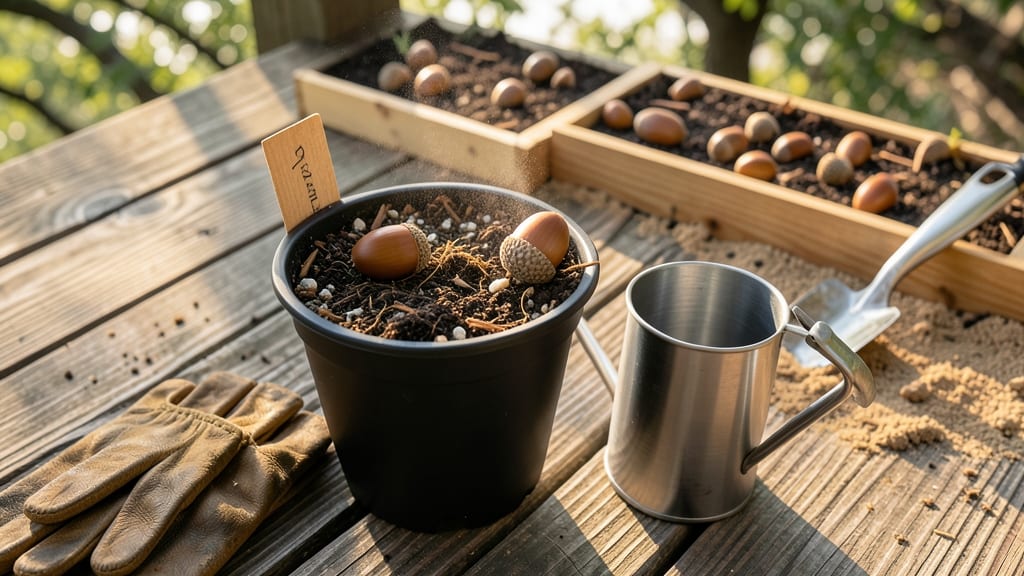
Planting a live oak from acorn means you're starting a tree that could live for centuries—if you get the cold stratification right. 🌱 The key isn't just burying an acorn and hoping; it's mimicking nature's winter process to break dormancy and trigger germination in just 6 months.
I've watched my own acorns go from hard shells to sprouting seedlings, and the patience pays off with a tree that outlives generations.
You'll need fresh acorns (collected in fall, not dried out), a plastic bag with moist peat moss or vermiculite, and a freezer for the 3-month cold treatment. The soil mix should be sandy loam with good drainage—live oaks hate soggy roots.
Most gardeners rush this step, but skipping stratification means waiting years (or never) for germination. My first batch failed because I skipped the cold period entirely.
By spring, you'll have tiny white roots pushing through the shell, ready for planting. The seedlings grow slowly at first—1-2 inches per year—but with proper care, they'll develop into sturdy saplings.
The real magic happens when you transplant them to their permanent spot, where they'll eventually cast shade for your great-grandchildren. This isn't quick gratification; it's a legacy.
Common challenges include mold during stratification (fix with airflow) and transplant shock (water deeply before moving). But the reward—a 200-foot-tall oak—makes every step worth it. Whether you're starting in a backyard or container, the process scales. Let's get those acorns germinating!
📚 In This Guide
- What you need
- Instructions
- Tips and common mistakes
- Wrapping up and next steps
What you need
- ● Mature acorns: 2–3 fresh, plump acorns (preferably from a live oak, Quercus virginiana). Ensure they’re free of cracks or mold.
- ● Cold-stratification supplies: 1 small container (e.g., plastic bag or paper towel-lined tray) for each acorn.
- ● Moistened peat moss or sphagnum moss (enough to cover acorns completely).
- ● 1 ziplock bag or airtight container per acorn (or a shared bag if using multiple acorns).
- ● Planting containers: 1–2 4–6 inch pots (with drainage holes) or a seedling tray for germination.
- ● Well-draining potting mix (e.g., 50% peat moss, 30% perlite, 20% sand).
- ● Outdoor planting supplies (for transplanting): 1 5–7 gallon pot or a well-drained garden bed (if planting outdoors).
- ● Compost or topsoil (for enriching the planting site).
- ● 1 mulch (e.g., shredded bark or pine straw) to retain moisture.
- ● Seedling heat mat (to encourage faster germination, especially in cooler climates).
- ● Spray bottle (for gentle watering during stratification).
- ● Humidity dome or plastic wrap (to create a mini greenhouse effect).
- ● pH testing kit (to ensure soil pH is between 5.0–6.5, ideal for oaks).
- ● Label tags (to track germination dates and planting progress).
Step-by-Step instructions for growing live oak trees from acorns
Cold-stratifying acorns is the secret to breaking dormancy—here’s how I’ve successfully germinated dozens of live oaks over the years.
🌱 Step 1: Collect and Prepare Fresh Acorns
Harvest acorns in late fall when they’ve fallen naturally—green acorns won’t germinate. Look for plump, brown ones with a thick, intact cap (the brown "hat"). Discard any that feel soft, moldy, or have holes from insects. Store them in a paper bag (not plastic) in the fridge for 3-4 months—this mimics winter conditions and softens the hard shell.
I always test a few acorns first by placing them in warm water for 24 hours. If they float, they’re hollow inside and won’t sprout. Sinkers are your best candidates. The cap should stay firmly attached—if it pops off easily, the acorn’s already dried out.
🌿 Step 2: Cold-Stratify for 6 Months
Fill a container with moist sand or peat moss (keep it damp but not soggy) and bury acorns 2 inches deep, spacing them 4 inches apart. Place the container in a garage, unheated basement, or outdoor cold frame where temperatures stay between 35-45°F. This 6-month cold treatment tricks the acorn into thinking winter has passed.
Check monthly—if the sand dries out, mist it lightly. You’ll see tiny root hairs poking through the shell after 3-4 months, but don’t rush to plant yet. The real magic happens when those roots grow 1-2 inches long—that’s your signal it’s ready for the next step.
☀️ Step 3: Pot Up Germinated Acorns in Early Spring
When roots reach 1-2 inches, carefully remove the acorn from the cold mix and plant it 1 inch deep in a 4-inch pot filled with well-draining potting mix. Use a 2-inch pot for each acorn—crowding leads to weak, tangled roots. Place the pot in a shady, protected spot (like under a tree) where temps stay 50-60°F during the day.
Water gently until the soil is evenly moist but not waterlogged. Overwatering now causes rot before the shoot emerges. I like to use a spray bottle to avoid disturbing the soil around the acorn. Keep the pot in this spot for 4-6 weeks until the first true leaves (not the seedling’s first cotyledons) appear.
🪴 Step 4: Harden Off and Transplant Outdoors
Once seedlings have 3-4 true leaves, move them to a sheltered outdoor area for 1 week to harden off. Start with 2 hours of morning sun, then gradually increase exposure over 7 days. By the time you transplant, they should handle full sun without wilting.
Dig a hole twice as wide as the root ball but only as deep as the pot’s base. Live oaks hate being buried too deep—plant the root flare (where the roots meet the trunk) just above soil level. Water deeply after planting to settle the soil, then mulch with 2 inches of wood chips to retain moisture.
⏰ Step 5: Maintain for First 2 Years
Water young live oaks deeply once a week during dry spells—1 gallon per week is enough for the first year. Too much water drowns roots; too little stresses the tree. You’ll know it’s thriving when new leaves appear in spring and fall (oaks grow slowly but steadily).
Fertilizer isn’t needed in the first year—live oaks form mycorrhizal relationships with soil fungi naturally. After year two, apply a slow-release oak-specific fertilizer in early spring. Watch for leaf curl or yellowing—this usually means too much water or poor drainage. Adjust care based on what you see, not just what you’ve read.
Tips & tricks for growing live oak trees from acorns
Here's what nobody tells you about turning acorns into sturdy live oaks—lessons from my own trial-and-error growing dozens of these majestic trees.
Selection Tip: The 24-hour water test in Step 1 isn't just about identifying hollow acorns—it also reveals which ones will germinate fastest. Acorns that sink immediately (not just float) and have a firm cap are your best bets. I've found that acorns with a slightly rough texture tend to germinate more reliably than those with smooth shells, though this isn't a hard rule. The cap should stay firmly attached even after soaking—if it pops off, the acorn has already dried out too much.
Cold-Stratification Strategy: The 6-month cold treatment at 35-45°F in Step 2 is non-negotiable for live oaks, but here's the secret: use a container with drainage holes. Without them, you risk root rot from excess moisture, which can kill your acorns before they even sprout. I use plastic storage bins with holes drilled in the bottom, elevated on bricks to prevent water pooling. This mimics natural forest conditions where acorns would lie on well-drained soil during winter.
Transplanting Technique: When you're ready to move germinated acorns to pots in Step 3, here's my game-changer: use a 50/50 mix of potting soil and perlite instead of straight potting mix. The extra perlite prevents compaction around the delicate roots, which is crucial since live oak seedlings are particularly sensitive to root damage. I also make sure to plant each acorn in its own 2-inch pot—this prevents root competition that can stunt growth. The key is to handle the acorns by their caps only, never the shells, to avoid damaging the emerging roots.
Harden-Off Hack: The 1-week hardening process in Step 4 is where most beginners fail. Start with just 2 hours of morning sun on day one, then increase by 30 minutes each day. I've seen seedlings crisp up overnight when moved too quickly to full sun. A simple trick is to place a piece of shade cloth over the seedlings during their first few days of hardening—this gives you control over exactly how much light they receive. Watch for leaves that look slightly wilted but perk up when watered; this is normal and means they're adjusting well.
Pro Tips for Plant A Live Oak Tree From Acorn
- Here's what nobody tells you about turning acorns into sturdy live oaks—lessons from my own trial-and-error growing dozens of these majestic trees.
- Selection Tip: The 24-hour water test in Step 1 isn't just about identifying hollow acorns—it also reveals which ones will germinate fastest.
- Cold-Stratification Strategy: The 6-month cold treatment at 35-45°F in Step 2 is non-negotiable for live oaks, but here's the secret: use a container with drainage holes.
Frequently asked questions
Got questions about growing a live oak from an acorn? Here are some of the most common ones—and their answers—to help you succeed!
How long does it take for an acorn to sprout after cold stratification?
With proper cold stratification (60–90 days in the fridge), acorns typically sprout within 2–4 weeks after planting in soil. Some may take longer—patience is key! Monitor moisture levels and warmth (70–75°F) to speed up germination. If nothing happens after 6 weeks, gently check for rot or pests.
Can I plant an acorn directly in the ground without cold stratification?
Yes, but success rates drop significantly—only 10–30% of acorns will germinate naturally. Cold stratification mimics winter conditions, breaking dormancy and boosting survival odds. If you skip it, plant in late fall or winter for the best chance, and choose a moist, shaded spot to protect the tender seedling.
How do I know if my acorn is viable before planting?
Test viability with the float test: Fill a bowl with water—viable acorns sink (good for planting), while hollow or rotten ones float. Also, check for a firm, plump shape and a smooth, unblemished shell. Avoid shriveled or insect-damaged acorns—they won’t sprout.
What should I do if my acorn sprouts mold or gets pests?
Mold or pests (like fungus gnats or weevils) mean your acorn needs better conditions. Act fast:
- Mold: Remove the acorn, rinse in a 10% hydrogen peroxide solution (1 part peroxide to 9 parts water), and replant in fresh, sterile potting mix.
- Pests: Treat soil with neem oil or diatomaceous earth, and ensure good airflow. Avoid overwatering—damp soil attracts pests.
How big should my live oak seedling be before transplanting outdoors?
Aim for a seedling with 3–5 sturdy leaves and a root system at least 4–6 inches deep before moving it outside. Harden off the seedling by gradually exposing it to outdoor conditions (sun, wind) over 1–2 weeks. Plant in early spring or fall, and water deeply to reduce transplant shock.
When is the best time to collect acorns for planting?
Harvest acorns in late fall (October–November), after they’ve fallen naturally but before they sprout. Look for firm, plump acorns with no cracks. Avoid those with holes (squirrel damage) or a musty smell. Store them in a cool, dry place (like a paper bag) until stratification.
Wrapping up and next steps
Growing a live oak from an acorn is a rewarding journey that connects you to nature’s patience and resilience. 🌱 With the right preparation—like cold stratification and a nurturing environment—you’ll witness a tiny acorn transform into a mighty tree. Stay consistent, and trust the process!
Ready to take the next step? Monitor your acorn’s progress and share your experience with fellow gardeners. Who knows? You might just inspire someone else to grow their own legacy tree! 🌳