
How To
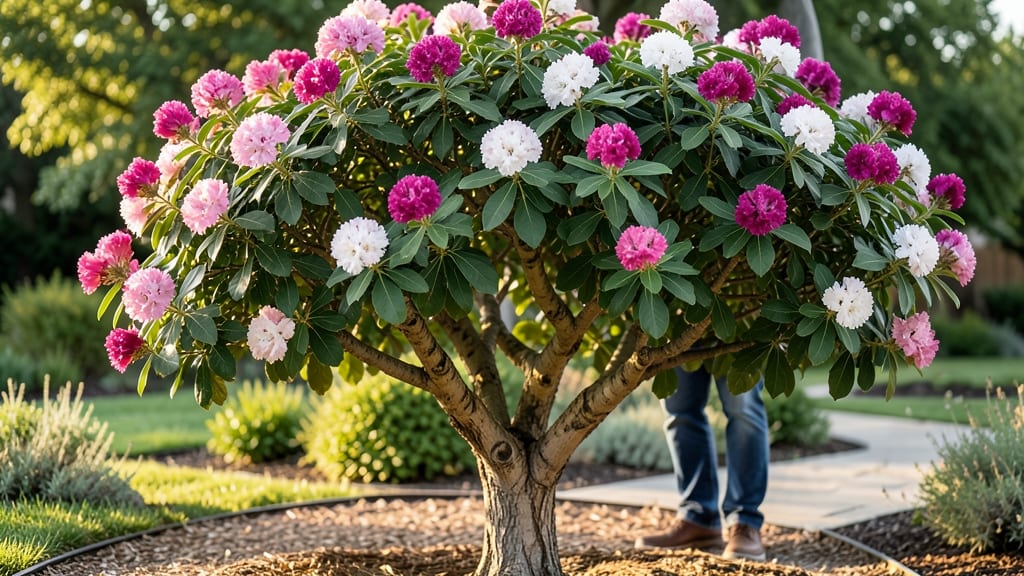
How tall does a crape myrtle tree grow? It ranges anywhere from 6 feet to towering 30 feet, depending on the variety you choose—and picking the right size for your space could save you years of pruning headaches.
If you're dreaming of a stunning, low-maintenance tree with vibrant blooms but limited space, crape myrtles could be your perfect match—but first, you need to know exactly how tall they grow. The answer depends entirely on the variety, and choosing the wrong one could leave you with an oversized headache.
Dwarf crape myrtles like 'Acoma' stay compact at just 6-10 feet, making them ideal for small yards or urban landscapes, while standard varieties like 'Muskogee' can reach 20-30 feet, perfect for large properties or as shade trees.
Even the smallest types need room to thrive, so spacing is key.
Below, I’ll break down the height ranges by variety, how to control growth naturally, and which companion plants work best—so you can pick the perfect crape myrtle 🌸 for your space without any surprises.


Crape myrtle tree height guide by variety (dwarf to giant)
Choosing a crape myrtle means deciding between a compact shrub and a towering specimen tree. The good news? There's a variety for every space, from 6-foot dwarf options to 30-foot giants.
I'll break down the most popular varieties by height so you can pick the perfect fit for your landscape—whether you're working with a cozy courtyard or a sprawling backyard.
Crape myrtles are beloved for their long-blooming summer flowers and low-maintenance nature. But their mature size varies dramatically. A dwarf variety might stay under 10 feet, while a standard tree can reach heights of a three-story building.
Let's explore the options so you can make an informed choice before planting.
| Variety | Mature Height | Spread | Sun Needs | Best For |
|---|---|---|---|---|
| 'Acoma' | 6-8 ft | 4-6 ft | Full sun | Small gardens, containers |
| 'Centennial' | 10-12 ft | 6-8 ft | Full sun | Medium spaces, urban yards |
| 'Dynamite' | 12-15 ft | 8-10 ft | Full sun | Privacy screens, focal points |
| 'Tonto' | 8-10 ft | 5-7 ft | Full sun | Small yards, patios |
| 'Muskogee' | 15-20 ft | 10-12 ft | Full sun | Large landscapes, shade trees |
| 'Natchez' | 20-25 ft | 12-15 ft | Full sun | Backyard centers, street trees |
| 'Tiftrend' | 25-30 ft | 15-20 ft | Full sun | Large properties, shade providers |
For small spaces, the 'Acoma' and 'Tonto' varieties are my top picks. These dwarf crape myrtles stay under 10 feet tall, making them perfect for containers, patios, or foundation plantings.
Their compact size also means they require less pruning, which is a bonus if you're not eager to grab the shears every year.
If you're working with a medium-sized yard, consider the 'Centennial' or 'Dynamite' varieties. These semi-dwarf crape myrtles reach 12-15 feet tall, offering plenty of shade and summer blooms without overwhelming your space. They're also great for creating privacy screens or as a focal point in a garden bed.
For large landscapes, the 'Muskogee', 'Natchez', and 'Tiftrend' varieties are the tallest crape myrtles you can grow. These standard trees reach 20-30 feet tall, making them ideal for backyard centers, street trees, or shade providers in expansive properties.
Just be prepared for their wide canopies—some varieties spread 15-20 feet!
All crape my
How to control crape myrtle height naturally (pruning tips & tricks)
Controlling your crape myrtle height starts with understanding its natural growth patterns. These stunning trees grow 6 to 30 feet tall depending on the variety, but with proper pruning techniques, you can shape them to fit your landscape perfectly.
The key is timing—prune at the right moment to encourage bushier growth and vibrant blooms without stunting the tree.
Most gardeners make the mistake of pruning too late in the season, which removes next year's flower buds. Instead, focus on late winter or early spring pruning when the tree is still dormant. This gives your crape myrtle time to recover and produce those iconic summer blooms.
Let's dive into the step-by-step process to keep your tree at your desired height while maintaining its health and beauty.
Step-by-Step Pruning Guide for Crape Myrtle Height Control
- Step 1: Wait until late winter (just before buds swell) to prune. This timing ensures you don't accidentally remove flower buds that form in late spring.
- Step 2: Remove dead or crossing branches first using clean, sharp pruners. Cut back to the nearest healthy bud or branch collar to prevent disease.
- Step 3: Shape the tree by cutting back 1/3 of the previous year's growth. Focus on reducing height rather than width to maintain a natural form.
- Step 4: Encourage bushiness by trimming back some of the central leader (main vertical stem) to promote side branching. This creates a fuller, more compact tree.
- Step 5: Avoid "crape murder"—never cut into the trunk or large branches. This practice weakens the tree and can lead to disease or death.
- Step 6: Clean up pruned branches immediately and dispose of them properly to prevent pests or diseases from spreading to your garden.
- Step 7: Apply mulch around the base (but not touching the trunk) to retain moisture and protect roots as the tree recovers from pruning.
For dwarf varieties (6-10 feet), you can prune more aggressively to maintain their compact size, while standard varieties (20-30 feet) benefit from lighter height reduction to preserve their majestic form. Always use sterilized tools to prevent bacterial or fungal infections that can harm your tree's health.
One common mistake is over-pruning in a single session, which stresses the tree and reduces next year's blooms. Instead, spread out pruning over 2-3 sessions if needed, giving the tree time to recover between cuts. This gradual approach keeps your crape myrtle thriving while maintaining your desired height.
After pruning, monitor your tree for new growth and adjust future cuts accordingly. Healthy crape myrtles respond well to proper pruning by producing more flowers and a stronger structure. With patience and the right techniques, you can enjoy a beautifully shaped tree that fits perfectly in your landscape.
Remember, the goal is to enhance natural growth, not fight it. By following these steps, you'll create a crape myrtle that's both visually stunning and perfectly sized for your space. Happy pruning!