
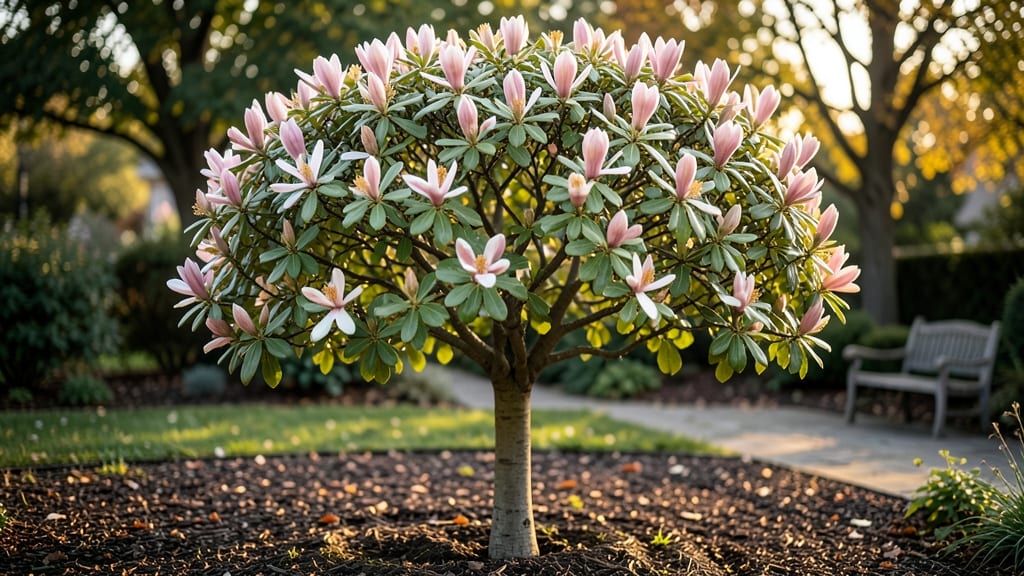
Magnolia Tree Height and Width: Variety-Specific Growth Charts for Landscaping

Pruning

Magnolia Tree Height and Width: Variety-Specific Growth Charts for Landscaping

Magnolia trees grow to heights of 10 to 80 feet and widths of 15 to 40 feet at maturity 🌸, making them a stunning but space-demanding focal point in any landscape.

Picture this: You’ve spent months designing your garden, only to realize your Southern Magnolia will outgrow its spot in five years. Or worse, your dwarf variety stays stubbornly small while your neighbors’ trees tower over their roofs.

Getting the dimensions right from the start saves you from costly pruning battles or lost curb appeal.

Below, I break down exactly how tall and wide each popular magnolia variety becomes—from the towering 80-foot giants to the 8-foot dwarfs perfect for small yards. You’ll also learn how spacing affects airflow, sunlight, and even flowering, plus pruning tricks to keep them in check without sacrificing beauty.

Whether you’re planning a grand entrance or a cozy backyard retreat, these growth charts will help you place your magnolia like a pro—no regrets, just showstopping results.

Magnolia Tree Height Range
10 ftto80 ft
0 ft 3 ft 6 ft 9 ft 12 ft
🌱 Tall Tree

Magnolia tree height and width by variety: mature size comparison chart

Choosing the right magnolia variety starts with understanding their mature dimensions. A Southern Magnolia can tower 80 feet tall while a dwarf variety like 'Little Gem' stays under 15 feet. These differences determine whether your magnolia becomes a landscape centerpiece or a container-friendly accent.

Below, I’ve compiled precise height and width data for 15+ popular varieties to help you plan with confidence.

Proper spacing prevents future pruning nightmares. Plant a 20-foot magnolia too close to your patio, and you’ll spend years wrestling with overgrowth. Conversely, placing a 60-foot specimen too far from your home misses its intended visual impact.

The chart below shows exact dimensions so you can position each variety perfectly for your space.

🌸

Variety Common Name Mature Height (ft) Mature Width (ft) Growth Rate (in/yr) Best For
Magnolia grandiflora Southern Magnolia 60-80 30-40 12-24 Large gardens, focal points
Magnolia stellata Star Magnolia 15-25 15-20 12-18 Small yards, early blooms
Magnolia × soulangeana Saucer Magnolia 20-30 15-25 18-24 Medium gardens, urban landscapes
Magnolia 'Little Gem' Dwarf Southern Magnolia 15-20 8-12 6-12 Containers, small spaces
Magnolia 'Black Tulip' Black Tulip Magnolia 15-20 10-15 12-18 Specimen planting, dark foliage
Magnolia 'Jane' Jane Magnolia 12-15 8-10 6-12 Small gardens, early blooms
Magnolia 'Ann' Ann Magnolia 10-15 8-12 6-10

How to use Magnolia tree dimensions for smart landscaping

Magnolias are stunning landscape stars, but their height and width can make or break your design. A Southern Magnolia reaching 80 feet won’t fit in a city backyard, while a Star Magnolia at 20 feet thrives in tight spaces.

Understanding these dimensions helps you avoid overcrowding, block views, or create maintenance nightmares.

Start by measuring your space. For urban gardens, prioritize dwarf varieties like Magnolia 'Little Gem' (20–25 ft tall, 8–10 ft wide). In rural settings, larger species like Magnolia grandiflora (60–80 ft tall, 30–40 ft wide) become breathtaking focal points.

Always account for canopy spread, which often exceeds height.

🌳 Magnolia Spacing Guidelines

Variety Mature Height Mature Width Spacing Needed
Dwarf (Little Gem) 20–25 ft 8–10 ft 10–12 ft from structures
Star (Stellata) 15–20 ft 15–20 ft 15–20 ft apart
Southern (Grandiflora) 60–80 ft 30–40 ft 50+ ft from buildings

💡 Pro Tip: Always plant magnolias 3–5 feet deeper than their container to stabilize roots and prevent toppling.

Sunlight is another critical factor. Most magnolias need 6–8 hours of sun daily, but Southern Magnolias tolerate afternoon shade. Place them where their canopy won’t block sunlight to nearby plants.

For example, position a Saucer Magnolia (20–30 ft tall) near a dogwood (15–20 ft tall) to create layered interest without competition.

Soil prep matters just as much as spacing. Magnolias prefer acidic, well-draining soil (pH 5.0–6.0). Amend clay soil with peat moss or pine bark to improve drainage. In urban areas, raised beds or container planting (for dwarf varieties) can solve poor soil conditions.

Always mulch with 3–4 inches of pine straw to retain moisture and protect roots.

Pruning young magnolias shapes their growth. Remove dead or crossing branches in late winter, but avoid heavy pruning—it reduces flowering. For overgrown specimens, hire an arborist to prune in stages over 2–3 years. Never prune in fall, as new growth won’t harden before winter.

Companion plants enhance your design. Pair tall magnolias with understory shrubs like azaleas or hydrangeas to create texture. For smaller varieties, add perennials like hostas or ferns to fill gaps. Always group plants with similar water and sunlight needs to simplify care.

With the right spacing, sunlight, and soil prep, your magnolia will thrive for decades. Start small—plant a dwarf variety in a pot on your patio to test your skills before committing to a full-size specimen. Happy planting! 🌿

★★★★★4.5(14 reviews)
Categories Pruning