
Pests and Diseases
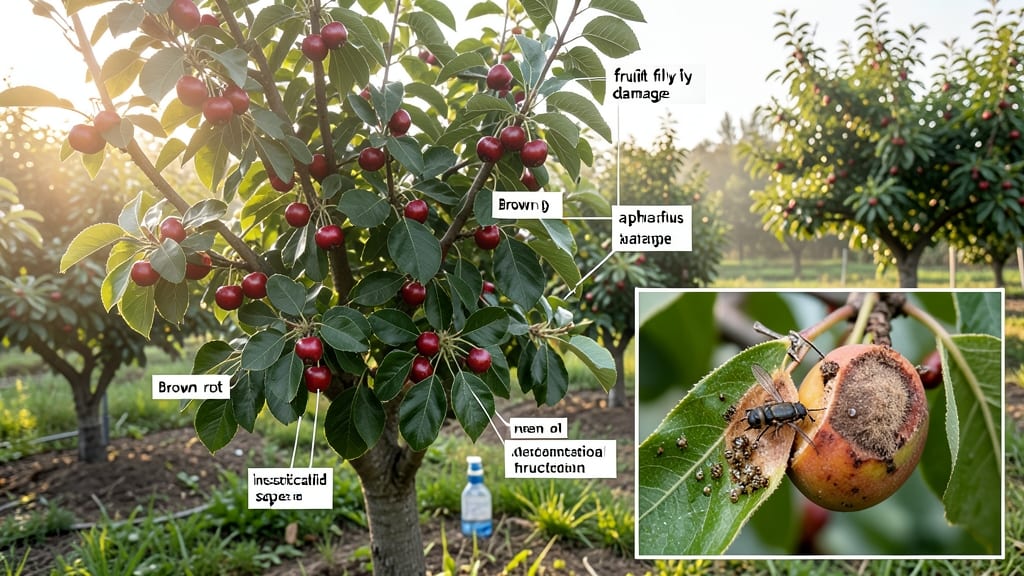
Your cherry tree’s health starts with knowing the sneaky pests and diseases that can turn lush branches into a battleground. 🌳 I’ve seen brown rot turn vibrant blooms into mush and borers hollow out trunks—both disasters you can prevent with the right care.
This guide cuts through the confusion so you can spot trouble early and stop it before it spreads.
The real enemy isn’t just what you see—it’s what you don’t. Aphids cluster on new leaves, spider mites weave fine webs in dry heat, and brown rot hides in cracked fruit until it’s too late.
The good news? Most issues start with simple fixes like pruning for airflow, choosing disease-resistant varieties, or a quick spray of neem oil before symptoms flare.
By the end, your tree will be thriving—no more wilting cankers or skeletonized branches. You’ll recognize early warning signs (like sticky sap or discolored leaves) and act fast, saving both your harvest and your sanity.
Even if pests strike, organic and chemical options give you control without poisoning the soil.
Works for sweet, tart, or ornamental cherries—whether you’re fighting off borers in summer or brown rot in spring. Let’s get your tree back to its healthiest self before next season’s blooms.
Root Causes Behind Tree Stress
Cherry trees, with their delicate blossoms and sweet fruit, are susceptible to pests and diseases when their natural defenses weaken. Understanding the underlying reasons helps you take proactive steps to protect your tree. Here’s why these issues arise—and how to address them before they spiral out of control.
Cherry trees thrive in specific conditions, and when these are disrupted, their immune systems falter, making them prime targets for pests and pathogens.
- Extreme Temperatures:
Sudden temperature swings—like late spring frosts or scorching summer heat—damage leaves and bark. This stress creates entry points for fungal infections (e.g., Monilinia, the culprit behind brown rot) and attracts sap-sucking insects like spider mites. Actionable fix: Plant cold-hardy varieties (e.g., 'Montmorency') and use frost cloths during late frosts.
- Poor Soil Conditions:
Compacted, waterlogged, or nutrient-deficient soil starves roots, reducing the tree’s ability to fight off diseases like Cytospora canker. Poor drainage also invites fungal growth at the base. Actionable fix: Test soil pH (ideal: 6.0–6.5) and amend with compost or organic matter.
- Water Stress:
Overwatering suffocates roots, while drought weakens the tree’s vascular system, making it vulnerable to borers and bacterial infections. Actionable fix: Water deeply 1–2 times per week (depending on climate) and mulch to retain moisture.
Pests and diseases don’t act alone—they target trees already compromised by poor health or environmental factors. Here’s how they gain the upper hand:
- Weakened Bark:
Physical damage from pruning cuts, hail, or animal scratches creates wounds where Eutypa dieback (a fungal disease) or European cherry fruit fly larvae can infiltrate. Actionable fix: Prune in late winter (dormant season) and seal large wounds with pruning sealant.
- Overcrowded Canopies:
Tight branch spacing reduces airflow, trapping moisture and promoting fungal spores (e.g., Powdery mildew). Actionable fix: Thin branches to improve sunlight penetration and circulation.
- Lack of Beneficial Microbes:
Healthy soil teems with mycorrhizal fungi and beneficial bacteria that suppress harmful pathogens. Chemical fertilizers or pesticides can disrupt this balance, leaving trees defenseless. Actionable fix: Use compost teas or mycorrhizal inoculants to boost soil biodiversity.
Even well-intentioned gardening practices can backfire. These common mistakes invite pests and diseases:
- Improper Pruning:
Cutting too late in the season (when pathogens are active) or using contaminated tools spreads infections like Silver leaf disease. Actionable fix: Sterilize pruners with rubbing alcohol and prune during dormancy.
- Ignoring Early Signs:
Yellowing leaves, wilting branches, or chewed fruit are red flags often dismissed until the problem spreads. Actionable fix: Conduct weekly inspections, especially after rain or extreme weather.
- Using Infested Mulch or Tools:
Recycled wood chips from diseased trees or shared tools can transfer pathogens like Armillaria root rot. Actionable fix: Source mulch from certified suppliers and sanitize tools between uses.
By addressing these root causes—environmental, biological, and human—you’ll fortify your cherry tree’s resilience and minimize the risk of pests and diseases. Prevention starts with understanding why problems occur, not just how to treat them.
Practical fixes for cherry tree woes
When your cherry tree starts showing signs of stress—whether it’s chewed leaves, strange spots, or wilting branches—don’t panic! 🌿 With the right approach, you can turn things around. Below are targeted solutions for common cherry tree pests and diseases, along with preventative tips to keep your tree thriving.
---
#### 🐛 Aphids, Scale, and Spider Mites These tiny troublemakers suck sap, leaving behind sticky residue (aphids) or webbing (mites). Here’s how to kick them out:
- 💦 Blast Them Off Use a strong stream of water from a hose to dislodge aphids and scale insects. Repeat every few days until they’re gone.
- 🧴 Soap It Up Mix 1 tablespoon of mild liquid soap (like Castile soap) with 1 quart of water and spray directly on infested areas. Avoid harsh chemicals—this is gentle but effective!
- 🦋 Introduce Beneficial Insects Ladybugs, lacewings, and parasitic wasps love eating pests. Buy them online or attract them with neem oil sprays (which also repel pests).
- 🌿 Prevent Future Infestations - Prune regularly to improve airflow (pests love crowded branches). - Remove fallen leaves where pests hide. - Plant companion flowers like marigolds or nasturtiums to deter pests naturally.
---
#### 🐛 Japanese Beetles (The Leaf Skeletons) These shiny green-and-copper beetles devour cherry leaves, leaving just the veins. Act fast!
- 🕵️ Handpick & Drop Fill a bucket with soapy water and shake beetles off into it. Do this in the early morning when they’re sluggish.
- 🌿 Use Neem Oil or Kaolin Clay Spray neem oil (follow label instructions) or dust kaolin clay (like Surround WP) to create a barrier they can’t cross.
- 🚫 Avoid Chemicals (If Possible) If you must use pesticides, opt for pyrethrin-based sprays (derived from chrysanthemums) and apply at dusk to protect bees.
- 🌱 Long-Term Defense - Plant trap crops like roses or grapes nearby to lure them away. - Mulch heavily—beetles dislike thick mulch layers.
---
#### 🍄 Brown Rot (The Biggest Threat!) This fungus causes black, mushy fruit and leaf spots. It spreads fast—act immediately!
- 🧹 Clean Up Debris Remove all infected fruit, leaves, and mummified cherries from the ground and burn or trash them (don’t compost!). This stops spores from overwintering.
- 💧 Adjust Watering Habits Water early in the day so leaves dry quickly. Avoid overhead sprinklers—they spread spores.
- 🍄 Fungicide Sprays (Preventative!) Apply copper fungicide (like Bordeaux mixture) or organic options like baking soda spray (1 tbsp baking soda + 1 tsp oil + 1 gallon water) before bloom and after harvest.
- 🌿 Prune for Airflow Thin out branches to reduce humidity—fungi love damp, crowded spaces.
---
#### 🍄 Powdery Mildew (White Dust Alert!) This fuzzy white coating weakens leaves. Here’s how to scrub it away:
- 🧼 Baking Soda Spray Mix 1 tsp baking soda + 1 tsp horticultural oil + 1 quart water and spray every 7–10 days until gone.
- 🌿 Sulfur or Neem Oil Use elemental sulfur (follow package rates) or neem oil for a preventative shield.
- 🌱 Boost Tree Health - Fertilize lightly with potassium-rich compost (stronger trees resist mildew). - Space trees properly (6–10 ft apart) for better airflow.
---
#### 🦠 Bacterial Leaf Spot (Black Spots = Bad News) Small, greasy black spots? This bacterial disease spreads with rain and tools. Stop it in its tracks!
- 🧼 Copper Spray (Only Cure!) Copper fungicide is the only effective treatment. Spray every 7–14 days during wet weather.
- 🔪 Sterilize Tools Clean pruners and shears with rubbing alcohol between cuts to avoid spreading bacteria.
- 🌧️ Improve Drainage If your soil stays soggy, amend with compost to help roots stay dry.
---
✅ Monitor Regularly – Check leaves weekly (especially undersides) for early signs. ✅ Rotate Solutions – Pests/diseases build resistance; switch methods seasonally. ✅ Healthy Tree = Strong Defense – Mulch, water deeply (but not too much), and fertilize in early spring. ✅ Timing Is Everything – Preventative sprays (neem, copper) work best before pests/diseases appear!
--- By tackling issues early and methodically, your cherry tree can bounce back stronger than ever. 🌟 Prevention is your best tool—stay vigilant, and enjoy those sweet, juicy cherries next season!
Frequently asked questions
What’s the first sign that my cherry tree has brown rot?
Look for dark, sunken spots on fruit that turn black and mushy, often with a pinkish mold underneath. Leaves may also develop brown spots with yellow halos. This fungus thrives in wet conditions, so check after rain or overhead watering.
How do I tell if my cherry tree has spider mites vs. aphids?
Spider mites create fine webbing on leaves (especially undersides) and cause yellow stippling. Aphids leave sticky honeydew residue and cluster in curled leaves. Use a magnifying glass—mites are tiny red/yellow dots, while aphids are larger green/black insects.
Can I save my cherry tree if it’s already infected with canker disease?
Early-stage canker (sunken, oozing bark wounds) can be managed by pruning infected branches 6+ inches below the lesion and sterilizing tools. For advanced cases, consult an arborist—some trees may need removal to prevent spread to nearby plants.
Is neem oil safe to use during cherry tree blooming?
Neem oil is low-toxicity but should be applied after bloom to protect pollinators. During flowering, opt for baking soda spray (1 tsp baking soda + 1 quart water) or kaolin clay—both are bee-friendly and effective against pests.
Why do my cherries keep getting infested with fruit flies?
European cherry fruit flies lay eggs in ripe or damaged fruit. Thin fruit to reduce overcrowding, pick fallen cherries daily, and wrap tree trunks with sticky bands to trap emerging adults. Apply spinosad spray (organic) during flight season (late spring).