
How To
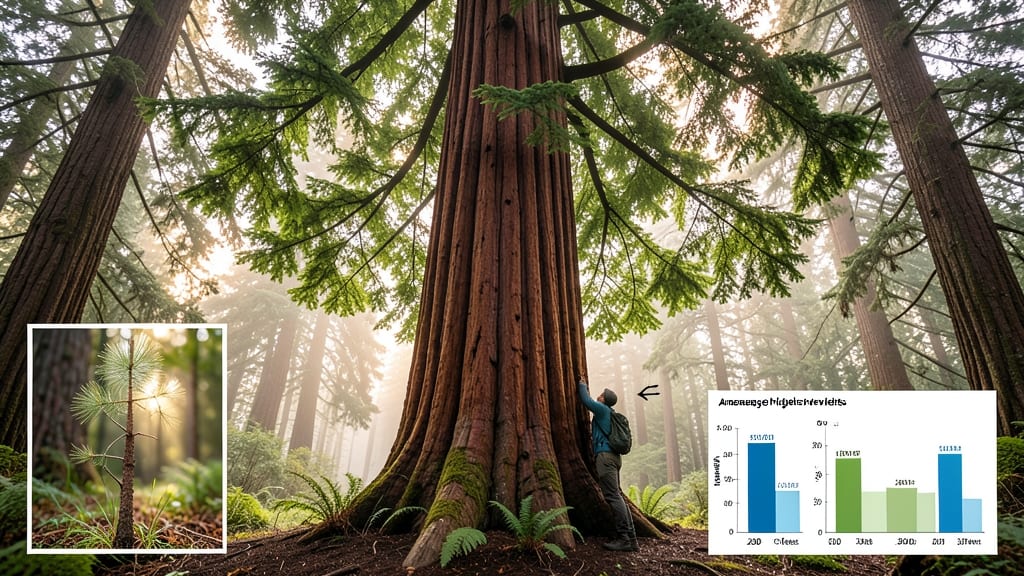
How tall a tree can grow depends entirely on its species, with coast redwoods hitting heights over 379 feet—the tallest living things on Earth—while most common trees like oaks or maples typically max out between 60 and 100 feet.
Nature's skyscrapers owe their height to a perfect balance of genetics, environment, and physics. 🌲 The coast redwood’s towering stature comes from its ability to transport water efficiently through massive, porous cells in its trunk—something smaller trees can't replicate.
Meanwhile, common trees like birches or cherries hit their height limits due to structural constraints: their trunks can't support the weight of additional growth without becoming unstable.
What's fascinating is how climate plays a role—trees in tropical rainforests often grow faster but rarely reach the same heights as redwoods, which thrive in cooler, foggy coastal climates where moisture stays abundant year-round.
For those curious about growing their own towering giants, soil quality and water access are non-negotiable. Coast redwoods need rich, well-drained soil and consistent moisture, while Douglas firs prefer slightly drier conditions.
Even with ideal care, most backyard trees will never rival the redwoods—but with the right species and patience, you can still grow trees that reach 50 to 80 feet in a lifetime.
💡 In This Article
- Factors Limiting Tree Height Growth
- Tallest Tree Species Compared: Growth Rates and Care Tips
Factors limiting tree height growth
Tree height is fundamentally constrained by physics—specifically, how water travels from roots to leaves. The cohesion-tension theory explains that water climbs through microscopic tubes called xylem, but gravity and evaporation create resistance.
In tall trees like coast redwoods, this system must overcome 100+ feet of vertical lift—a challenge that requires specialized adaptations. Their xylem cells are wider (up to 0.004 inches in diameter) to reduce friction, while smaller trees like maples have narrower xylem that limits their height.
The root-to-crown ratio is another critical factor. A tree's roots must anchor its weight and supply water, but physics dictates that root systems can't grow proportionally taller. Coast redwoods achieve heights over 379 feet with roots that spread only 10-15 feet deep—a ratio that would collapse in most species.
Their secret? A thin, flexible trunk that bends slightly in wind, reducing structural stress. In contrast, oaks with 60-foot heights have roots extending 2-3 times deeper to support their bulkier trunks.
Genetics also play a decisive role. The maximum height potential is hardwired into a species' growth hormones, particularly auxin, which regulates cell elongation. Coast redwoods produce 20-30% more auxin than average trees, allowing their cells to stretch taller without breaking.
Meanwhile, species like Douglas firs (which reach 300 feet) have evolved a tapered crown to reduce wind resistance—a trait absent in shorter trees like willows, which prioritize rapid growth over height.
Climate acts as both an enabler and a limiter. Coast redwoods thrive in foggy, coastal climates where moisture condenses directly on leaves, supplementing root water uptake. In drier regions, trees like mesquite (max 50 feet) grow wide but short to conserve water.
Even with ideal conditions, structural limits kick in: a 100-foot oak would snap under its own weight without its specialized wood density and branching patterns.
What most people overlook is how leaf surface area impacts height.
Tall trees need massive canopies to photosynthesize enough energy for growth, but their branches must stay lightweight. Coast redwoods solve this with needle-like leaves that reduce wind resistance, while broadleaf species like sycamores (max 100 feet) grow flatter crowns.
This trade-off explains why tropical trees grow fast but rarely exceed 200 feet—their broad leaves demand more energy to support than redwood needles.
For gardeners, these factors mean soil depth and water access are non-negotiable. A 50-foot tree needs roots reaching at least 15 feet deep, while shallow soils cap growth at 30-40 feet.
Even with perfect conditions, genetics set the ceiling: a Douglas fir will never grow like a redwood, no matter how much you water it.