
How To
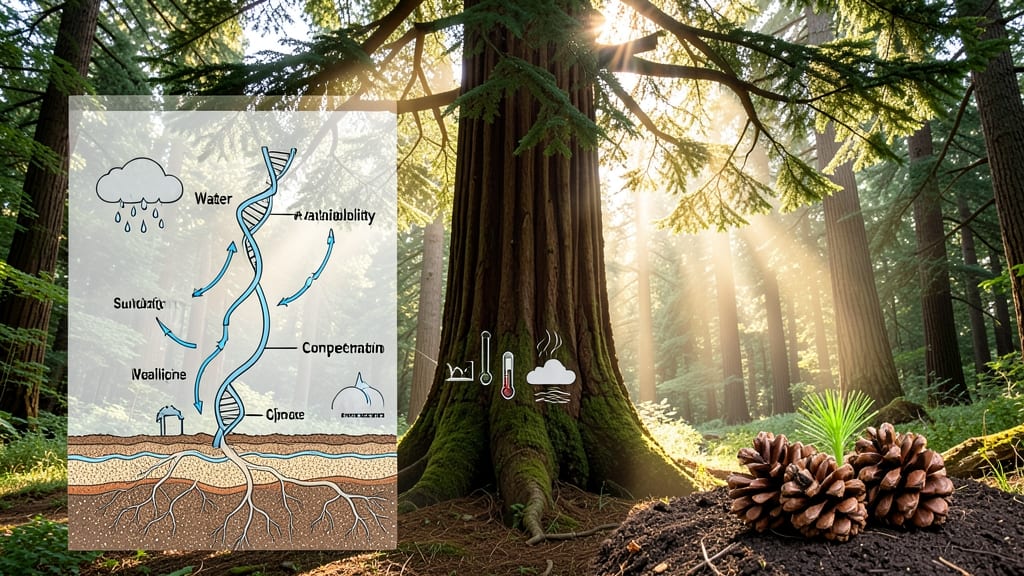
What factors might affect how tall a coast redwood tree can grow? Climate, soil quality, water availability, genetics, sunlight exposure, and competition for space all play a crucial role. Ideal conditions—cool, moist air, nutrient-rich soil, and minimal crowding—allow these giants to reach their full 350-foot potential.
These towering trees thrive where conditions align perfectly—think of the foggy, temperate coastal regions of Northern California as their natural playground. 🌲 The combination of high humidity, consistent rainfall, and mild temperatures creates the perfect environment for rapid vertical growth.
Without these ideal factors, redwoods may grow wider instead of taller, or even struggle to reach maturity at all. For example, redwoods planted in drier inland areas rarely surpass 100 feet, demonstrating just how critical their native habitat truly is.
Genetics also play a starring role in determining height potential. Some redwoods inherit faster growth rates from their parent trees, while others may be genetically predisposed to develop thicker trunks rather than greater height.
Even the tiniest differences in seed source can lead to dramatic variations in growth patterns over decades. That's why the oldest and tallest redwoods often trace their lineage back to the most favorable growing conditions in their natural range.
💡 In This Article
- Climate and Environmental Conditions for Maximum Redwood Growth
- Soil Composition and Genetic Factors in Redwood Height Development
Climate and environmental conditions for maximum redwood growth
The coastal redwood's vertical growth is directly tied to its ability to access moisture from the air. These trees thrive in the foggy, high-humidity conditions of Northern California's coast, where atmospheric moisture condenses on their needles and drips down to the roots—a process called "fog drip."
This provides a consistent water supply even during dry summer months, allowing them to grow 3-5 feet per year in optimal conditions. Without this fog, inland redwoods grow significantly slower, often less than 1 foot per year, because they rely solely on rainfall.
Temperature also plays a critical role in their growth patterns. Redwoods prefer cool summers (60-75°F) and mild winters (30-50°F), as extreme heat or cold can stunt growth by disrupting photosynthesis. At higher elevations, where temperatures drop below freezing, redwoods struggle to establish deep root systems, limiting their height potential.
The coastal microclimate near the Pacific Ocean creates this ideal temperature range, with ocean currents moderating seasonal extremes. This is why the tallest redwoods—like Hyperion at 380 feet—are found in these protected coastal valleys.
Sunlight exposure affects both growth rate and canopy development. While redwoods can tolerate partial shade, they grow fastest in dappled sunlight, where they receive indirect light for most of the day. Too much direct sun can dry out their needles, while too little shade slows photosynthesis.
The canopy expansion of these trees is a strategic adaptation—broader canopies capture more light but require stronger structural support, which comes from thicker trunks and deeper roots. This balance explains why redwoods in dense forests grow taller but thinner than those in open areas.
Water availability is the single most limiting factor for redwood height. These trees need at least 30-50 inches of annual rainfall to reach their full potential, with most coming from winter storms and summer fog.
In drier regions, redwoods allocate more energy to root development rather than vertical growth, resulting in shorter, wider trees. For example, redwoods in Oregon's Willamette Valley (which gets 40-60 inches of rain yearly) average 200-250 feet, while those in drier Central California rarely exceed 150 feet.
This water dependency is why coastal redwoods are often found near rivers and streams, where groundwater tables are high.
Competition for space is another hidden growth regulator. In crowded forests, redwoods grow taller to access sunlight, a phenomenon called "competitive exclusion." This is why the tallest redwoods are often found in open groves or forest edges, where they face less competition.
However, this rapid vertical growth comes at a cost—thinner trunks that are more susceptible to wind damage. The root systems of these trees can spread up to 100 feet wide to stabilize against coastal winds, but in tight spaces, roots become shallow, limiting stability and height potential.
One fascinating adaptation is how redwoods respond to seasonal changes. During spring and early summer, when moisture is abundant, they grow most rapidly, adding up to 6 inches per month in ideal conditions.
In late summer and fall, growth slows as moisture becomes scarce, and the tree focuses on root reinforcement. This seasonal rhythm is why redwoods in coastal fog belts maintain consistent growth year-round, while inland specimens show dramatic seasonal fluctuations.