
How To
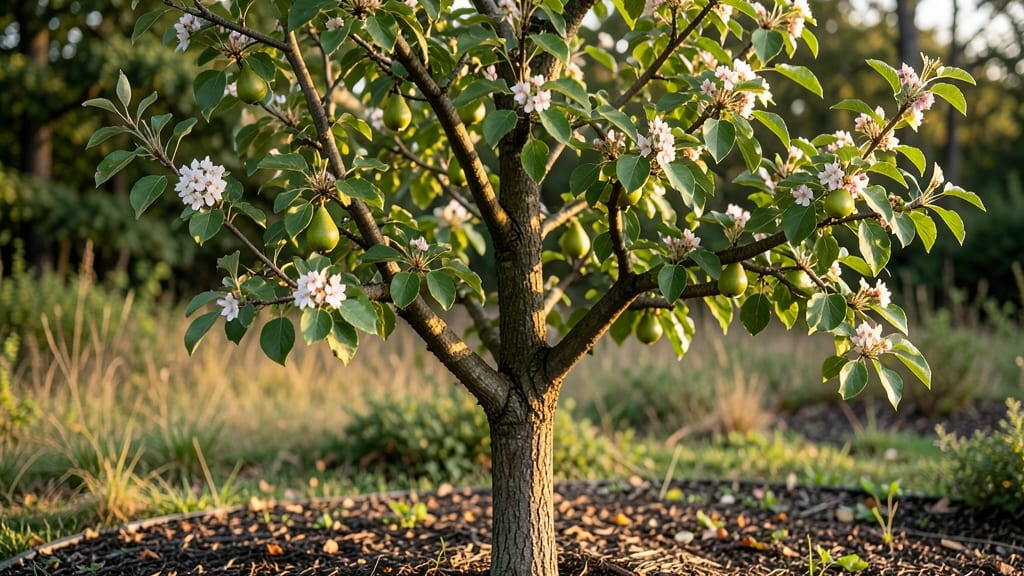
How tall can a pear tree grow? It can range anywhere from 8 feet to towering over 50 feet, depending entirely on its rootstock and growing conditions.
Picture this: a dwarf pear tree 🍐 tucked into a corner of your patio, its branches heavy with fruit, while a standard variety stretches toward the sky like a natural skyscraper.
The difference isn’t just about space—it’s about how much fruit you’ll harvest, how often you’ll prune, and whether you’ll need a ladder (or a crane) to pick your pears.
Most home gardeners opt for dwarf or semi-dwarf varieties to save space and simplify care, but standard trees thrive in orchards or large properties where height isn’t a concern. The right choice depends on your yard, your patience, and whether you’re dreaming of a small-scale harvest or a backyard orchard.
In this guide, I’ll break down the height ranges for each rootstock type, how to control growth with pruning, and the spacing rules that keep your trees healthy—and your neighbors happy.


Pear tree height limits by rootstock type: dwarf vs semi-dwarf vs standard
Choosing the right pear tree rootstock is the first step in determining how tall your tree will grow. Rootstocks control not just height but also fruit production, disease resistance, and yield potential.
For example, a dwarf pear tree might reach just 8–12 feet, while a standard variety can tower over 30 feet. Your yard’s size and your pruning goals will dictate which type is best for you.
Rootstocks are the foundation of your pear tree, influencing everything from growth rate to fruit quality. Dwarf rootstocks, like Quince C or Old Home x Farmingdale (OHxF), keep trees manageable for small spaces, while standard rootstocks like Seeding or Angeleno create towering specimens perfect for large properties.
Semi-dwarf options strike a balance, typically reaching 15–20 feet at maturity.
Growth rates also vary dramatically. A dwarf pear tree may take 3–5 years to bear fruit but grows only 1–2 feet per year. In contrast, a standard tree can add 3–5 feet annually and may take 5–7 years to produce fruit. Understanding these differences helps you plan for long-term care and space management.
Popular pear varieties like Bartlett and Doyenné du Comice are often grafted onto different rootstocks to control size. For instance, a Bartlett pear on Quince C rootstock will stay dwarf-sized, while the same variety on Seeding rootstock will grow to full height. This flexibility lets you customize your tree’s size to fit your garden’s layout.
| Rootstock Type | Mature Height | Growth Rate (Annual) | Time to Fruit | Best For |
|---|---|---|---|---|
| Dwarf (Quince C, OHxF) | 8–12 ft | 1–2 ft/year | 3–5 years | Small gardens, containers, urban yards |
| Semi-Dwarf (Old Home, MM106) | 15–20 ft | 2–3 ft/year | 4–6 years | Backyards, medium spaces, low-maintenance pruning |
| Standard (Seeding, Angeleno) | 25–35 ft | 3–5 ft/year | 5–7 years | Large properties, orchards, shade trees |
If you’re working with limited space, dwarf rootstocks are the clear winner. They’re ideal for container growing, balconies, or small urban yards. My own dwarf Bartlett pear thrives in a large pot on my patio, producing 50+ pears annually without overwhelming the space.
Just ensure the container is at least 20 gallons and has drainage holes.
For semi-dwarf pear trees, you’ll need more room but still enjoy manageable maintenance. These trees fit well in backyard orchards or alongside other fruit trees. A Doyenné du Comice on MM106 rootstock will reach about 18 feet, perfect for a 10x10-foot planting area.
They also bear fruit slightly faster than dwarf varieties, often in 4–5 years.
Standard pear trees require significant space—think 20+ feet in all directions—and are best suited for rural properties or orchard settings. Their taller stature means more pruning and potential structural support needs, but they produce the largest yields.
A Bartlett pear on Seeding rootstock can reach 30 feet and yield hundreds of pears per season.
Pruning plays a crucial role in managing your pear tree’s height. For dwarf trees, I recommend light annual pruning to maintain shape and encourage airflow. Semi-dwarf and standard trees need more aggressive pruning—especially during their first 3–5 yearslate winter or early spring before new growth begins.
Soil quality and climate conditions also affect height. Pear trees thrive in well-draining soil with a pH of 6.0–7.0. In warmer climates, growth rates may accelerate, while cooler zones can slow height increases.
If you’re in a USDA Zone 5–7, expect slightly slower growth compared to Zone 8–9.
Before planting, measure your space and consider future growth. A standard pear tree needs at least 25 feet of clearance from structures
How rootstock affects pear tree fruit production and longevity
When selecting a pear tree, the rootstock determines more than just height—it directly impacts fruit production, disease resistance, and how long your tree will thrive.
Dwarf varieties may bear fruit in just 3-5 years but typically live 15-20 years, while standard trees take 5-8 years to fruit but can last 50+ years with proper care. This trade-off is why understanding rootstock is critical for long-term success.
Dwarf rootstocks like Quince C or Old Home x Farmingdale produce smaller trees (8–12 ft) with concentrated energy for fruit production. However, their shorter lifespan means you’ll eventually need to replace them.
Meanwhile, standard rootstocks like Seedling or Ohio x Farmingdale yield larger trees (25–35 ft) with higher fruit volume but require more space and maintenance.
Pros:
- Faster fruiting (3–5 years)
- Compact size (8–12 ft)
- Easier to harvest
- Good for containers
Cons:
- Lower fruit volume
- Shorter lifespan (15–20 years)
- Needs frequent pruning
- Less disease resistance
Pros:
- Higher fruit yield
- Longer lifespan (50+ years)
- Better disease resistance
- Stronger structure
Cons:
- Slower fruiting (5–8 years)
- Requires more space (25–35 ft)
- Needs structural support
- Harder to maintain
Semi-dwarf rootstocks like MM 106 or Pyrodwarf strike a balance, reaching 15–20 ft with moderate fruit production and a 30–40 year lifespan. They’re ideal for homeowners who want a compromise between size and longevity. However, even semi-dwarfs need regular pruning to control growth and maintain fruit quality.
Another key factor is disease resistance. Standard rootstocks often inherit stronger genetic defenses from their parentage, making them better suited for humid climates or areas prone to fire blight or pear scab.
Dwarf varieties, while easier to manage, may require extra fungicides to stay healthy. Always choose a rootstock matched to your local climate and soil conditions.
For fruit production, standard trees produce 2–3 times more pears per year than dwarfs, but their size makes harvesting challenging without a ladder. Dwarf trees, however, are perfect for small gardens or urban patios, where space is limited.
If you’re growing multiple trees, consider spacing: dwarf trees need 6–8 ft apart, while standard trees require 25–30 ft to avoid competition.
Finally, think about long-term care. Dwarf trees may need replacement every 15–20 years, while standard trees can outlive generations with proper pruning, fertilization, and pest control.
If you’re planting for future harvests, a standard rootstock offers decades of fruit—but only if you’re prepared for the upfront work. Choose wisely, and your pear tree will reward you for years to come! 🍐