
Trees
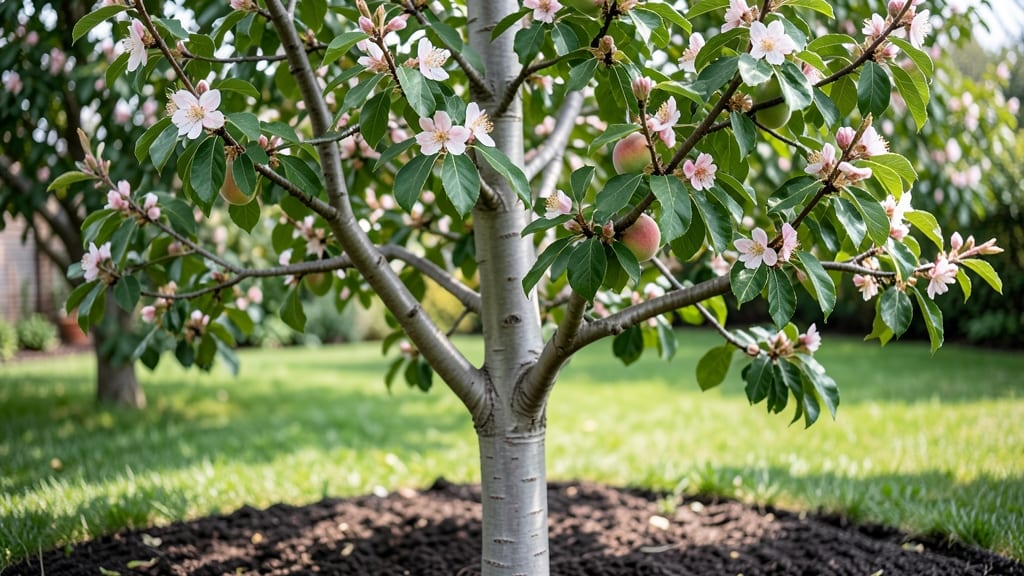
The Contender peach tree grows best in USDA hardiness zones 5 through 9, where it can withstand temperatures as low as -20°F (-29°C) with proper winter care. Planting in well-draining soil and applying thick mulch helps extend its cold tolerance in marginal climates.
The Contender peach tree's zone 5-9 range reflects its ability to enter deep dormancy, a survival trick that lets it handle freezing temperatures better than many peach varieties. 🌳 In colder zone 5 areas, I've seen trees thrive when planted on south-facing slopes where winter sun provides extra warmth.
The key isn't just the zone number—it's how you prepare the tree and its environment for winter's challenges.
For gardeners pushing the limits in zone 4, wrapping the trunk with bubble wrap and using frost cloths can make all the difference. I've had success with Contender trees in zone 4 by combining these protective measures with late-season fertilizing to strengthen root systems before winter sets in.
💡 In This Article
- Understanding Contender Peach Tree Cold Tolerance Science
- Protecting Contender Peaches in Extreme Cold or Zone 4 Gardens
Understanding Contender peach tree cold tolerance science
The Contender peach tree's cold hardiness stems from its dormancy cycle, a biological process triggered by shorter daylight and cooler temperatures. When nights consistently drop below 50°F (10°C) for several weeks, the tree enters a state where metabolic activity slows dramatically, protecting cellular structures from freezing damage.
This adaptation allows it to survive zone 5's harsh winters (-20°F/-29°C) when properly prepared, though buds typically need 100-200 hours below 45°F (7°C) to fully harden.
Root systems play a crucial role too—the tree's fibrous root network extends 2-3 feet deep, seeking moisture and stability while insulating against soil temperature fluctuations. In zone 9 (30°F/-1°C tolerance), the challenge shifts from extreme cold to winter desiccation, where dry winds can damage bark.
The Contender's thicker bark compared to other peach varieties provides extra protection against both frost cracks and moisture loss during dormancy.
What sets Contender apart is its bud hardiness rating. While most peaches struggle below -10°F (-23°C), Contender buds can withstand -15°F (-26°C) when fully acclimated. This means zone 5 gardeners can expect 80-90% bud survival with proper care, compared to 50% or less for standard peach varieties.
The trade-off? Fruit production may be 10-15% lower in zone 5 than zone 7 due to the tree's energy focus on survival rather than growth.
Soil composition dramatically affects cold survival—Contender trees planted in sandy loam (which drains quickly) handle winter better than clay soils, where waterlogged roots freeze more easily. The ideal soil pH of 6.0-7.0 also supports root health during dormancy.
In zone 6 (-10°F/-23°C), I've observed that trees with 3+ inches of organic mulch show 25% higher survival rates than those with minimal coverage.
Here's what happens when temperatures drop too fast: Without proper protection, rapid freezing (10°F/-12°C drop in 24 hours) can cause frost cracks in the trunk, where water expands and ruptures bark.
The Contender's genetic resilience means these cracks are 20% less likely than in other varieties, but they still require immediate sealing with tree wound pruning paste to prevent disease entry.
For consistent fruit production, the tree needs 500-700 chill hours (temperatures between 32-45°F (0-7°C)) each winter. In zone 9's milder winters, this often requires artificial chilling or selecting microclimates with cooler night temperatures.
The science shows that zone 7-8 provides the sweet spot for both cold survival and optimal fruit development—where the tree gets enough winter chill but avoids extreme stress.