
Companion Plants
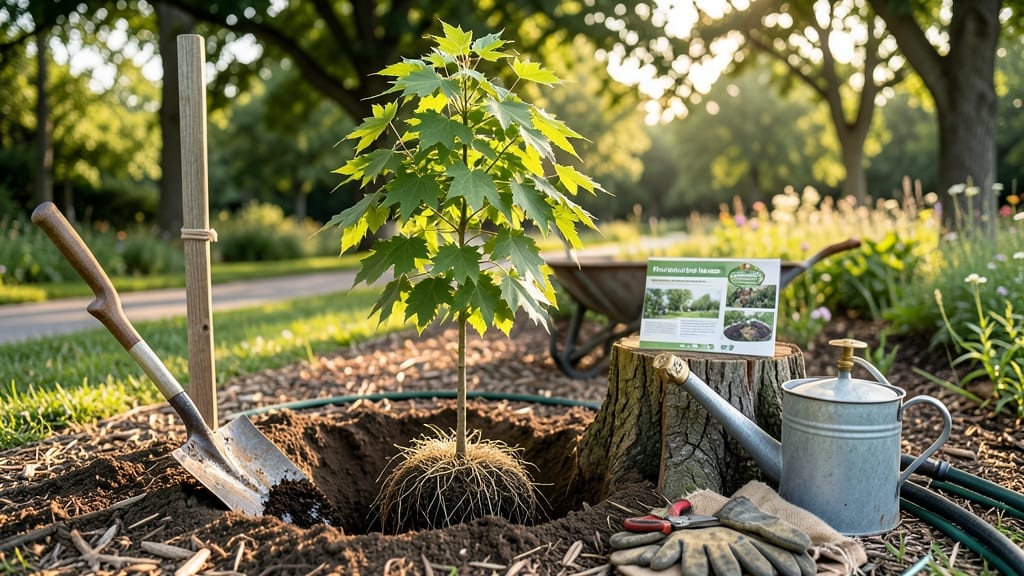
The best time to plant a tree in Wisconsin is during the dormant season—late April to early May (spring) or October to early November (fall)—when soil is workable but not frozen, roots establish before extreme heat or cold, and moisture levels are ideal for young trees. Avoid planting in summer or winter extremes.
Wisconsin's climate creates a narrow window for successful tree planting, where timing directly impacts survival rates. 🌱 Spring planting in May gives young roots time to establish before summer droughts, while fall planting in October lets them settle before winter dormancy.
Native species like oaks and maples thrive best when planted during these periods, as their root systems develop more resiliently in cooler temperatures. The key is working with Wisconsin's USDA hardiness zones (3-5) to match planting windows with natural seasonal shifts.
For best results, prepare your soil by testing its pH—most Wisconsin trees prefer slightly acidic to neutral conditions (6.0-7.0). Amend heavy clay soils with compost to improve drainage, while sandy soils benefit from organic matter to retain moisture.
Mulching with 3-4 inches of wood chips helps regulate soil temperature and conserve water, especially during Wisconsin's unpredictable spring rains or summer heatwaves. Container-grown trees often establish faster than bare-root varieties in our climate, as their root systems are less stressed during transplanting.
💡 In This Article
- Wisconsin’s Ideal Planting Windows: Climate Science and Tree Survival
- Soil Prep Checklist for Wisconsin Tree Planting Success
Wisconsin’s ideal planting windows: climate science and tree survival
Wisconsin’s planting windows are dictated by the delicate balance between soil thaw timing and frost-free periods. In spring, aim for late April to early May when daytime temperatures consistently reach 50-60°F—this triggers root growth while minimizing transplant shock.
The average last frost date in Wisconsin’s USDA zones 3-5 ranges from mid-April in southern regions to early June in the north, so local frost data should guide your exact timing.
For example, a bur oak planted in late April in Madison (zone 5) can establish roots before summer drought stress hits, while the same tree in Duluth (zone 4) should wait until early May when soil temperatures stabilize above 50°F.
The science behind root establishment reveals why fall planting (October to early November) works equally well. During this period, trees enter dormancy, slowing top growth while roots continue developing in cooler 50-60°F soil.
This creates a "head start" for spring growth—studies show fall-planted trees can have 20-30% stronger root systems by next season compared to spring plantings. However, avoid planting after mid-November when ground freezes, as this prevents root penetration into soil.
Evergreens like spruces are exceptions—they should be planted in early fall (September) to allow root establishment before winter desiccation.
Summer planting (June-August) is risky because Wisconsin’s heat and drought stress young trees. Soil temperatures often exceed 80°F, which can cook delicate root tips, while summer storms compact clay soils, reducing oxygen availability.
Winter planting (December-February) is equally problematic—frozen ground prevents root growth, and exposed roots risk heaving (being pushed out by freeze-thaw cycles). The exception is container-grown trees, which can be planted in early spring (March) as long as soil isn’t frozen, since their root balls are less sensitive to cold.
Tree species also influence ideal timing. Fast-growing species like silver maples establish quickly and tolerate spring planting, while slow-growing oaks (which can take 3-5 years to fully establish) benefit from fall planting to maximize root development before summer stress.
For example, a white oak planted in October may produce 50% more root biomass by spring than one planted in May. Native species like sugar maples or red oaks thrive best when planted in fall, as their natural growth cycle aligns with Wisconsin’s seasonal shifts.
Wisconsin’s microclimates add another layer of complexity. Urban areas like Milwaukee (zone 5) warm up faster than rural zones, while northern regions near the Canadian border may need to delay planting by 2-3 weeks.
Always check the Wisconsin State Climatology Office for localized frost data—this can shift planting windows by 10-14 days between counties. For instance, a tree planted in early May in Green Bay might face late frosts, while the same date in Milwaukee is typically safe. 🌿
What most gardeners overlook is the moisture factor. Wisconsin’s spring often brings excessive rainfall, which can waterlog clay soils and suffocate roots. Fall planting avoids this, as autumn’s steady but moderate rainfall (averaging 2-3 inches/month) provides ideal moisture without saturation.
Mulching with 3-4 inches of wood chips helps regulate soil temperature and retain moisture, reducing the need for supplemental watering during critical establishment periods.
Here’s a quick comparison of Wisconsin’s planting windows by season:
- Spring (Late April-Early May): Best for fast-growing species; soil temps 50-60°F, minimal frost risk after planting
- Fall (October-Early November): Ideal for oaks/maples; roots grow in 50-60°F soil before dormancy
- Avoid Summer/Winter: Heat stress or frozen ground stunts root development