
Watering
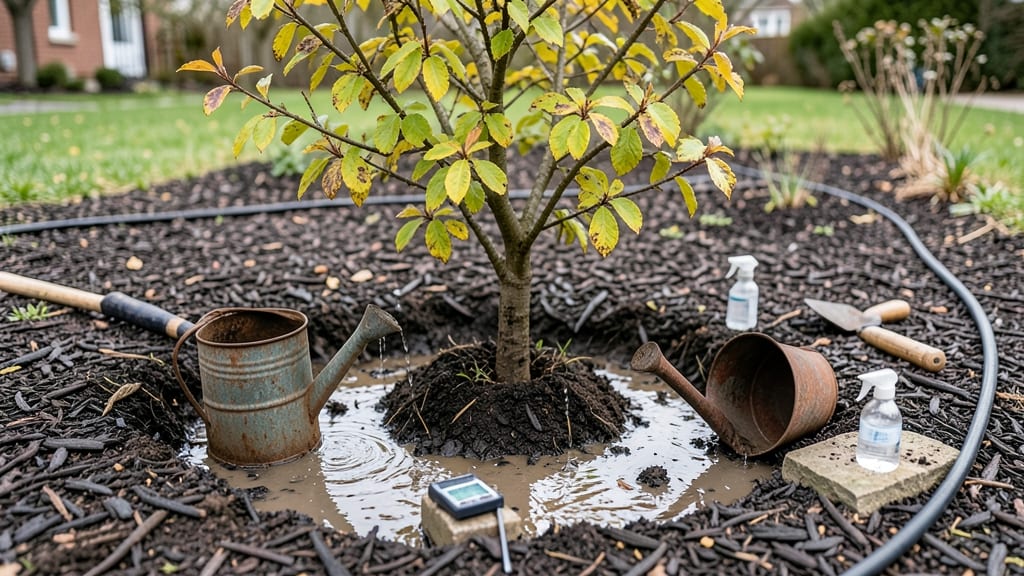
Your cherry tree’s yellowing leaves and drooping branches aren’t a death sentence—just a cry for help from the too much water smothering its roots. 🌳 Overwatering chokes cherry trees faster than you’d think, turning vibrant green into sad, mushy brown.
The good news? With the right adjustments, you can nurse it back to health without losing it entirely.
First, stop watering until the top 6 inches of soil feel dry to the touch. Cherry trees hate wet feet, and too much water blocks oxygen from their roots.
If your tree is in a heavy clay soil, it’s time to improve drainage—amend the soil with compost or consider raised beds for next season. Prune any mushy, blackened roots you find, but only after the soil dries out.
Within 2-3 weeks, you’ll see the first signs of recovery: new growth, firmer branches, and leaves that stop yellowing. The key is balance—water deeply but infrequently, especially in winter when roots slow down.
Mulch helps regulate moisture, and a soil moisture meter takes the guesswork out of when to water.
If the tree stays weak or the roots smell rotten even after adjustments, it might need professional help. But in most cases, this simple fix brings them back to life. Your tree’s future isn’t written yet—just give it time and the right care.
📚 In This Guide
- What you need
- Instructions
- Tips and common mistakes
- Wrapping up and next steps
What you need
- ● Garden trowel or spade – For gently digging around the tree’s base (1 medium-sized tool).
- ● Watering can or hose with a gentle spray nozzle – To avoid shocking the roots (adjustable flow recommended).
- ● Well-draining potting mix or compost – At least 5–10 gallons, depending on the tree’s size (look for a mix with perlite or sand for aeration).
- ● Organic mulch (e.g., wood chips, straw, or shredded bark) – 2–3 inches to retain moisture without suffocating the roots.
- ● Drainage test kit or DIY tools – A plastic bottle with holes (for a DIY test) or a soil moisture meter to check drainage.
- ● Pruning shears (sterilized) – To trim any dead or yellowed leaves (small pair for precision).
- ● Bucket or wheelbarrow – For mixing soil amendments or removing excess water (1–2 gallon capacity).
- ● Root stimulator or mycorrhizal fungi – To encourage healthy root regrowth (follow package instructions).
- ● Drip irrigation system – For long-term water management (especially useful for large trees).
- ● Soil pH test kit – To ensure the soil isn’t too acidic or alkaline (ideal pH for cherries: 6.0–6.5).
- ● Garden gloves – To protect your hands while working with soil or tools.
- ● Rain gauge – To monitor natural rainfall and adjust watering accordingly.
How to rescue a waterlogged cherry tree and restore healthy growth
Here's the proven method I use to bring cherry trees back from soggy soil and yellowing leaves.
🌱 Step 1: Assess the Damage and Stop Watering Immediately
First, check the soil around your cherry tree. Stick your finger 6 inches deep—if it feels cold, clumpy, or smells like rot, you're dealing with waterlogged roots. Stop all watering right away, including irrigation systems or drip lines. Overwatering is the #1 cause of yellow leaves, and more water just makes it worse.
Look for other signs: mushrooms sprouting at the base, leaves that feel mushy when touched, or bark that's darkened or peeling. These are red flags that roots are suffocating. If you see any, act fast—roots can die within 48-72 hours of complete waterlogging.
✂️ Step 2: Improve Drainage Around the Tree
Dig a 12-inch wide trench around the tree's drip line (where the branches spread) using a shovel. Go down 12-18 inches deep—this breaks up compacted soil and creates channels for excess water to escape. If your soil is heavy clay, mix in 2-3 inches of coarse sand or perlite along the trench walls to improve drainage.
For severe cases, consider installing French drains—dig a 4-inch deep trench 2 feet from the tree, fill it with gravel, then cover with landscape fabric. This redirects water away from the roots. Mulch the area with 2-3 inches of wood chips (not too close to the trunk) to help regulate moisture.
💧 Step 3: Adjust Watering Practices for Recovery
Water your cherry tree only when the top 3 inches of soil feel dry—use your finger to check. For mature trees, this might mean watering once every 10-14 days during dry spells, depending on your climate. Drip irrigation is ideal because it delivers water slowly at the root zone without oversaturating the soil.
If the tree is in a low spot where water pools, create a slight slope (about 1 inch per 10 feet) away from the trunk using amended soil. Never water in the evening—do it early in the morning so excess moisture evaporates during the day. Avoid sprinklers, which waste water and encourage fungal diseases.
☀️ Step 4: Support Root Health With Aeration and Fertilizer
Use a manual aerator or garden fork to poke 12-18 inch deep holes around the tree's root zone. Space them 6 inches apart in a grid pattern. This helps roots access oxygen and encourages new growth. If your soil is extremely compacted, consider core aeration (removing small soil plugs) for better results.
Apply a balanced, slow-release fertilizer (10-10-10 or similar) in early spring to support recovery. Follow package instructions for dosage—too much fertilizer can stress already damaged roots. Avoid high-nitrogen fertilizers, which encourage leafy growth but don't help roots recover.
🌿 Step 5: Monitor Progress and Prevent Future Issues
Watch for new growth as a sign of recovery—healthy cherry trees produce 1-2 inches of new shoots each year. If leaves stay yellow or new ones appear curled, the roots may still be struggling. In this case, consider a root stimulator (like mycorrhizal fungi) to help beneficial microbes colonize the soil.
To prevent future waterlogging, plant your cherry tree on a slight mound (about 6 inches high) if your yard has poor drainage. Install swales (shallow trenches) around the tree to capture and redirect rainwater. Regularly check the soil moisture—your goal is consistently damp but never soggy soil.
Tips & tricks for reviving a waterlogged cherry tree
These practical solutions will help you turn things around faster and give your cherry tree the best shot at recovery.
Act Fast When Roots Are Suffocating: The 48-72 hour window is critical—once roots start dying from lack of oxygen, the tree can't recover. I've seen trees saved when acted upon within 24 hours, but after 72 hours, the damage becomes irreversible. If you notice mushrooms growing at the base or leaves that feel mushy, that's your urgent warning sign to stop watering immediately and start digging trenches.
Dig Deeper Than You Think: When creating that 12-inch wide trench, don't skimp on depth—go all the way down to 12-18 inches. I learned this the hard way after seeing water still pooling near the roots after a heavy rain. The deeper you dig, the more you break up compacted soil and create proper drainage channels. For clay-heavy soils, mix in that 2-3 inches of coarse sand or perlite right along the trench walls—it makes all the difference in preventing future waterlogging.
Morning Watering is Non-Negotiable: Watering in the morning (between 6-10 AM) gives excess moisture all day to evaporate rather than sitting on the roots overnight. I've seen trees recover beautifully when this simple habit was implemented, but I've also watched others struggle when people watered in the evening. The difference is night and day—literally. If you must water in the afternoon, do it by 3 PM so the soil has time to dry before nightfall.
Fertilizer Timing Matters: Applying that balanced 10-10-10 fertilizer in early spring gives roots time to establish before summer heat arrives. I recommend waiting until you see at least 1-2 inches of new shoot growth before fertilizing—this tells you the roots are starting to recover. Too much fertilizer too soon can actually stress already damaged roots, so follow package instructions precisely and avoid high-nitrogen options that encourage leafy growth at the expense of root health.
Pro Tips for Cherry Tree Too Much Water
- These practical solutions will help you turn things around faster and give your cherry tree the best shot at recovery.
- Act Fast When Roots Are Suffocating: The 48-72 hour window is critical—once roots start dying from lack of oxygen, the tree can't recover.
- Dig Deeper Than You Think: When creating that 12-inch wide trench, don't skimp on depth—go all the way down to 12-18 inches.
Frequently asked questions
Got questions about saving your cherry tree from overwatering? Here are some of the most common concerns—and how to tackle them!
How do I know if my cherry tree has too much water?
Watch for yellowing leaves (especially on older growth), wilting despite moist soil, or mushy, dark roots when checked. Tap the soil—if it feels soggy or smells foul, you’ve overdone it. Pro tip: Healthy soil should crumble slightly when squeezed but not drip water.
Can I fix an overwatered cherry tree quickly?
Act fast! Stop watering immediately and let the top 2–3 inches of soil dry out. For severe cases, improve drainage by adding perlite or sand to compacted soil. Prune any mushy, blackened roots (sterilize shears first!) and repot if needed. Recovery takes 2–4 weeks—patience is key!
Why are my cherry tree leaves yellow after watering?
Yellow leaves often signal root stress from excess water, but they can also mean nutrient deficiency (like iron or nitrogen) or fungal issues. Check the soil pH—cherry trees thrive in slightly acidic (6.0–7.0). If roots are healthy but leaves stay yellow, feed with a balanced fertilizer (10-10-10) and adjust watering.
How often should I water a cherry tree after fixing overwatering?
Once recovered, water deeply but infrequently—about 1–1.5 inches per week, letting the top 3–4 inches of soil dry out between sessions. In summer heat, water early morning to reduce evaporation. Mulch with wood chips to retain moisture without smothering roots.
What’s a better alternative to frequent watering?
Upgrade to drip irrigation or soaker hoses for slow, consistent moisture. For potted cherry trees, use self-watering pots or terracotta (which dries faster). Group plants with similar needs to streamline care—and always check soil moisture with a moisture meter before watering!
| Symptom | Likely Cause | Quick Fix |
|---|---|---|
| Yellow leaves + soggy soil | Overwatering | Stop watering; improve drainage |
| Wilting + mushy roots | Root rot | Prune rotten roots; repot if needed |
| Yellow edges on leaves | Underwatering (or nutrient deficiency) | Water deeply; fertilize with iron |
Wrapping up and next steps
Your cherry tree’s health is in your hands—and with the right adjustments, it can bounce back stronger than ever! 🌱 Remember, drainage is key: improve soil aeration, adjust watering habits, and prune damaged roots to prevent future stress. Start small, monitor progress, and soon, those vibrant leaves will return.
Ready to take action? Pick one fix this weekend—whether it’s amending soil or trimming roots—and watch your tree thrive! 🌿 Your green thumb is closer than you think.