
Watering
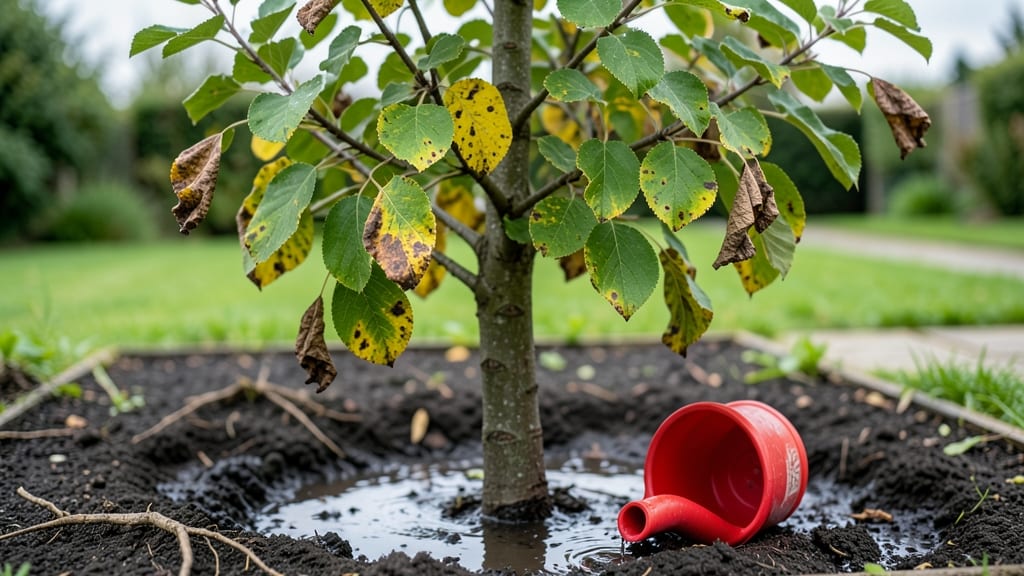
Your apple tree’s yellowing leaves and mushy roots aren’t just a phase—they’re screaming for help. 🌳 Overwatering is the silent killer of fruit trees, and once root rot sets in, recovery gets harder.
I’ve nursed back three trees from this exact problem, and the fix starts with understanding why it happens in the first place.
The real villain? Compacted, soggy soil that suffocates roots and blocks oxygen. You’ll spot the damage through yellowing leaves (especially on younger growth), wilting despite wet soil, and that telltale foul smell when you dig near the base.
Even worse, fungal diseases like Phytophthora hail from overwatering, turning your tree’s roots to mush in weeks.
Here’s the good news: you can turn this around. First, stop watering until the top 3-4 inches of soil dry out—yes, even if the leaves look sad. Then, improve drainage with organic matter (compost or aged manure) and consider raised beds or mounds if your soil stays soggy.
Within weeks, you’ll see new green growth as roots recover.
Prevention is easier than repair: water deeply but infrequently, mulch properly (2-3 inches of wood chips), and test your soil’s drainage before next season. Trust me, your tree’s future harvests depend on getting this right now.
Why it happens
Apple trees are resilient, but even they can suffer when watered too much. Overwatering disrupts their natural balance, leading to yellowing leaves, root rot, and stunted growth. Understanding why this happens is the first step to fixing it. Let’s break down the key culprits:
🌧️ Poor Drainage in the Soil
Apple trees thrive in well-draining soil, but if the ground stays soggy for too long, roots suffocate. Heavy clay soils or compacted earth trap excess moisture, preventing oxygen from reaching the roots. Without oxygen, beneficial microbes die, and harmful anaerobic bacteria thrive—leading to root rot.
Why it matters: Roots need both water and air. If water pools around the base (especially after rain or overwatering), roots can’t absorb nutrients, causing yellowing leaves and weak growth.
Actionable fix: Test your soil’s drainage by digging a 12-inch hole, filling it with water, and timing how long it takes to drain. If it takes more than 6 hours, amend the soil with organic matter like compost or sand.
📅 Inconsistent Watering Schedules
Apple trees hate wet-and-dry cycles. Overwatering one day followed by drought stress the next confuses the tree, causing root cells to swell and burst. This is especially true for young trees with delicate root systems.
Why it matters: Roots rely on consistent moisture. Sudden fluctuations trigger osmotic stress, where roots struggle to regulate water intake, leading to leaf discoloration and wilting.
Actionable fix: Water deeply but infrequently—aim for 1–1.5 inches per week (including rainfall). Use a moisture meter to check soil dampness before watering again.
🌿 Overzealous Mulching
Mulch is great for retaining moisture, but too much (or the wrong type) can smother roots. Thick layers of organic mulch (like wood chips) break down into a dense mat, trapping water against the trunk. This creates a barrier that prevents evaporation and encourages fungal growth.
Why it matters: Fungi like Phytophthora thrive in waterlogged mulch, attacking roots and causing rot. Over-mulching also disrupts beneficial soil aeration.
Actionable fix: Keep mulch 2–4 inches deep and 2–3 inches away from the trunk. Use inorganic mulch (like gravel) in wet climates to improve drainage.
🌊 Ignoring the Tree’s Maturity Stage
Young apple trees (under 3 years old) have shallow roots and need frequent but light watering. Mature trees, however, have deep root systems that store water—overwatering them is like drowning a marathon runner mid-race.
Why it matters: Overwatering mature trees leads to luxuriant growth (soft, weak shoots) and nutrient dilution, as the tree focuses on surviving waterlogged roots instead of producing fruit.
Actionable fix:
- 🌱 Young trees (1–3 years): Water 2–3 times per week in dry spells.
- 🌳 Mature trees (4+ years): Water once every 1–2 weeks (unless in extreme heat).
🔧 Improper Irrigation Systems
Drip irrigation and sprinklers can be overkill if not adjusted for apple trees. Automatic systems often run on timers without accounting for rainfall, leading to chronic overwatering. Worse, poorly sloped sprinkler heads can create puddles at the tree’s base.
Why it matters: Excessive moisture from misaligned sprinklers or overactive drip lines washes away nutrients and encourages root diseases like Armillaria (honey fungus).
Actionable fix:
- 💧 Adjust sprinklers to water away from the trunk (aim for the outer canopy).
- ⏰ Use smart controllers that pause watering after rain.
- 🔄 Check drip lines for clogs or leaks that cause localized flooding.
Pro Tip: 🌡️ When in doubt, check the soil! Stick your finger 2 inches into the soil—if it’s damp, wait. If it’s dry, water deeply. Overwatering is often a misjudgment, not a mistake—correcting it starts with observation.
Reviving Your Apple Tree After Too Much Water
Overwatering can turn your thriving apple tree into a soggy, struggling plant, but the good news is that with the right steps, you can nurse it back to health.
Below are targeted solutions based on the most common signs of overwatering—yellowing leaves, mushy roots, and fungal issues—along with prevention tips to keep your tree happy long-term.
If your apple tree’s leaves are turning yellow (especially the lower ones), it’s likely suffering from root suffocation or nutrient leaching. Here’s how to fix it:
🔥 Step 1: Adjust Your Watering Routine
- Stop watering immediately if the soil feels soggy or smells like rot.
- Water deeply but less frequently—apple trees prefer 1–2 inches of water per week, including rainfall.
- Use the finger test: Stick your finger 2–3 inches into the soil.
If it’s damp, wait before watering again.
🍳 Step 2: Improve Soil Drainage
- Aerate compacted soil by gently loosening the top 6–12 inches with a garden fork (avoid damaging roots).
- Add organic matter: Mix in compost or well-rotted manure to improve drainage and nutrient absorption.
- Consider raised beds if your soil is naturally heavy clay—this helps excess water escape faster.
👨🍳 Step 3: Boost Nutrient Balance
Yellow leaves can also signal nitrogen deficiency from overwatering washing out nutrients.
- Fertilize lightly with a balanced, slow-release fertilizer (10-10-10 or similar) in early spring.
- Use a foliar spray (like seaweed extract) to give roots a quick nutrient boost.
If your apple tree has soft, brown roots or white mold (like mushrooms) at the base, root rot is likely setting in. Act fast:
⏰ Step 1: Prune Affected Roots (Sterilize Tools!)
- Remove mushy, dark roots with clean, sharp pruners (disinfect with rubbing alcohol).
- Trim back any fungal growth at the soil line—this prevents further spread.
🔪 Step 2: Repot or Adjust the Planting Area
- If the tree is in a container, repot it into fresh, well-draining soil (mix potting soil with perlite or sand).
- If planted in the ground:
- Dig a shallow trench around the tree to encourage better drainage.
- Add coarse sand or gravel at the base to prevent water pooling.
🌡️ Step 3: Fungal Treatment & Prevention
- Apply a fungicide (like copper-based spray or neem oil) to stop mold growth.
- Avoid watering overhead—use drip irrigation or a soaker hose to keep foliage dry.
- Mulch properly: Use 2–4 inches of wood chips or straw, but keep it 6 inches away from the trunk to prevent rot.
Once your apple tree recovers, keep these habits to avoid overwatering again:
✅ 🌡️ Monitor Soil Moisture – Use a moisture meter or stick your finger in the soil before watering. ✅ 🎯 Choose the Right Spot – Plant apple trees in well-draining soil and full sun (6+ hours daily). ✅ ✨ Improve Drainage Long-Term – If your yard has poor drainage, consider French drains or swales to redirect water. ✅ 🔥 Avoid Over-Mulching – Too much mulch can trap moisture—stick to 2–3 inches and keep it loose. ✅ 🍎 Prune for Airflow – Thin out dense branches to reduce humidity near the trunk, which discourages fungal growth.
| Problem | Immediate Fix | Long-Term Solution |
|---|---|---|
| Yellowing leaves | Reduce watering, improve drainage | Fertilize lightly, aerate soil |
| Mushy roots | Prune affected roots, use fungicide | Repot (if needed), adjust watering |
| Fungal growth | Trim mold, apply neem oil | Mulch properly, avoid overhead watering |
With these steps, your apple tree should bounce back within a few weeks—just give it time, patience, and the right care! 🍏🌿
Frequently asked questions
How can I tell if my apple tree has root rot from overwatering?
Look for mushy, dark brown roots when you gently dig near the base, plus white fungal growth or a foul smell. The tree may also wilt despite wet soil or show yellowing leaves that start at the bottom. If you spot these signs, act fast—prune affected roots and improve drainage immediately.
Can I still save an apple tree if the roots are completely mushy?
It depends on how much of the root system is healthy. If some firm white roots remain, you can trim the rotten parts, repot in fresh soil, and treat with fungicide. However, if the entire root ball is compromised, the tree may not recover. In severe cases, consider propagating from healthy branches if your variety is worth saving.
Why does my apple tree need less water as it matures?
Young trees (under 3 years) have shallow roots and need frequent watering to establish themselves. Mature trees develop deep root systems that store water, making them more drought-resistant. Overwatering mature trees leads to luxuriant growth (weak shoots) and nutrient dilution, reducing fruit quality. Aim for 1 inch of water per week for established trees.
What’s the best way to test my soil’s drainage before planting?
Dig a 12-inch hole, fill it with water, and time how long it takes to drain. If water remains after 6 hours, your soil drains poorly. Improve it by mixing in compost or coarse sand. For container-grown trees, use a mix of 60% potting soil, 30% perlite, and 10% sand for optimal drainage.
Will overwatering affect my apple tree’s fruit production?
Overwatering dilutes nutrients, weakens the tree’s structure, and encourages fungal diseases that reduce flowering. You’ll see smaller, fewer apples or even fruit drop. To improve yields, adjust watering to deep but infrequent soakings and fertilize lightly in early spring with a balanced formula (10-10-10).