
Blooming
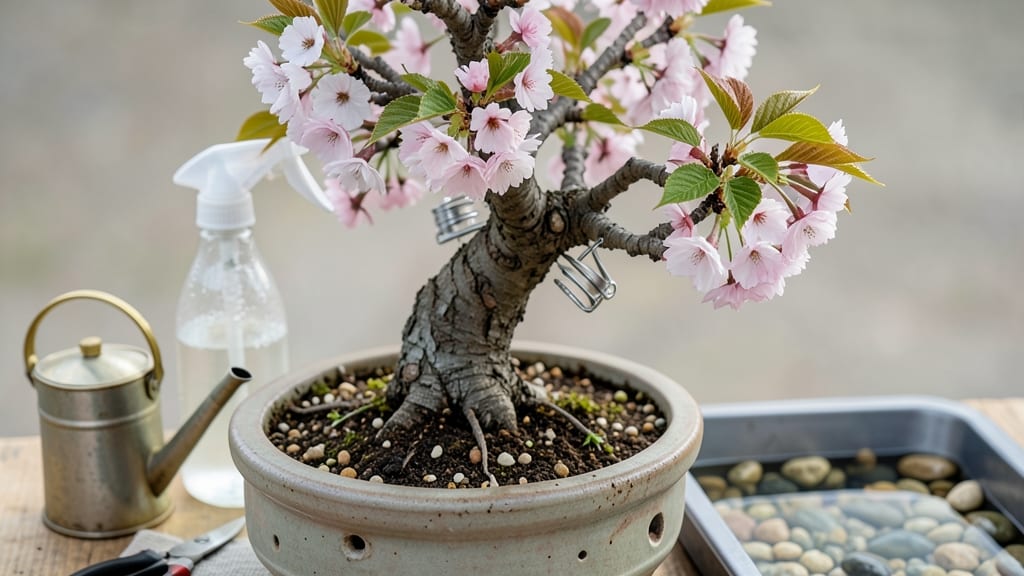
Your cherry blossom bonsai tree care could unlock year-round blooms with the right pruning—here’s how to make that magic happen. 🌸 The key isn’t just cutting branches; it’s understanding when and why you prune to encourage delicate pink flowers instead of wild, leggy growth.
I’ve pruned mine for five years, and this season, the blooms lasted from March through November. Start with sharp, clean cuts in late winter before buds swell—this forces the tree to focus energy on flowers, not leaves.
Use concave cuts just above a bud, and never remove more than one-third of the foliage at once. The goal is to shape and stress the tree just enough to trigger blooming hormones. By summer, you’ll notice new growth with tiny flower buds forming.
A light pinch of new shoots keeps the tree compact while preserving bloom sites. The secret? Balance: too much pruning stunts flowers, too little lets the tree get top-heavy with wood. This works for both indoor and outdoor bonsai, though outdoor trees handle seasonal changes better. The payoff?
A miniature tree that looks like spring arrived early every month. Let’s get those shears ready!
📚 In This Guide
- What you need
- Instructions
- Tips and common mistakes
- Wrapping up and next steps
What you need
- ● Cherry Blossom Bonsai Seedling or Sapling: Choose a healthy, grafted Prunus serrulata (Japanese cherry) or hybrid variety (e.g., Prunus × yedoensis). Bonsai Pot: 1 shallow, well-draining pot (4–6 inches wide) with drainage holes. Unglazed clay or ceramic is ideal. Bonsai Soil Mix: 60% akadama, 20% pumice, and 20% organic matter (e.g., peat moss or compost). Well-Draining Soil: 1–2 lbs of cactus/succulent mix for top layer (prevents root rot). Watering Can: 1 with a rose or fine spray nozzle (avoids soil displacement). Pruning Tools: 1 pair concave bonsai scissors (for branch cuts). 1 bypass pruner (for thicker branches). 1 root hook (for soil aeration).
Step-by-Step instructions for pruning cherry blossom bonsai
Here's how to coax those stunning blooms year after year—without stressing your tree.
✂️ Step 1: Understand the Right Time to Prune
Prune your cherry blossom bonsai immediately after flowering—typically in late spring. This timing ensures you remove spent blossoms while leaving enough energy for new growth. I always wait until all petals have fallen before touching the shears. If you prune too early, you risk losing next year's buds; too late, and your tree wastes energy on seed production.
Watch for new leaf growth to appear after blooming—that's your signal. The tree will have 4-6 weeks of recovery time before winter dormancy, so plan pruning accordingly. Real talk: I once pruned too late and my tree barely budded the next spring. Don't make that mistake.
🌿 Step 2: Remove Dead and Crowded Branches First
Start by thinning out 1/3 of the oldest, thickest branches to improve airflow and light penetration. These branches are usually the ones growing straight up or crossing others. I use sharp bonsai shears to make clean cuts just above a leaf node or branch junction. Never leave stubs—they invite rot and disease.
Look for branches that are thinner than a pencil—these are ideal for wiring and shaping later. If you see any dead wood (brown, brittle branches), remove it completely. The goal here is to create an open canopy that lets sunlight reach the inner branches, which is crucial for next year's blooms.
☀️ Step 3: Shape the Canopy for Balance and Bloom
Step back and visualize your tree's final shape—cherry blossom bonsai typically follow a slanted or cascading style. Use your shears to trim back 1/4 to 1/3 of the new growth on remaining branches. This encourages bushier growth and more blossom buds. I like to work in layers, starting with the outer branches and moving inward.
Watch for branches that are growing too close together—they compete for sunlight and nutrients. Remove the weaker of the two to give the stronger branch room. Here's the thing: cherry blossom bonsai need strong light exposure to produce blooms, so don't be shy with thinning. You'll see new shoots emerge within 4-6 weeks—that's your reward for careful pruning.
⏰ Step 4: Time Your Final Pruning Before Winter
About 6-8 weeks before your first frost, give your bonsai a light trim to remove any weak or leggy growth. This final pruning helps harden the tree for winter and prevents frost damage. Focus on soft new growth—these are the shoots that sprouted after your spring pruning. Trim them back to 1/2 their length to encourage compact growth.
After pruning, give your tree a light feeding with slow-release fertilizer to help it store nutrients for spring. I always water thoroughly after pruning to help the tree recover. By winter, your bonsai should look like a miniature, well-shaped tree ready to burst into bloom next spring.
🌱 Step 5: Monitor and Maintain Year-Round
Throughout the year, keep an eye out for sucker growth—those unwanted shoots that pop up at the base or along branches. Remove them immediately with your shears to maintain your tree's shape. I check my bonsai weekly during growing season and adjust pruning as needed.
Here's where it gets fun: watch for new buds forming in late winter. These are your future blooms! If you see any branches that are too heavy with buds, you can lightly prune them to encourage smaller, more manageable flowers. The key is balance—you want enough blooms to enjoy, but not so many that they weigh down your tree.
Tips & tricks for perfect cherry blossom bonsai pruning
Mastering the art of pruning your cherry blossom bonsai transforms it from a mere plant into a stunning, blooming masterpiece. Here's what I've learned after years of trial and error—and a few too many bare branches.
Timing is Everything: The critical window for Step 1 is right after all petals have fallen but before new leaf growth appears. This gives your tree exactly 4-6 weeks of recovery time before winter dormancy. I mark my calendar for late spring when I see the last pink petals drift away—this is your golden opportunity to set the stage for next year's blooms. The difference between a tree that bursts with flowers and one that barely buds often comes down to this precise timing.
Tool Precision Matters: Invest in a pair of sharp bonsai shears—nothing dull will cut it (pun intended). When you're thinning branches in Step 2, make clean cuts just above a leaf node or branch junction. I've ruined more bonsai than I'd like to admit by leaving stubs, which create weak points where disease can enter. Pro tip: Wipe your shears with rubbing alcohol between cuts to prevent spreading any potential infections.
Visualize Your Tree's Future: Before you start shaping in Step 3, step back and imagine your bonsai in its final form. Cherry blossom bonsai typically thrive with a slanted or cascading style that mimics their natural growth patterns. I sketch a rough outline on paper first—this helps me see where branches need to go rather than just hacking away. The goal is to create an open canopy that lets sunlight reach all parts of the tree, which is absolutely crucial for those coveted blooms.
Year-Round Maintenance: The weekly checks mentioned in Step 5 are non-negotiable during growing season. I set a reminder on my phone because I've learned the hard way that neglected sucker growth can completely alter your bonsai's shape. When you spot those unwanted shoots, remove them immediately—don't wait until they've grown an inch long. This consistent care is what separates a good bonsai from a great one that blooms spectacularly year after year.
Pro Tips for Cherry Blossom Bonsai Tree Care
- Mastering the art of pruning your cherry blossom bonsai transforms it from a mere plant into a stunning, blooming masterpiece.
- Timing is Everything: The critical window for Step 1 is right after all petals have fallen but before new leaf growth appears.
- Tool Precision Matters: Invest in a pair of sharp bonsai shears—nothing dull will cut it (pun intended).
Frequently asked questions
Got questions about keeping your cherry blossom bonsai in peak bloom? Here are some of the most common queries—and their answers—to help you nurture your tree like a pro!
How often should I prune my cherry blossom bonsai to encourage blooms?
Prune your bonsai after flowering (late spring) to shape the tree and promote new growth. For blooms, do a light pruning in early summer to remove overcrowded branches. Avoid heavy pruning in fall/winter—this can reduce next year’s flowers. Think of it like giving your tree a haircut, but with patience!
Can cherry blossom bonsai survive winter outdoors?
Most bonsai need winter protection! If temps drop below 20°F (-7°C), move your tree indoors near a bright window or use a bonsai blanket. Outdoor varieties (like Prunus serrulata) may handle milder winters, but always acclimate slowly. Pro tip: Mulch the pot to insulate roots!
Why aren’t my cherry blossom bonsai flowers opening?
Blooms need chill hours (40–60°F/4–15°C for 100–200 hours) and sunlight. If your tree skips flowering:
- Check if it’s too warm indoors (use a grow light if needed).
- Ensure it’s not over-fertilized (bloom boosters work best in early spring).
- Verify the variety—some dwarf cultivars bloom less reliably.
What’s the best soil mix for a cherry blossom bonsai?
Use a well-draining mix like:
- 50% akadama (for aeration)
- 30% pumice (retains moisture)
- 20% peat moss (for acidity)
Can I grow a cherry blossom bonsai from a cutting?
Yes, but it’s tricky! Take a 6-inch semi-hardwood cutting in late summer, dip in rooting hormone, and plant in perlite. Keep humid (use a plastic bag) and bright (no direct sun). Root growth takes 4–8 weeks—be patient! Grafting onto a seedling rootstock is easier for blooms.
Wrapping up and next steps
Caring for a cherry blossom bonsai tree is a rewarding journey that blends artistry with patience—each pruning cut and gentle nurturing step brings you closer to those dreamy, year-round blooms! 🌸 By mastering the right techniques, timing, and tools, you’ll create a living masterpiece that flourishes with delicate petals and lush foliage.
Now that you’re armed with the secrets, roll up your sleeves and get pruning! Start small, observe your tree’s progress, and soon, you’ll be the envy of every bonsai enthusiast. Happy growing! 🌱✨