
Planting
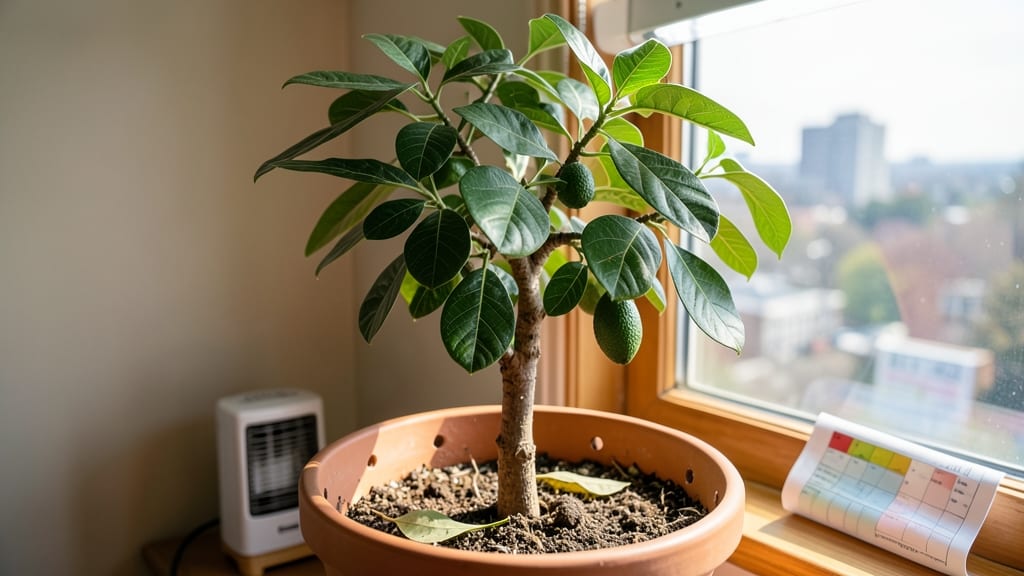
Growing avocado trees in Ohio is possible with careful protection, since they naturally thrive in warmer USDA Zones 9-11 but can tolerate brief cold snaps in Zones 8-9 when given proper winter care. Select hardy varieties like 'Mexicola' or 'Wurtz' and use containers for flexibility or indoor overwintering.
Ohio's climate presents challenges for avocado trees, which prefer temperatures above 20°F—most of the state falls in USDA Zones 5-7. 🌱 However, cold-resistant varieties like 'Mexicola' can handle brief dips to 15°F when protected.
The key is strategic placement: containers let you move trees indoors during winter, while mulching and frost blankets create microclimates. I've seen container-grown avocados produce fruit in Zone 7 with these methods, though yields may be smaller than in ideal climates.
For best results, start with dwarf varieties in 15-gallon containers and use a south-facing window for winter sunlight. Spring is the critical season—harden off plants gradually to prevent shock when moving them back outside. Many Ohio gardeners swear by electric heat mats during early spring to jumpstart growth after dormancy.
💡 In This Article
- USDA Zones and Cold Tolerance for Avocado Trees
- Protecting Avocado Trees in Ohio Gardens
USDA Zones and cold tolerance for avocado trees
Ohio's climate—primarily USDA Zones 5-7—presents a significant challenge for avocado trees, which evolved in tropical and subtropical regions where temperatures rarely drop below 20°F. The critical threshold for damage occurs when leaves and stems freeze, typically at 28-32°F, while root systems can suffer irreversible harm below 15°F.
This explains why most commercial avocado orchards exist in California's coastal regions (Zone 9b) or Florida (Zone 10a), where winter lows rarely dip below 25°F.
Not all avocado varieties are equally vulnerable. Tropical strains like 'Hass' or 'Fuerte' will suffer severe damage in Ohio's winters, but cold-resistant varieties like 'Mexicola' and 'Wurtz' have been selectively bred to tolerate brief exposures to 15°F temperatures.
These hardier types originated from Mexico's highland regions, where they naturally experience cooler nights. The difference lies in their cellular structure—cold-tolerant varieties produce higher concentrations of cryoprotectant compounds like proline and sugars that prevent ice crystal formation within their cells during freezing events.
What this means for Ohio gardeners is that while outdoor growth is nearly impossible in unprotected conditions, container cultivation creates opportunities. The key advantage of containers is their mobility—you can move potted trees indoors before the first frost or into a garage during extreme cold snaps.
Research from the University of Florida shows that container-grown avocados in Zone 8 can survive winter with proper protection, though fruit production may be delayed by 2-3 years compared to trees in ideal climates. The trade-off is worth it for those willing to invest in winter care.
Another critical factor is the tree's maturity. Young avocado trees (3 years old) have more flexibility to recover from cold exposure than mature specimens because their root systems are less extensive.
This is why many Ohio growers start with dwarf varieties in 15-20 gallon containers, which establish more quickly and handle temperature fluctuations better. The root-to-foliage ratio in smaller trees allows them to allocate more energy to recovery after cold stress.
For visual reference, imagine the difference between a tropical rainforest palm and a hardy oak tree. Avocados are more like the palm—delicate and adapted to warmth—while the 'Mexicola' variety is the oak equivalent in the avocado world.
The cellular adaptations that allow oaks to survive -20°F temperatures are what breeders have worked to replicate in cold-resistant avocado strains, though on a much smaller scale.
Understanding these biological mechanisms helps explain why some Ohio gardeners report success while others fail. The difference often comes down to selecting the right variety and providing the right level of protection during critical temperature windows.
For example, a 20°F night might be survivable for a 'Wurtz' tree in a container, but the same temperature would kill a 'Hass' tree planted in the ground.