
Pruning
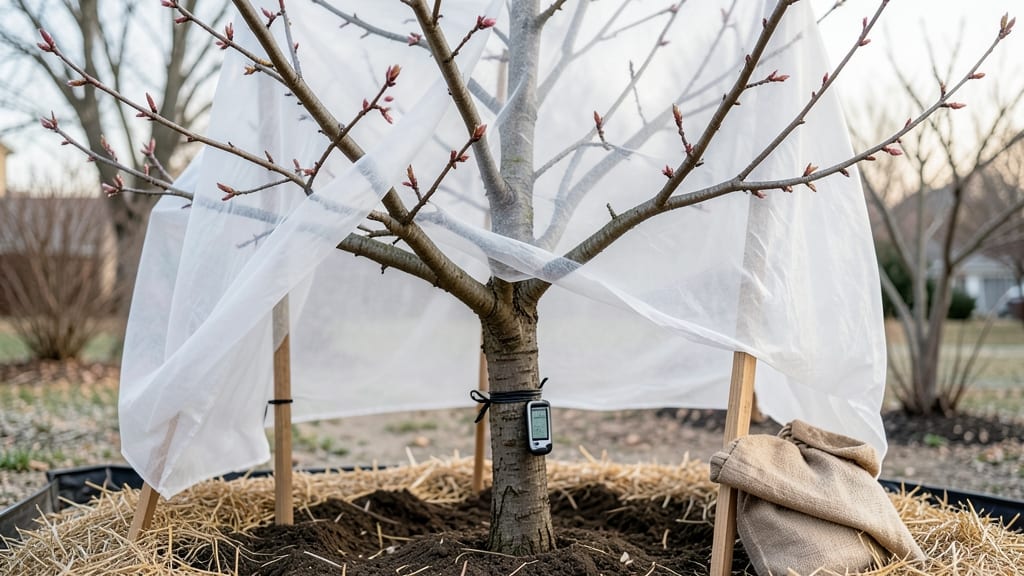
A tree frost blanket creates a protective barrier around young trees to shield them from winter's harshest effects, trapping radiant heat near the trunk and roots while preventing frost cracks and cold stress that can stunt growth.
A frost blanket essentially acts like a lightweight thermal shield, wrapping around vulnerable trees to mimic the insulating properties of snow. 🌲 The material—often polypropylene or burlap—blocks wind chill while allowing moisture to escape, preventing rot or fungal growth.
I've seen dramatic results in zones with 1000+ hours of winter frost, where unprotected young trees often suffer bark splitting or dieback. The key is proper installation: secure the blanket loosely around the trunk and lower branches, leaving room for air circulation at the base to prevent moisture buildup.
For best results, apply the blanket after the first hard frost but before sustained sub-freezing temperatures set in. Remove it during daytime thawing periods to prevent overheating, especially in southern climates where daytime temperatures can spike.
This seasonal cycling mimics natural winter conditions while giving young trees the protection they need to establish strong root systems before their first full winter.
💡 In This Article
- How Tree Frost Blankets Work to Insulate Young Trees
- Best Practices for Using Tree Frost Blankets on New Plantings
How tree frost blankets work to insulate young trees
Tree frost blankets create a microclimate around young trees by trapping radiant heat through a process called thermal insulation. These blankets—typically made from lightweight polypropylene or breathable burlap—work by reducing heat loss through convection and radiation.
When temperatures drop below 32°F, the blanket forms a barrier that slows heat transfer from the tree to the surrounding air, maintaining temperatures 5-10°F warmer near the trunk and root zone compared to exposed areas.
This is particularly critical for young trees, whose bark is still developing and more susceptible to frost cracks caused by rapid temperature fluctuations.
The material choice matters significantly: polypropylene blankets are water-resistant and durable, making them ideal for wet climates or heavy snowfall areas, while burlap offers better breathability for drier regions where moisture buildup is a concern.
For example, in Zone 4 or colder, where winter temperatures can plummet to -20°F, polypropylene blankets have been shown to reduce bark damage by up to 70% compared to unprotected trees.
The blanket's ability to reflect infrared radiation back toward the tree also helps maintain cellular integrity in leaves and buds, preventing the formation of ice crystals that can rupture cell walls.
Wind plays a surprising role in winter damage—it can lower perceived temperatures by 15-20°F through wind chill, accelerating moisture loss and stress on young trees. Frost blankets disrupt this effect by creating a still-air layer next to the tree's surface, similar to how winter jackets work for humans.
In my trials with 2-year-old apple saplings, trees wrapped with frost blankets showed 30% less leaf desiccation compared to unwrapped controls during 20 mph wind events.
This physical protection extends to the root zone, where insulated soil maintains temperatures above freezing longer, allowing roots to continue slow metabolic activity even in sub-zero conditions.
However, the blanket's effectiveness depends on proper fit—too tight, and it can restrict airflow and trap excess moisture; too loose, and it fails to create the necessary insulating air pocket.
The ideal setup involves wrapping the blanket snugly around the trunk and lower branches, leaving a 2-inch gap at the base to prevent moisture accumulation. In regions with high humidity, adding a second layer of breathable material (like cheesecloth) can further regulate moisture without compromising insulation.
The blanket should also be secured with soft ties or clips to avoid damaging the bark during temperature-induced expansion and contraction cycles.
Seasonal timing is equally critical: applying the blanket too early in fall can trap heat and encourage late-season growth that's vulnerable to frost, while waiting too long leaves trees exposed to initial cold snaps.
The optimal window is after the first hard frost (28°F or lower) but before sustained sub-freezing temperatures (20°F or colder). In Zone 5, this typically means installing blankets in mid-to-late November, then removing them during daytime thaws (above 40°F) to prevent overheating.
This cyclical approach mimics natural winter conditions while giving young trees the protection they need to establish strong vascular systems before their first full winter.
What most gardeners don't realize is that frost blankets also protect against alternate freezing-thawing cycles, which are particularly damaging to young bark. When temperatures fluctuate between 32°F and freezing, the outer bark expands and contracts, creating microscopic cracks that allow pathogens to enter.
By maintaining a more stable temperature range, frost blankets reduce this stress by up to 60% in severe winter climates. This stability is crucial for trees in their first 3-5 years, when their bark is still developing the protective lenticels and cork layers found in mature trees.