
Flowers
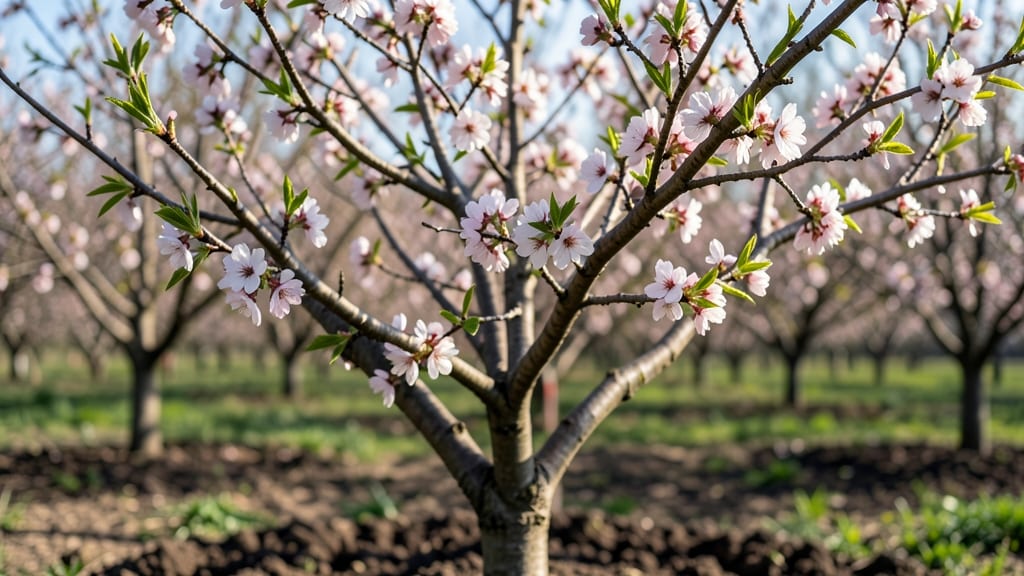
Almond tree branches in blossom display stunning pink or white flowers for about 1-2 weeks, with their peak bloom arriving in late winter to early spring. The timing varies by region—cooler climates stretch the flowering season, while warmer areas experience more concentrated but shorter displays.
The beauty of almond tree branches in full bloom lies in their fleeting yet spectacular display. 🌸 These blossoms appear as nature's delicate canvases, transforming bare branches into cascades of soft pink or pristine white.
What's fascinating is how climate plays a starring role—regions with colder winters often enjoy a more extended show, while warmer areas might see a more dramatic but brief spectacle.
I've noticed that even within the same variety, microclimates can shift bloom timing by up to two weeks, making each tree's display uniquely timed.
This brief window of floral splendor is actually a critical period for almond production.
The blossoms must be pollinated within these 1-2 weeks to ensure a successful harvest later in the season. 🌿 The timing is so precise that almond growers often monitor weather forecasts closely, as frost or unseasonable warmth can dramatically affect both bloom duration and fruit set.
Understanding this natural cycle helps gardeners and enthusiasts appreciate why these branches are such prized elements in both ornamental displays and agricultural landscapes.
💡 In This Article
- Factors Influencing Almond Blossom Duration and Timing
- Best Practices for Pruning and Displaying Almond Tree Blossom Branches
Factors influencing almond blossom duration and timing
Almond tree blossoms thrive on a delicate balance of temperature and daylight hours. The trees require 400-800 hours of chilling below 45°F during winter to break dormancy—a process called endodormancy. Without sufficient chilling, buds may fail to open or produce weak blooms.
In California's Central Valley (USDA Zone 9), where many commercial almond orchards thrive, this chilling requirement is typically met between November and February, setting the stage for bloom to begin in late February to early March. 🌿
Genetic variety plays a crucial role in timing and duration. The Nonpareil variety, one of the most common commercial types, blooms slightly later than Carmel or Butte varieties, often by 3-5 days. This staggered bloom pattern helps reduce frost damage risks, as not all flowers open simultaneously.
Cooler regions like Oregon's Willamette Valley (USDA Zone 8) may see blooms lasting up to 3 weeks due to slower metabolic processes, while Southern California's warmer microclimates can compress the bloom window to just 7-10 days.
The key factor is nighttime temperatures—ideal bloom development occurs when nights stay above 40°F but below 60°F.
Daylight exposure also influences bloom duration. Almond trees are photoperiod-sensitive, meaning they respond to increasing daylight hours in late winter. Once 12-hour days arrive, the trees accelerate flower production.
This is why early spring blooms in USDA Zone 7 (like parts of Colorado) often appear 1-2 weeks earlier than in Zone 9 areas. The trade-off? Warmer climates may experience more intense but shorter displays because the flowers develop and senesce faster under longer daylight exposure. 🌸
Pollination is another critical factor that can shorten bloom duration. Almond trees are not self-pollinating—they rely on bees to transfer pollen between flowers. In regions with early spring rains or cold snaps that delay bee activity, blooms may last longer as unfertilized flowers persist.
Conversely, in ideal pollination conditions (like California's Central Valley), fertilized flowers drop petals within 5-7 days, while unfertilized ones may linger for another week, creating the classic 1-2 week bloom window.
Climate change has introduced new variables to this delicate balance. Research shows that rising temperatures can advance bloom timing by 5-10 days per decade, but this often comes at the cost of reduced bloom duration.
In 2021, parts of Spain's almond-growing regions saw blooms begin 2 weeks earlier than average due to unseasonably warm winters, yet the total bloom period shrank to just 5 days because higher temperatures accelerated flower senescence.
This mismatch between bloom timing and pollinator activity has become a growing concern for commercial growers. 💫
For home gardeners, understanding these factors means choosing varieties suited to your local climate. In colder regions, varieties like Fritz or Peerless thrive with longer bloom periods, while heat-tolerant types such as Sonora or Price suit warmer areas.
The right variety can extend your enjoyment of those stunning blossoms by up to 10 days in optimal conditions.