Trees
Growing avocado trees in Zone 7 feels like a tropical dream—until you remember those 20°F nights that can turn your plant into a sad, brown mess. 🌱 I’ve nursed avocados through three winters in my Zone 7 garden, and here’s how to keep yours alive (and even productive) when the mercury drops.
The secret isn’t just about cold tolerance—it’s about strategy. Most avocados (like Hass) won’t survive Zone 7 winters outdoors, but with container growing and a sunny indoor spot, you can trick them into thinking they’re in Mexico.
Start with a dwarf variety like ‘Mexicola’ or ‘Wurtz,’ which handle cooler temps better than standard types.
By spring, your tree will reward you with glossy new leaves and—if you’re lucky—tiny, inedible fruits by year 3 or 4. The key is consistent warmth (65°F minimum) and bright light during dormancy, plus a soil mix that drains like a dream to prevent root rot.
Frost? Move it indoors before temps hit 32°F.
This isn’t just survival—it’s about year-round growth. With the right setup, your avocado can produce fruit in Zone 7, even if it takes a little extra TLC. Let’s get those roots thriving before winter hits.
📚 In This Guide
- What you need
- Instructions
- Tips and common mistakes
- Wrapping up and next steps
What you need
- ● Avocado plant: 1 seedling (nursery-bought) or 1-2 avocado pits (for seed-starting)
- ○ Optional: Dwarf variety (e.g., ‘Wurtz’ or ‘Mexicola’) for smaller spaces
- ● Container or planting site: 5-gallon pot (minimum) or in-ground hole (12" wider than root ball)
- ● Drainage holes (if using a pot)
- ● Soil: Well-draining potting mix (e.g., 60% peat/coco coir, 30% perlite, 10% compost)
- ● OR Amended garden soil (sandy loam + compost, pH 6.0–7.0)
- ● Tools: Trowel or shovel
- ● Gloves (to protect hands from sap)
- ● Watering can or hose with gentle spray nozzle
- ● Cold protection (Zone 7 essentials!): Frost cloth (30–50 lb. test weight)
- ● Grow lights or indoor space (for overwintering seedlings)
- ● Mulch (straw or wood chips, 2–3 inches deep)
- ● Slow-release fertilizer (e.g., 10-10-10, 1 tbsp per pot)
- ● Citrus/avocado-specific fertilizer (for micronutrients like zinc)
- ● Humidity tray (for seed-starting)
- ● Sturdy stakes (if planting outdoors in windy areas)
- ● pH testing kit (to monitor soil acidity)
How to grow an avocado tree in Zone 7
Cold winters don’t have to stop you from growing avocados—here’s how to keep yours thriving year-round.
☀️ Step 1: Choose the Right Variety for Cold Climates
Not all avocados handle Zone 7’s frosts. Look for cold-hardy varieties like Mexican (Hass is the most common) or West Indian types, which tolerate brief dips to 20°F when mature. Start with a container-grown tree (3-4 feet tall) from a nursery—younger plants recover better from temperature swings.
I always check the rootstock too. Trees grafted onto Mexican rootstock handle cold better than those on West Indian roots. Ask your supplier if unsure—some nurseries specialize in cold-climate citrus and avocados.
🪴 Step 2: Plant in a Protected, Sunny Spot
Avocados need full sun (6+ hours daily) but no frost exposure. Plant near a south-facing wall or under a clear plastic greenhouse cover to trap heat. If you must plant in-ground, dig a hole twice as wide as the root ball but only as deep—burying the graft union (visible bump on the trunk) will kill the tree.
Amend the soil with 3-4 inches of compost before planting. Avocados hate soggy roots, so ensure drainage by adding a 2-inch layer of gravel at the bottom of the hole. Water deeply after planting, then let the soil dry slightly before watering again—overwatering is the #1 killer of young trees.
❄️ Step 3: Winterize for Zone 7’s Cold Snaps
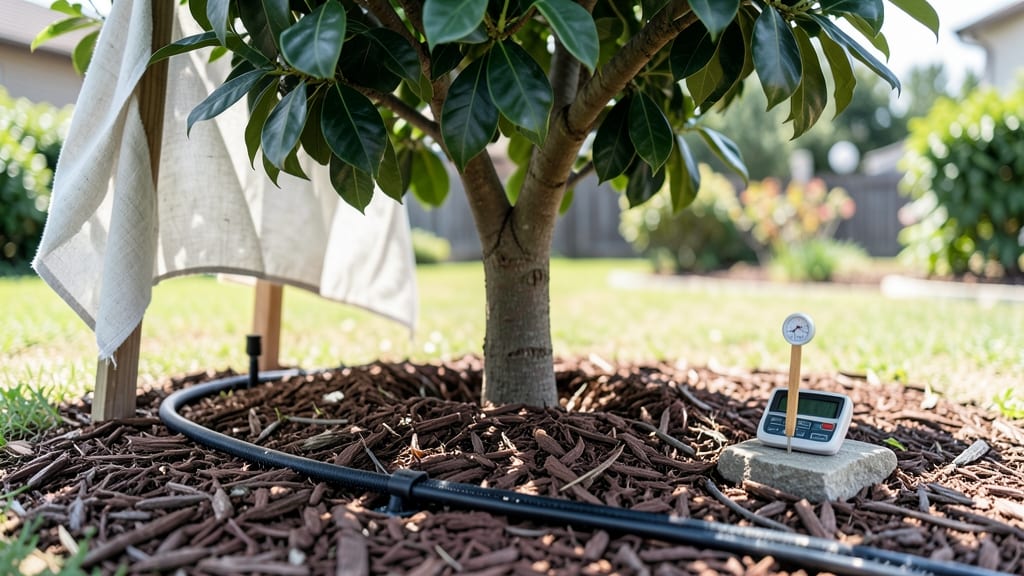
When temperatures drop below 30°F, move potted trees to an unheated garage or shed (not a freezer—40-50°F is ideal). For in-ground trees, wrap the trunk and canopy in burlap and cover with frost cloth secured with stakes. Remove the cloth on warm days to prevent rot.
I also mulch heavily (4-6 inches) around the base in late fall. Use straw or wood chips—they insulate roots while allowing airflow. Avoid plastic mulch; it traps moisture and invites fungal diseases. Watch for bud break in spring—if you see new growth before last frost, move the tree back outside gradually.
🌿 Step 4: Prune and Fertilize for Year-Round Growth
Prune in late winter or early spring (before new growth) to shape the tree and remove dead wood. Cut back overly long branches by one-third to encourage bushier growth. Avocados bloom on new wood, so avoid heavy pruning in fall—you’ll sacrifice next year’s fruit.
Fertilize every 2 months with a balanced citrus/avocado fertilizer (look for 6-6-6 or 8-3-9 NPK). I mix in 1 tablespoon of Epsom salt (magnesium sulfate) per gallon of water monthly—avocados are heavy feeders and need magnesium for fruit development. Water deeply after fertilizing to prevent root burn.
🍈 Step 5: Harvest and Troubleshoot Common Issues
Avocados in Zone 7 may not fruit reliably until 3-5 years old, but when they do, harvest when the fruit gives slightly when gently squeezed and the stem slips easily from the branch. Never pick unripe fruit—it won’t ripen off the tree.
Watch for yellowing leaves (usually overwatering or nutrient deficiency) or brown tips (often low humidity). Increase humidity with a pebble tray under the pot or mist leaves occasionally. If pests appear (like scale or spider mites), treat with neem oil spray—avocados are sensitive to harsh chemicals.
Tips & tricks for thriving avocado trees in Zone 7
Here's what nobody tells you about keeping your tropical tree happy in cold winters.
Variety Matters: The Hass variety is your best bet for Zone 7—it's the most cold-hardy and widely available. When selecting a tree, look for the graft union (that visible bump on the trunk) to ensure it's grafted onto Mexican rootstock. I've seen West Indian rootstock trees fail after just one frost, while Mexican-rooted trees bounce back. If you're unsure, ask your nursery about cold-hardiness ratings—some even test their trees in frost chambers before selling.
Sunlight Strategy: Avocados need that full sun (6+ hours daily), but positioning matters just as much. I've found that planting near a south-facing wall or under a clear greenhouse cover creates a microclimate that traps heat—critical for Zone 7's cooler nights. For in-ground planting, avoid burying the graft union (that visible bump) deeper than it was in the pot. I've seen beginners bury it too deep, which strangles the tree's growth. Use a marker if needed to remember the original depth.
Winter Survival Tactics: When temps drop below 30°F, move potted trees to an unheated garage or shed—but keep them above freezing. I learned this the hard way after losing a tree to a freezer accident (yes, I know better now!). For in-ground trees, wrap the trunk and canopy in burlap and cover with frost cloth secured with stakes. The key is airflow—remove the cloth on warm days to prevent rot. I also add a 4-6 inch layer of straw mulch around the base in late fall, which insulates roots while allowing airflow. Avoid plastic mulch—it traps moisture and invites fungal diseases.
Fertilizing Insight: Avocados are heavy feeders, so that monthly Epsom salt treatment (1 tablespoon per gallon of water) makes a huge difference. I've noticed trees with magnesium deficiencies develop yellow leaves between the veins—this is your cue to step up the Epsom salt. And always water deeply after fertilizing to prevent root burn. I fertilize every 2 months with a balanced citrus/avocado fertilizer (6-6-6 or 8-3-9 NPK), but I've seen trees thrive with organic options like fish emulsion or compost tea too.
Pro Tips for Avocado Tree Zone 7
- Here's what nobody tells you about keeping your tropical tree happy in cold winters.
- Variety Matters: The Hass variety is your best bet for Zone 7—it's the most cold-hardy and widely available.
- Sunlight Strategy: Avocados need that full sun (6+ hours daily), but positioning matters just as much.
Frequently asked questions
Got questions about growing avocado trees in Zone 7? You’re not alone!
Here are answers to the most common concerns—from cold protection to harvest timing—to help you grow lush, fruitful avocado trees even in cooler climates.
Can avocado trees survive Zone 7 winters?
While avocado trees (Persea americana) are tropical natives, yes, they can thrive in Zone 7 with care! Choose cold-hardy varieties like ‘Hass’ or ‘Fuerte,’ and protect young trees with frost cloth, microclimates (like near south-facing walls), or container growing. Mature trees may tolerate brief dips to 20°F with proper prep.
How long does it take for an avocado tree to bear fruit in Zone 7?
Patience is key! Grown from seed, it can take 5–13 years for an avocado tree to bear fruit in Zone 7. For faster results, opt for grafted nursery trees (3–6 years). Consistent care—watering, fertilizing, and winter protection—speeds up fruiting. Pro tip: Plant two trees for cross-pollination!
What’s the best way to plant an avocado tree in cold climates?
Start with well-draining soil
(mix in compost or sand if needed) and plant in spring after the last frost. Dig a hole twice as wide as the root ball but no deeper. Container growing is ideal for Zone 7: Use a 15+ gallon pot, move it indoors (60°F+) in winter, and place it near a sunny window or grow light.
Why is my Zone 7 avocado tree dropping leaves?
Leaf drop is often stress-related. Check for overwatering (avocados hate soggy roots), underwatering, or cold shock. Yellow leaves? Likely nutrient deficiency (fertilize with citrus-specific feed). Brown edges? Low humidity—mist leaves or use a pebble tray. Pro tip: Mulch to insulate roots and retain moisture.
Are there avocado alternatives for Zone 7 growers?
If avocados seem too finicky, try these Zone 7-friendly tropical-inspired trees:
- Loquat (Eriobotrya japonica) – Cold-hardy to 15°F, bears edible fruit.
- Fig (Ficus carica) – Thrives in Zone 7, produces sweet fruit.
- Pomegranate (Punica granatum) – Tolerates 10°F with protection.
- Citrus (in containers) – Lemons, limes, or oranges (needs winter indoors).
Each offers unique flavors and lower-maintenance cold tolerance!
Wrapping up and next steps
Growing an avocado tree in Zone 7 is absolutely doable with the right care and a little creativity! 🌱 By choosing cold-hardy varieties, protecting your tree from frost, and providing the ideal conditions, you’ll enjoy fresh avocados right from your backyard.
Remember, patience and consistency are key—your tree will reward you with lush growth and delicious fruit over time.
Ready to take the next step? Start with a healthy sapling or grafted tree, and soon you’ll be harvesting your own creamy avocados. Happy growing! 🥑✨