
Diseases
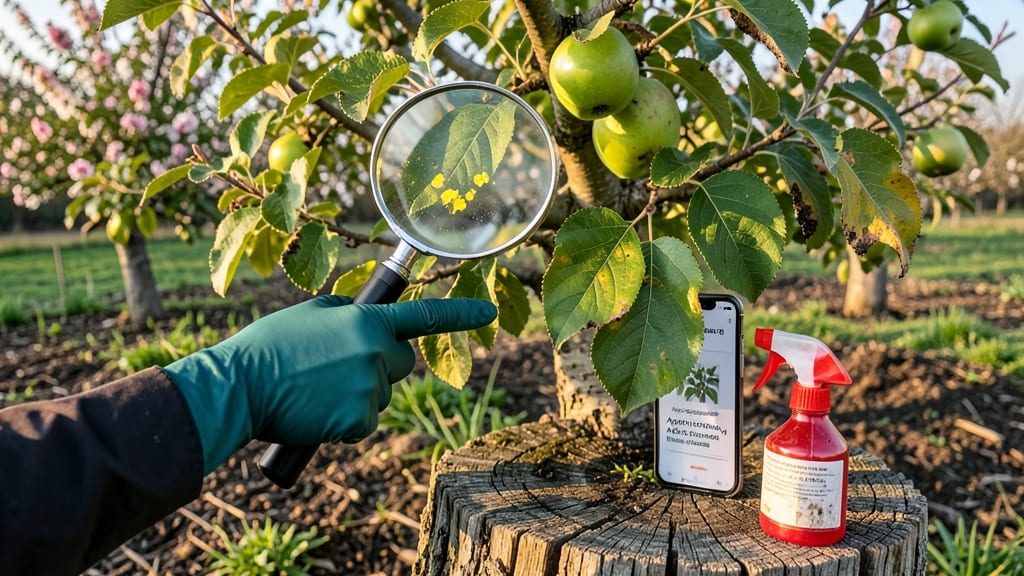
Yellow spots on apple tree 🍎 leaves could signal a fungal infection like apple scab or a nutrient deficiency that’s easier to fix than you think.
Seeing those telltale patches can feel like a panic attack—until you know whether it’s a harmless nutrient issue or a fungal infection spreading. The difference between a quick fix and a full-blown crisis often comes down to early diagnosis and the right treatment.
Fungal diseases like apple scab thrive in wet conditions, while yellowing from iron or zinc deficiencies shows up as interveinal chlorosis. Without the right approach, what starts as a few spots can turn into defoliation and weakened fruit production.
In this guide, I’ll walk you through how to diagnose the problem, organic and chemical treatments that actually work, and prevention tips to keep your tree thriving for years to come.
How to diagnose apple tree leaf spots: fungal vs nutrient deficiency
When you spot yellow patches on your apple tree leaves, your first instinct might be to panic—but don’t. These spots can signal either a nutrient deficiency or a fungal infection, and knowing the difference saves your tree from unnecessary stress.
The key lies in examining the leaf patterns, spot texture, and tree behavior. Let’s break down how to tell them apart before deciding on treatment.
Start by collecting a few affected leaves and a hand lens (or magnifying glass) for close inspection. Look for irregular edges or powdery textures—these are red flags for fungal diseases like apple scab or powdery mildew.
Nutrient deficiencies, on the other hand, often create uniform yellowing between leaf veins or interveinal chlorosis. The location of the spots (new growth vs. older leaves) also holds clues.
Fungal infections like apple scab thrive in wet, humid conditions and often appear as dark, velvety spots with yellow halos. They spread quickly and can cover entire leaf surfaces. In contrast, nutrient deficiencies like iron chlorosis or zinc deficiency cause yellowing without dark spots, usually starting on younger leaves first. Let’s compare these visually for clarity.
| Feature | Fungal Infection (Apple Scab, Powdery Mildew) | Nutrient Deficiency (Iron, Zinc, Magnesium) |
|---|---|---|
| Spot Appearance | Dark, velvety or powdery spots; often with yellow halos | Uniform yellowing; no dark spots; may appear pale green/yellow |
| Leaf Location | Affects both old and new leaves; often lower leaves first | Young leaves first; progresses to older leaves if untreated |
| Edge Texture | Irregular edges; spots may merge and spread | Smooth edges; yellowing stays between veins |
| Under Leaf Surface | Black or gray fungal growth; spore clusters visible | No fungal growth; may show stunted veins or small leaf size |
| Seasonal Timing | Peaks in spring/early summer after wet weather | Appears anytime during growth; worsens in alkaline soil |
| Soil Test Result | Normal pH (6.0-7.0); no nutrient imbalance | High pH (>7.0) for iron/zinc; low magnesium in sandy soil |
Next, flip the leaves to check the underside. Fungal infections like apple scab often show black or gray spores clustered in the spots. If you see these, your tree is battling a pathogen, not a nutrient issue.
For nutrient deficiencies, the underside will look normal—just paler than healthy leaves. This step is critical for avoiding over-fertilization, which can burn roots or worsen fungal spread.
Don’t overlook the tree’s overall health. Fungal infections often come with dropping leaves, stunted growth, or premature fruit drop. Nutrient deficiencies, however, may cause smaller leaves, thin canopies, or delayed flowering.
If your tree looks weak or stressed, combine treatments—fix the nutrient imbalance while tackling the fungus.
To confirm suspicions, perform a simple soil test (available at garden centers or via mail-in kits). Fungal issues won’t show up here, but nutrient deficiencies like low iron or zinc will. If the test reveals alkaline soil (pH >7.0), that’s often the culprit behind iron chlorosis.
For fungal diseases, a soil test won’t help—but it rules out nutrient issues so you can focus on fungicides.
Timing matters too. Fungal spots often appear after rain or in shady, humid areas of the yard. Nutrient deficiencies, meanwhile, may worsen in hot, dry weather when the tree struggles to uptake nutrients.
Keep a gardening journal to note when spots first appear—this helps narrow down the cause and plan preventive care for next season.
If you’re still unsure after these tests, collect a leaf sample in a paper bag (not plastic) and visit your local extension office. They can perform a lab analysis to confirm the issue.
Early diagnosis means the difference between a quick spray treatment and a full-blown infection that weakens your tree’s fruit production.
Remember, prevention is easier than cure. For fungal diseases, prune for airflow, remove fallen leaves, and apply copper fungicide in early spring. For nutrient deficiencies, amend soil with compost, use chelated iron, and
Best organic & chemical treatments for apple tree leaf spots by cause
Once you’ve identified whether your apple tree’s yellow spots stem from a fungal infection or nutrient deficiency, the next step is choosing the right treatment. Using the wrong solution can worsen the problem or even harm your fruit-bearing tree.
Let’s break down the best organic and chemical options based on the cause, including when and how to apply them safely.
For fungal infections like apple scab or powdery mildew, the goal is to stop the spread and prevent spores from overwintering. Copper fungicides and neem oil are my top organic choices, while chemical options like sulfur sprays or propiconazole offer stronger control.
Nutrient deficiencies, on the other hand, require targeted soil amendments like chelated iron or Epsom salt to restore balance.
Treatment Options for Apple Tree Leaf Spots
- Neem Oil
- Copper Fungicide
- Compost Tea
- Baking Soda Spray
Pros:
- Safe for fruit trees
- Environmentally friendly
- Prevents fungal spread
- Sulfur Sprays
- Propiconazole
- Chlorothalonil
- Zinc Sulfate
Cons:
- Risk of residue on fruit
- Potential environmental harm
- Requires precise timing
Pros:
- Faster symptom relief
- Stronger fungal control
- Longer residual protection
- Chelated Iron
- Epsom Salt
- Fish Emulsion
Pros:
- Quick nutrient correction
- Improves soil health
- Safe for organic gardens
Cons:
- May require multiple applications
- Less effective for severe infections
- Can over-fertilize if misused
If your apple tree has a fungal infection, start with a copper fungicide like Copper Sulfate. Apply it as a spray during the early spring (before buds open) and again after harvest.
For a more natural approach, neem oil works well—mix 1 tablespoon with 1 quart of water and spray leaves thoroughly. Reapply every 7-14 days until new growth appears.
For nutrient deficiencies, focus on soil amendments. If your tree lacks iron, use chelated iron granules or a foliar spray. For magnesium issues, Epsom salt (1 tablespoon per gallon of water) applied to the soil or leaves can help.
Always water the soil before and after applying amendments to prevent root burn.
Safety is critical when treating fruit-bearing trees. Always follow label instructions for chemical treatments, and avoid spraying when bees are active. For organic options, test a small leaf area first to check for sensitivity.
If your tree’s condition worsens or you’re unsure, consult a local agricultural extension service for expert advice.
Timing matters most—treat fungal issues preventively in early spring and again after harvest, while nutrient deficiencies should be addressed before bud break or during the growing season. With the right approach, your apple tree can bounce back and produce healthy fruit next season.