
Trees
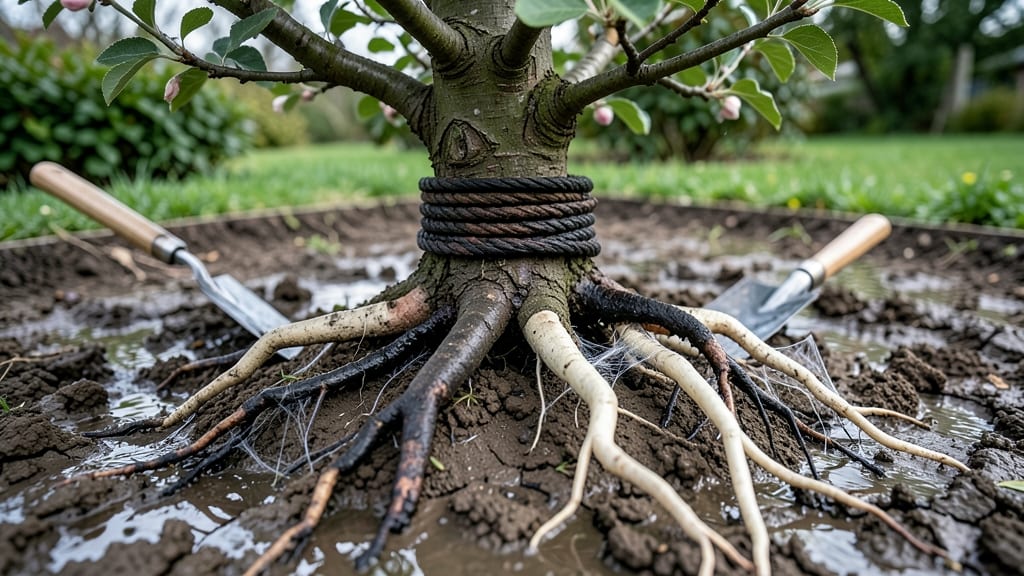
Apple tree root problems struggling with rot or pests can kill your harvest before it starts. 🌱 I’ve watched root rot turn a thriving orchard into a sad, wilting mess—until I learned these three simple steps to revive even the most damaged roots. The key is acting fast before the tree’s health spirals beyond repair.
Root rot and girdling roots often start with soggy soil or poor drainage, creating the perfect breeding ground for fungal infections. You’ll spot the trouble through yellowing leaves, stunted growth, or mushrooms sprouting at the base—all signs your tree’s roots are suffocating.
The good news? With the right soil amendments and pruning, you can give your tree a second chance.
By the end of these steps, your apple tree will show signs of recovery within 4-6 weeks, with stronger roots and a fuller canopy. The secret lies in balancing moisture, aeration, and organic matter—no complicated tools or chemicals required.
Even if your tree looks hopeless now, early intervention can save it.
This method works for both young saplings and mature trees, whether you’re dealing with root rot, compacted soil, or pest damage. Let’s get your tree’s roots back on track—before next season’s harvest is at risk.
Root Stress Culprits Explained
Apple tree root problems rarely happen by accident—they’re usually the result of environmental pressures, poor growing conditions, or human oversight. Understanding the root causes (pun intended) helps you prevent or fix issues before they spiral.
Let’s break down the science behind why apple tree roots struggle, so you can take action with confidence.
When soil becomes too dense, roots suffocate. Heavy machinery, foot traffic, or even natural soil settling can compress the earth around your tree’s roots, restricting water and oxygen flow.
Why it happens:
- Clay-heavy soils hold moisture but also trap air pockets, creating anaerobic (oxygen-poor) zones where roots rot.
- Construction or landscaping near the tree can compact soil, cutting off critical nutrient pathways.
- Overwatering can saturate soil, making it more prone to compaction as particles shift and pack tightly.
Actionable fix: Aerate the soil around the tree’s drip line (the edge of its canopy) using a manual aerator or garden fork to create air pockets. Add organic matter (compost or mulch) to improve drainage and loosen the soil.
Apple trees need moisture, but too much water is a silent killer. Roots thrive in well-draining soil—when they sit in soggy conditions, they suffocate and develop root rot (a fungal infection).
Why it happens:
- Poor drainage in clay or compacted soil traps excess water at the root zone.
- Irrigation systems (like sprinklers) that water the foliage instead of the soil can lead to fungal growth.
- Monsoon-like rains or lack of proper drainage can turn the root zone into a swamp.
Actionable fix:
- Test your soil’s drainage by digging a 12-inch hole near the tree—if water pools after 6 hours, amend with sand or perlite.
- Water deeply but infrequently—apple trees prefer 1–1.5 inches of water per week, delivered at the base.
- Mulch properly (3–4 inches of organic mulch, kept 6 inches away from the trunk) to regulate moisture.
Fungi like Phytophthora and Armillaria (also called honey fungus) thrive in moist, oxygen-deprived soil, attacking roots and cutting off nutrients.
Why it happens:
- Wet soil conditions (from overwatering or poor drainage) create the perfect fungal breeding ground.
- Wounded roots (from construction, girdling roots, or mechanical damage) provide entry points for pathogens.
- Old, decaying wood near the tree (like dead stumps) can harbor fungal spores that spread to roots.
Actionable fix:
- Prune away infected roots (if visible) with sterilized tools and dispose of them in a sealed bag.
- Improve airflow by reducing mulch thickness near the trunk and ensuring proper spacing between trees.
- Apply fungicidal treatments (like copper-based sprays or beneficial microbes) in early spring to prevent spread.
When roots grow in a circular pattern around the trunk, they cut into the bark, restricting water and nutrient flow. This is often a nursery or transplant issue but can also develop over time.
Why it happens:
- Tight planting forces roots to spiral as they search for nutrients.
- Poor root pruning during transplanting can encourage erratic growth patterns.
- Competition with nearby trees/shrubs may cause roots to grow aggressively in unnatural directions.
Actionable fix:
- Inspect the root flare (where roots meet the trunk)—if you see roots wrapping around the base, they may need correction.
- Gently loosen girdling roots (if safe) by making a small cut to release tension—only do this in early spring when the tree is dormant.
- Avoid planting too deeply—apple trees should be set with the root flare slightly above soil level to prevent future girdling.
Apple tree roots are sensitive to freezing and heat stress, which weakens their ability to absorb water and nutrients.
Why it happens:
- Frost heave (soil freezing and thawing) can lift roots out of the ground, exposing them to drying winds.
- Heatwaves dry out soil quickly, causing osmotic stress (when roots can’t absorb water fast enough).
- Sudden temperature swings (like late spring frosts) can burn root tips, reducing the tree’s ability to uptake nutrients.
Actionable fix:
- Mulch heavily (4–6 inches of wood chips) in winter to insulate roots and in summer to retain moisture.
- Water deeply before winter to help roots withstand freeze-thaw cycles.
- Choose cold-hardy apple varieties (like ‘Granny Smith’ or ‘Honeycrisp’) if you’re in a harsh climate zone.
Insects like grubs, borers, and nematodes chew through roots, creating entry points for disease and reducing the tree’s stability.
Why it happens:
- Grubs (larvae of beetles) feed on fine root hairs, which are critical for water absorption.
- Root-knot nematodes (microscopic worms) distort roots, making them unable to function properly.
- Bark beetles or borers may tunnel into the trunk, weakening the tree’s structural integrity.
Actionable fix:
- Apply beneficial nematodes (like Steinernema carpocapsae) to combat soil-dwelling pests.
- Use organic pest controls (neem oil, diatomaceous earth) to deter grubs and beetles.
- Encourage natural predators (birds, ground beetles) by planting pollinator-friendly ground covers near the tree.
If the soil lacks essential minerals, roots can’t grow strong or absorb water efficiently, making the tree vulnerable to stress and disease.
Why it happens:
- Over-farming or depleted soil (common in urban or agricultural areas) lacks nitrogen, phosphorus, or potassium.
- High pH soil (alkaline conditions) locks out iron, zinc, and manganese, causing chlorosis (yellowing leaves).
- Improper fertilization (too much synthetic nitrogen) can burn roots, while too little leaves them malnourished.
Actionable fix:
- Test your soil (a $20 home kit or professional lab test) to identify deficiencies.
- Amend soil with balanced organic fertilizers (like 5-5-5 or 10-10-10) in early spring.
- Add micronutrients (like chelated iron for chlorosis) if soil tests reveal imbalances.
The best defense? Proactive care.
- Plant apple trees in well-draining soil (avoid low spots where water pools).
- Avoid heavy foot traffic near the root zone.
- Monitor for early signs (wilting, yellow leaves, fungal growth) and act fast.
By tackling these root stress culprits, your apple tree will thrive—strong roots mean a healthier, fruit-bearing tree for years to come! 🍏🌳
Fixing Apple Tree Root Issues
Once you’ve identified the root of the problem (pun intended), it’s time to take action! Apple tree root issues like rot, girdling, or soil compaction can be managed with the right approach.
Below, we’ve broken down practical solutions tailored to each common cause—plus prevention tips to keep your tree thriving for years.
If your apple tree is battling root rot (often caused by overwatering, poor drainage, or fungal infections), act fast to save it.
🍳 Step 1: Improve Drainage Root rot thrives in waterlogged soil.
If your tree is in a low-lying area or heavy clay soil, raise the root zone by: - Mounding soil around the base (but avoid piling against the trunk). - Adding gravel or sand to improve drainage in the planting hole. - Installing French drains if water pools persistently.
👨🍳 Step 2: Prune Affected Roots (Carefully!)
- Use sterilized pruners to trim black, mushy, or hollow roots (healthy roots are firm and white).
- Avoid cutting more than 20-30% of the root system at once to prevent shock.
- Pro Tip: 💡 If the rot is severe, consider root grafting (a professional technique where healthy roots are grafted onto the affected tree).
🥘 Step 3: Fungal Treatment & Soil Adjustments
- Apply copper fungicide (like Bordeaux mixture) to kill pathogens.
- Mix compost or well-rotted manure into the soil to improve aeration and microbial activity.
- Avoid overwatering—let the top 2-3 inches of soil dry between waterings.
⏰ Prevention Tips
- Plant apple trees in well-draining soil (avoid clay-heavy areas).
- Use mulch (2-3 inches thick) but keep it 6 inches away from the trunk to prevent rot.
- Install drip irrigation to control water flow instead of hose blasts.
Girdling roots wrap around the trunk or major roots, restricting nutrients and causing decline.
🔪 Step 1: Identify & Expose the Problem
- Gently dig around the base (be careful not to damage healthy roots).
- Look for roots growing in a circular pattern around the trunk or large roots.
- If the root is less than ½ inch thick, you can prune it carefully with sterilized tools.
👨🍳 Step 2: Prune Strategically
- Remove only the girdling portion—don’t cut healthy root sections.
- Make clean cuts at a 45-degree angle to prevent tearing.
- Pro Tip: 🌡️ If the root is thicker than ½ inch, consult an arborist—removing large roots can stress the tree.
🥘 Step 3: Encourage Healthier Growth
- Aerate the soil around the root zone with a soil probe or hand fork.
- Top-dress with compost to promote new, non-girdling root growth.
- Mulch lightly (2-3 inches) to protect roots from temperature fluctuations.
✨ Prevention Tips
- Plant trees deeper (root flare should be 2-4 inches above soil level).
- Avoid compacting soil near the trunk (use stepping stones or gravel paths).
- Monitor young trees—girdling often starts in the first few years.
Compacted soil restricts root growth, leading to stunted trees and poor nutrient uptake.
🔥 Step 1: Test & Loosen the Soil
- Dig a small hole (6-8 inches deep) near the tree—if the soil is hard as concrete, it’s compacted.
- Use a garden fork or aerator to poke holes in the root zone (go down 8-12 inches).
- Pro Tip: 💡 For large trees, rent a mechanical aerator for deeper relief.
🍳 Step 2: Amend the Soil
- Mix in organic matter like:
- Compost (improves structure)
- Peat moss or coconut coir (for sandy soil)
- Sand or perlite (for clay-heavy soil)
- Work it in gently—don’t disturb roots more than necessary.
🥘 Step 3: Mulch & Water Wisely
- Apply 2-3 inches of mulch (wood chips, straw) to prevent future compaction.
- Water deeply but infrequently to encourage deep root growth.
- Avoid heavy foot traffic near the tree’s drip line.
🎯 Prevention Tips
- Plant trees in loose, well-amended soil from the start.
- Use raised beds if your native soil is extremely compacted.
- Avoid tilling near the root zone—it can damage shallow roots.
No matter the problem, consistent maintenance is key:
- Water deeply but less frequently (1-2 inches per week).
- Fertilize in early spring with a balanced, slow-release fertilizer (avoid high-nitrogen in summer).
- Monitor for pests (like root borers)—treat with neem oil or insecticidal soap if needed.
- Prune above-ground branches to reduce stress on the roots.
Final Thought: 🌱 With the right care, even a struggling apple tree can bounce back! Start with one fix at a time, give nature a little help, and watch your tree thrive. 🍏🌿
Frequently asked questions about apple tree root problems
How can I tell if my apple tree has root rot?
Look for black, mushy roots when you gently dig near the base, plus these warning signs: yellowing leaves, stunted growth, or mushrooms sprouting at the soil line. Healthy roots should be firm and white—if they smell foul or crumble easily, you’ve got root rot. Act fast by improving drainage and treating with copper fungicide.
Can I save my apple tree if the roots are girdling?
Yes, but act carefully! Gently dig to expose the roots and prune only the circular portions (never thick roots). For roots less than ½ inch thick, make clean cuts at a 45-degree angle. If the root is thicker, consult an arborist—removing too much can stress the tree. Follow up by aerating the soil and adding compost.
What’s the best way to prevent soil compaction around my tree?
Start by mulching 2-3 inches deep (keep it 6 inches from the trunk) and avoid heavy foot traffic near the root zone. Use organic matter like compost or wood chips to loosen soil naturally. For established trees, rent a mechanical aerator to create deep air pockets—do this in early spring before new growth begins.
Will overwatering really kill my apple tree’s roots?
Overwatering creates anaerobic conditions where roots suffocate and fungi thrive. Water only when the top 2-3 inches of soil are dry, and always water at the base—not the leaves. If your soil drains poorly, raise the root zone by mounding soil around the base (avoid piling against the trunk).
How do I know if my apple tree’s roots are too cold?
Watch for wilted leaves in winter or cracked bark near the soil line—both signs of frost damage. Mulch 4-6 inches deep with wood chips in late fall, and water deeply before the first freeze to help roots withstand temperature swings. Cold-hardy varieties like ‘Granny Smith’ handle harsh climates better than delicate types.