
Watering
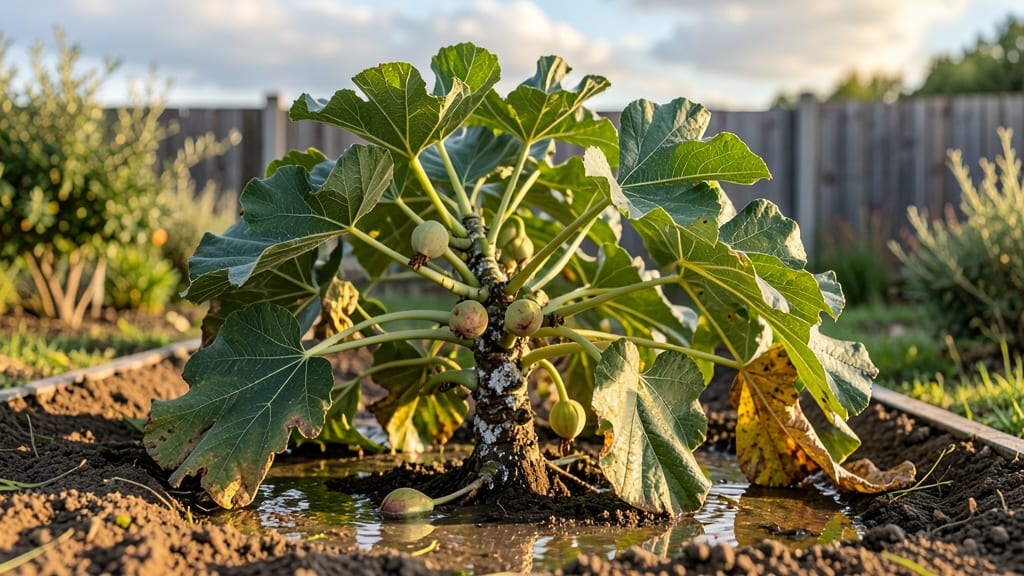
An overwatered fig tree looks like a sad, soggy mess—yellow leaves, drooping branches, and roots that feel mushy when you dig in. 🌱 I’ve seen it too many times: what starts as a thriving tree turns into a wilted, fungus-prone plant overnight.
The key is spotting the difference between overwatering and underwatering before it’s too late.
Yellowing leaves are the first red flag, often paired with brown edges or spots. Unlike underwatered figs that crisp up, overwatered ones feel limp and heavy. Check the soil: if it’s damp more than an inch down, you’re likely drowning the roots.
Fungal growth or a foul smell confirms the problem—this isn’t just wilting, it’s root rot setting in.
Fixing it starts with cutting back on water. Let the top 2-3 inches of soil dry out completely before watering again, and ensure your pot or bed has drainage holes.
Prune any mushy roots you find, and consider repotting if the soil stays soggy. With proper care, your fig tree can bounce back—just give it time and better drainage.
Long-term, mulch around the base to regulate moisture, and avoid watering on a schedule. Fig trees are tough once they’re established, but they hate wet feet. A little patience and adjustment will have your tree thriving again in no time.
Common Causes Of Overwatering
When your fig tree starts showing signs of distress—like yellowing leaves, drooping branches, or mushy roots—it’s often a cry for help from too much water. But why does this happen?
Overwatering isn’t just about pouring too much water at once; it’s a mix of environmental, soil, and care-related factors that create the perfect storm for root suffocation and disease. Let’s break down the key culprits behind this problem so you can fix it before it’s too late.
Fig trees, like most plants, hate soggy feet. If your soil doesn’t drain well, water pools around the roots instead of draining away, cutting off oxygen and leading to anaerobic conditions—a fancy term for "roots drowning in their own moisture."
- Heavy clay soil is the main offender—it compacts easily, trapping water like a sponge that never squeezes out.
- Lack of organic matter (like compost or perlite) reduces porosity, making it harder for excess water to escape.
- Improper pot drainage: If your container has no holes or a clogged saucer, water has nowhere to go but upward—straight to your fig tree’s roots.
Actionable fix: Amend clay-heavy soil with coarse sand, gravel, or coconut coir to improve drainage. For potted figs, always use a pot with drainage holes and elevate it on a tray to prevent waterlogging.
Even well-draining soil can’t save your fig tree if you’re consistently overwatering. Fig trees are drought-tolerant once established, but many gardeners water on a schedule rather than checking soil moisture. This leads to:
- Frequent shallow watering keeps the topsoil wet, encouraging roots to stay near the surface where they suffocate.
- Ignoring seasonal changes: Water needs drop in cooler months, but some gardeners keep up summer watering rates year-round.
- Automatic irrigation systems (like sprinklers) can drench fig trees daily, mimicking rain without letting the soil dry between sessions.
Actionable fix: Switch to the "finger test": Stick your index finger 2–3 inches into the soil. If it’s damp, wait. If it’s dry, water deeply until it runs out the drainage holes. Pro tip: 💡 Water in the morning so excess moisture evaporates by night.
Potted fig trees are especially vulnerable because their root systems are physically limited. When roots fill the entire pot, they have no room to expand, and water circulates in a closed loop, leading to stagnation. Signs your fig is root-bound:
- Roots circling the bottom or poking out of drainage holes.
- Slow growth despite regular watering.
- Water sitting on top of the soil for hours instead of draining.
Why it matters: Root-bound trees can’t absorb oxygen efficiently, making them 3x more susceptible to fungal rot (like Phytophthora) when overwatered.
Actionable fix: Repot your fig into a container 2–3 inches larger with fresh, well-draining soil. If roots are severely matted, prune the outer layer before repotting to encourage outward growth. 🌱
Fig trees thrive in warm, dry climates, but high humidity or sudden temperature drops can turn a "normal" watering routine into a disaster. Here’s how:
- High humidity (above 70%) slows evaporation, keeping soil wet longer and promoting fungal growth.
- Cold temperatures reduce root activity, so the tree can’t process excess water efficiently.
- Shade without airflow (like a dense forest or enclosed patio) traps moisture around leaves and soil.
Actionable fix: Adjust your watering based on weather conditions:
- 🌡️ Hot/dry: Water deeply 2–3x per week.
- ☁️ Humid/rainy: Reduce to once every 10–14 days.
- ❄️ Cold/winter: Water sparingly—once every 3–4 weeks.
For potted figs, move them to a sunny, breezy spot to speed up soil drying.
Overwatering doesn’t just drown roots—it creates the perfect breeding ground for pathogens. When soil stays soggy, fungi like Fusarium or bacteria like Erwinia multiply, attacking weakened roots and causing:
- Mushy, blackened roots (a classic sign of rot).
- Yellowing leaves with brown edges (nutrients can’t reach the foliage).
- Foul-smelling soil (ammonia-like odor from decay).
Why it’s dangerous: Once these infections take hold, they can spread to healthy roots and even kill the tree if untreated.
Actionable fix: If you suspect an infection:
- 🔪 Prune affected roots with sterilized shears.
- 🌡️ Repot in sterile, fresh soil mixed with fungicide (like copper-based treatments).
- ✨ Improve airflow by spacing plants 3–4 feet apart outdoors.
Revive Your Fig Tree Now
Overwatering can feel like a silent killer for your fig tree—yet with the right steps, you can nurse it back to health. Below, we’ll map the most common overwatering symptoms to practical fixes, plus prevention tips to keep your tree thriving. Let’s get your fig tree back on track!
Cause: Too much moisture suffocates roots, cutting off oxygen and nutrients. Solution:
- Stop Watering Immediately – Let the soil dry out completely before watering again. Stick your finger 2 inches into the soil; if it’s damp, wait.
- Improve Drainage – If your pot lacks drainage holes, repot your fig tree into one with holes or add a layer of gravel or perlite at the bottom.
- Adjust Watering Schedule – Figs hate soggy soil. Water only when the top 1-2 inches of soil are dry (usually every 7-10 days, less in winter).
- Prune Affected Leaves – Snip off yellow or mushy leaves to redirect energy to healthy growth.
💡 Pro Tip: Mulch around the base (but not touching the trunk) to retain just enough moisture without drowning roots.
Cause: Root rot from excess water weakens the tree’s ability to transport water and nutrients. Solution:
- Check for Root Rot – Gently lift the tree (if in a pot) and inspect roots. Healthy roots are firm and white; rotten roots are mushy, dark, or smell foul.
- Trim Rotten Roots – Use sterilized pruning shears to cut away black, squishy roots. Dust cuts with cinnamon powder (natural antifungal).
- Repot in Fresh Soil – Use a well-draining cactus/succulent mix or amend garden soil with sand or compost. Avoid heavy clay.
- Prop Up Weak Branches – If branches are too limp to stand, gently tie them to a small stake for support while the tree recovers.
✨ Prevention: Water at the base only—never overhead—to avoid fungal growth on leaves.
Cause: Severe root rot from chronic overwatering or poor drainage. Solution:
- Act Fast – Root rot spreads quickly. If roots are 90%+ mushy, the tree may not recover, but you can try:
- Root Pruning & Sterilization –
- Remove the tree from its pot.
- Rinse roots under cool water to remove excess soil.
- Trim all rotted roots (keep only firm, white sections).
- Soak remaining roots in a 1:10 hydrogen peroxide solution (3% strength) for 10 minutes to kill fungi.
- Repot in Sterile Soil – Use a new pot (old pots may harbor pathogens) with fresh, gritty soil. Add a fungicide (like Mycorrhizal fungi) to boost recovery.
- Adjust Care Post-Rescue –
- No watering for 3-5 days to let roots recover.
- Place the tree in bright, indirect light (no harsh sun yet).
- Resume watering only when soil is bone-dry.
🔥 Warning: If the tree’s trunk is soft or hollow, it’s likely beyond saving. Start fresh with a cutting!
Even after recovery, keep these habits to avoid repeating mistakes: - Use the Finger Test – Always check soil moisture before watering. - Upgrade Your Pot – Terracotta pots dry out faster than plastic; choose based on your climate. - Seasonal Adjustments – - Spring/Summer: Water every 5-7 days (more if hot). - Fall/Winter: Reduce to every 10-14 days (figs rest in cooler months). - Monitor Leaf Color – Yellowing between veins?
Likely overwatered. Brown, crispy edges? Underwatered. - Consider a Moisture Meter – A $10 tool takes the guesswork out of watering.
Final Thought: Figs are tough but finicky about water—think of them like a desert plant with a thirst for balance. With these fixes, your tree should bounce back in 4-6 weeks, and you’ll be rewarded with juicy figs (and bragging rights!). 🍇💦
Frequently asked questions about overwatered fig trees
How can I tell if my fig tree's yellow leaves mean overwatering or something else?
Yellow leaves on fig trees often signal overwatering, but check these clues: overwatered leaves feel heavy, mushy, and may have brown edges or spots. Underwatered leaves feel crispy and dry at the edges. Also, overwatered trees often have yellowing between leaf veins, while nutrient deficiencies cause yellowing at the edges first.
My fig tree's branches are drooping - could this be from too much water?
Yes, drooping branches are a classic overwatering sign! Unlike underwatered figs that wilt crisply, overwatered branches feel limp and heavy. Check the soil—if it's damp more than 1-2 inches down, you're likely overwatering. Let the soil dry completely before watering again, and improve drainage if needed.
What should I do if I find mushy, black roots on my fig tree?
That's root rot—a serious overwatering symptom! First, trim all mushy, black roots with sterilized shears. Repot in fresh, well-draining soil (mix cactus mix with perlite) and avoid watering for 3-5 days
Can I save a fig tree that's been overwatered for months?
It depends on how severe the damage is. If only roots are affected, you can often save it with proper care. If the trunk is soft or hollow, the tree may be beyond saving. For borderline cases, try the hydrogen peroxide root soak method (1:10 ratio) before repotting in fresh, sterile soil. Monitor closely for signs of recovery.
How often should I water my fig tree to prevent overwatering?
Fig trees need deep but infrequent watering. In warm weather, water every 7-10 days when the top 2 inches of soil are dry. In cooler months, reduce to every 2-3 weeks. Always check soil moisture with your finger—never water on a schedule!