
Plants
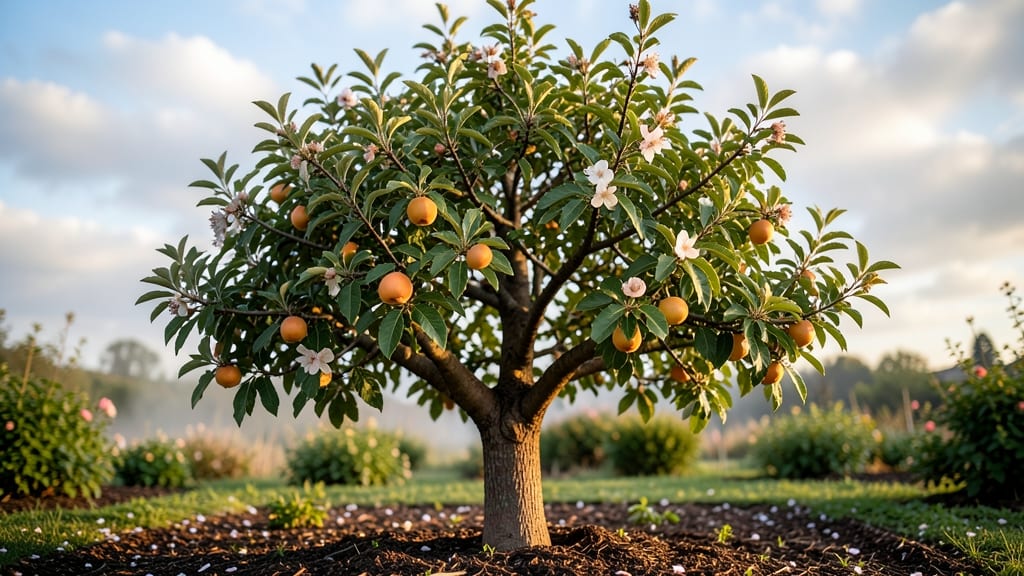
A nectarine tree looks like a peach tree but features smooth, hairless bark, oval leaves with finely serrated edges, and slightly smaller, fuzzy-free fruit. Its branches create a rounded shape, and mature trees typically reach 15-20 feet tall with a dense, bushy form.
A nectarine tree's most distinctive feature is its smooth, hairless skin compared to peaches' fuzzy exterior. 🌿 The leaves are oval with serrated edges, similar to peach leaves but slightly smaller, and the fruit hangs in clusters like its peach relatives.
What sets them apart is the nectarine's glossy, velvety skin—no fuzz to touch, making them easier to clean before eating. These trees thrive in similar climates but often grow slightly smaller, with a more compact canopy that's perfect for home gardens.
If you're trying to identify one in your yard, check the bark first—nectarine bark stays smooth even as the tree ages, while peach bark develops a fuzzy texture over time. The fruit size is another clue: nectarines are typically 1-2 inches smaller than peaches and have a more uniform shape.
Both trees produce white or pink blossoms in spring, but nectarines often bloom slightly later, which can help with identification during the growing season.
💡 In This Article
- Comparing Nectarine vs Peach Tree Bark, Leaves, and Fruit
- Identifying Nectarine Trees in Gardens and Orchards
Comparing nectarine vs peach tree bark, leaves, and fruit
The most striking difference between nectarine and peach trees lies in their bark texture. Nectarine bark remains smooth and hairless throughout its life, even as the tree matures, while peach bark develops a fuzzy, downy covering—especially noticeable on younger branches.
This smoothness isn't just cosmetic; it's a genetic trait tied to the fruit's skin. The lack of fuzz on nectarine bark correlates directly with the fruit's glossy, velvety surface, making it feel almost silky to the touch compared to peaches' slightly rougher texture. 🌿
Leaves offer another key identification point. Both trees have oval-shaped leaves with serrated edges, but nectarine leaves are typically 1-2 inches shorter (about 3-5 inches long) and slightly narrower. The serrations are finer on nectarines, creating a more delicate appearance.
When crushed, nectarine leaves release a subtle almond-like aroma—a trait inherited from their shared ancestor, the almond tree—while peach leaves have a milder, more neutral scent. This aromatic difference becomes more pronounced in spring when new growth emerges.
The fruit itself reveals the most obvious distinction: nectarines are completely free of fuzz, with skin so smooth it almost feels waxy. Peaches, in contrast, have a fine, velvety coating that covers their entire surface.
Nectarines also tend to be 10-20% smaller than peaches, typically weighing between 4-6 ounces compared to peaches' 6-8 ounces. The color difference is subtle but noticeable—nectarines often have a slightly deeper orange hue when ripe, while peaches may show more yellow or red blush.
These visual cues make identification straightforward once you know what to look for.
Growth habits also set them apart. Nectarine trees develop a more compact, rounded canopy that grows 15-20 feet tall at maturity, while peach trees can reach 20-25 feet with a slightly more open structure.
The branches on nectarine trees tend to be less prone to cracking under heavy fruit loads, thanks to their denser wood composition. This makes them slightly more resilient in windy conditions, a practical advantage for home gardeners in exposed locations. 🌳
What most people don't realize is that these physical differences stem from a single genetic mutation. Nectarines are essentially peaches without fuzz, resulting from a recessive gene that suppresses the production of trichomes—the hair-like structures that create the peach's characteristic fuzz.
This same gene affects the tree's bark and leaves, creating a consistent visual theme from root to fruit. The mutation doesn't affect flavor, though nectarines often have slightly more intense sweetness due to their concentrated size.
Seasonal changes provide additional clues. In late winter, nectarine trees often leaf out slightly later than peaches, giving them a delayed spring flush of new growth. The blossoms are nearly identical—white or pink with five petals—but nectarine flowers tend to be 10-15% smaller in diameter.
This timing difference can help distinguish young trees before they bear fruit. Even the seed pits differ slightly: nectarine pits are generally 5-10% smaller and have a smoother surface compared to peach pits.
For gardeners, understanding these distinctions is crucial when selecting trees. Nectarines' smooth bark makes them easier to maintain—less debris collects on branches—and their compact size makes them ideal for small gardens. The fuzz-free fruit also means less cleaning before eating, a practical advantage for families.
However, nectarines are slightly more susceptible to sunburn on their smooth skin, requiring 10-20% more shade cloth in hot climates compared to peaches. This trade-off makes them better suited for regions with mild summers or partial shade conditions. 🌞