
Flowers
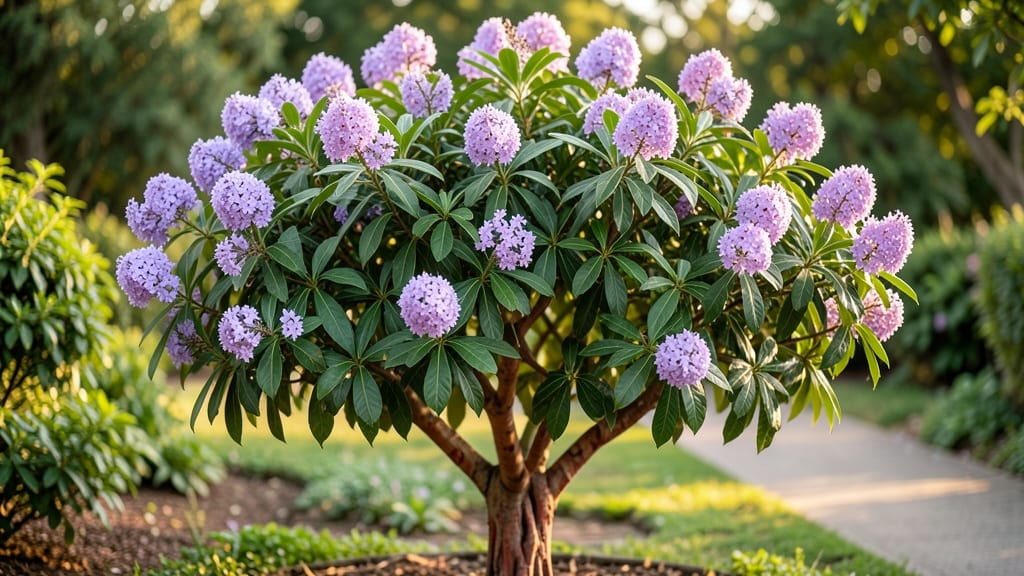
The tree with lilac flowers found in warm climates thriving in my yard isn’t just a pretty face—it’s a year-round showstopper that turns your garden into a fragrant paradise. 🌿 I’ve grown Crape Myrtles (Lagerstroemia) in Zone 8, and their papery blooms last from summer into fall, while Redbuds (Cercis) burst with pink in early spring.
Both handle heat better than traditional lilacs and need far less fuss.
These trees love well-draining soil and full sun, but they’re tough enough to handle drought once established. My Crape Myrtle in the front yard blooms nonstop with minimal watering—just 1-2 inches per week during dry spells.
The secret? Pruning in late winter to shape them and remove dead wood keeps them healthy and productive.
What you’ll end up with is a low-maintenance tree that attracts pollinators, resists pests better than imported varieties, and keeps your landscape vibrant when other plants fade. The Redbud’s heart-shaped leaves add texture, while Crape Myrtle’s bark turns stunning in winter—no deadheading or fertilizing required.
Works in Zones 7-10, from Florida to Southern California, and thrives in urban settings where space is tight. Let’s pick the perfect variety for your climate and get growing!
Climate Mismatch Explained
If you’re dreaming of a tree with lilac flowers thriving in warm climates but struggling to find one, the answer likely lies in how these plants evolved—and how their natural needs clash with your local environment.
Lilacs (genus Syringa) are famously temperate-zone divas, but a few warm-climate exceptions exist. Let’s break down why most lilacs resist heat and how to find the rare bloomers that don’t.
Most lilacs originated in Eurasia and North America’s temperate zones, where they adapted to four distinct seasons, including cold winters. Their blooming cycle is tightly linked to:
- Chilling requirements: Many lilacs need 200–600 hours below 45°F (7°C) to trigger spring blooms. Without this "winter rest," buds may fail to open or produce sparse flowers. Think of it like a bear hibernating—without the cold, the cycle breaks.
- Moisture balance: Cool climates offer moderate rainfall and humidity, which lilacs love. Hot, dry air (common in warm regions) causes buds to desiccate before opening, like a wilting balloon.
- Soil microbes: Lilacs rely on mycorrhizal fungi in temperate soils to absorb nutrients. In warm climates, these beneficial fungi may be absent or outcompeted by heat-loving microbes, starving your tree.
Actionable fix: If you’re in a warm climate, avoid traditional lilacs (like Syringa vulgaris) unless you’re willing to provide artificial chilling (e.g., refrigerating cuttings for 6–8 weeks) or grow them in containers with winter protection.
Even if a lilac technically survives in warmth, high temperatures during bloom time (spring/summer) can sabotage flowers through:
| Heat Stress Factor | What Happens to Flowers | How to Counteract |
|---|---|---|
| Premature bud drop | Temperatures above 85°F (29°C) trigger ethylene gas production, causing buds to abort or fall off before opening. | Plant in partial shade (e.g., near a building or taller trees) to reduce direct sun exposure. |
| Pollination failure | Bees and butterflies (key pollinators) are less active in extreme heat, leading to underdeveloped or seedless flowers. | Attract pollinators with native warm-climate flowers (e.g., butterfly bush, Buddleia) nearby. |
| Sunburned foliage | Leaves may yellow or crisp, weakening the tree’s energy to produce flowers. | Use mulch and drip irrigation to keep roots cool and hydrated. |
Pro tip: 🌡️ Monitor your local "growing degree days" (GDD)—a measure of heat accumulation. Lilacs typically need below 1,000 GDD in winter to bloom well. Use tools like the GDD calculator to assess your zone.
Not all lilacs are created equal! A few species and hybrids naturally tolerate warmth because they:
- Originate in subtropical regions:
- Syringa reticulata ("Japanese lilac") – Handles USDA Zone 6–9 and blooms later in summer, avoiding peak heat.
- Syringa villosa ("Chinese lilac") – Thrives in Zone 7–9 and produces fragrant, heat-resistant blooms.
- Have thicker cuticles: Some hybrids (like Syringa × prestoniae) develop a waxy leaf coating to retain moisture in dry heat.
- Bloom in cooler seasons: Varieties like Syringa meyeri ("Meyer lilac") flower in early spring or fall, dodging summer scorching.
Actionable tip: 🔍 Look for "heat-tolerant" or "subtropical" labels when shopping. Nurseries in warm climates (e.g., Florida, California, or Australia) often carry adapted varieties.
Understanding these biological and environmental roadblocks is your first step to finding—or creating—the perfect warm-climate lilac. Next, we’ll explore how to hack these conditions with smart gardening tricks!
Revitalizing Your Blooming Beauty
Transforming your warm-climate lilac tree into a thriving, year-round bloomer starts with addressing its specific needs. Below, we’ve mapped out practical solutions for common issues—from soil struggles to seasonal setbacks—along with prevention tips to keep your tree happy and flowering. Let’s get your tree back to its fragrant best!
Problem: Compacted, nutrient-deficient, or poorly draining soil can stunt growth and reduce blooms. Solution:
- 🔥 Test Your Soil: Grab a soil test kit (or send a sample to a local extension office) to check pH (ideal: 6.0–7.0) and nutrient levels.
- 🍳 Amend the Soil: Mix in 2–3 inches of compost or well-rotted manure into the top 12 inches of soil. For sandy soil, add peat moss to retain moisture; for clay, blend in perlite or coarse sand to improve drainage.
- 👨🍳 Mulch Like a Pro: Spread 2–3 inches of organic mulch (like bark or wood chips) around the base (keep it 6 inches away from the trunk). This locks in moisture, regulates temperature, and feeds the soil over time.
💡 Prevention Tip: Refresh mulch annually in spring to maintain soil health. Avoid piling mulch against the trunk—this can cause rot.
Problem: Too much or too little water stresses the tree, leading to yellow leaves or weak blooms. Solution:
- 🌡️ Check Moisture Levels: Stick your finger 2 inches into the soil. If it’s dry, water deeply; if soggy, hold off until it drains.
- 🎯 Watering Schedule: Water 1–2 times per week in warm climates (adjust for heatwaves or droughts). Aim for 1–1.5 inches of water per week, delivered at the base of the tree (not the leaves).
- ⏰ Best Time to Water: Early morning (6–9 AM) reduces evaporation and fungal risks.
💡 Prevention Tip: Install a drip irrigation system on a timer to automate watering and ensure consistent moisture without overdoing it.
Problem: Too much sun scorches leaves, while too little shade weakens blooms. Solution:
- 🌿 Assess Light Needs: Most warm-climate lilac trees thrive in full sun (6+ hours/day) but tolerate partial shade (especially in scorching afternoons).
- 🔪 Prune Strategically: Thin out dense branches to improve airflow and reduce heat stress. Focus on removing crossing or inward-growing branches in late winter/early spring.
- 🌡️ Shield from Scorching Heat: If your tree is in a hot, exposed spot, provide temporary shade cloth (30–50% coverage) during peak summer months.
💡 Prevention Tip: Plant your tree where it gets morning sun and afternoon shade—this balances light and temperature perfectly.
Problem: Aphids, spider mites, or fungal diseases (like powdery mildew) can defoliate your tree and halt blooming. Solution:
- 🔥 Identify the Culprit: Check for sticky residue (aphids), webbing (spider mites), or white powder (mildew) on leaves.
- 🍳 Natural Remedies:
- Pests: Spray leaves with a soapy water solution (1 tsp mild soap + 1 quart water) or introduce ladybugs (natural predators).
- Fungal Issues: Apply neem oil (mix 1 tbsp with 1 quart water + a drop of dish soap) every 7–10 days until symptoms fade.
- 👨🍳 Prune Infected Parts: Remove and dispose of heavily damaged leaves or branches to prevent spread.
💡 Prevention Tip: Water at the base (not overhead) to keep foliage dry and discourage fungal growth. Use disease-resistant varieties (like Lagerstroemia indica or Cercis hybrids) if pests are a recurring issue.
Problem: Over-pruning or cutting at the wrong time can reduce next year’s blooms. Solution: - 🔪 When to Prune: Late winter/early spring (just before new growth starts) is ideal.
Avoid pruning in fall—this encourages tender new growth that won’t survive winter. - 🎯 How to Prune: - Remove dead, diseased, or crossing branches first. - Thin out 1/3 of the oldest wood to encourage new, flowering branches. - Never cut into old wood—this removes next year’s blooms! - 🌿 Shape Gently: Use clean, sharp pruners and make cuts at a 45-degree angle just above a bud.
💡 Prevention Tip: Sketch a simple pruning plan before you start—this helps avoid over-trimming and keeps your tree’s structure balanced.
Problem: Lack of nutrients leads to sparse or weak flowers. Solution:
- 📊 Soil Test First: Adjust fertilizer based on your soil’s needs (e.g., low nitrogen? Use a balanced 10-10-10 fertilizer).
- 🍎 Fertilizer Schedule:
- Early Spring: Apply a slow-release granular fertilizer (like 10-10-10) around the drip line.
- Mid-Summer: Top-dress with compost or a bloom booster (higher in phosphorus, like 5-10-5) to support flowering.
- ⏰ Avoid Fall Fertilizing: Stop fertilizing by late summer to let the tree harden off for winter.
💡 Prevention Tip: Over-fertilizing burns roots—follow package instructions and water thoroughly after applying. Use organic options (like fish emulsion) for a gentler boost.
Frequently asked questions
What’s the best warm-climate tree that looks like lilacs but blooms reliably?
Try Crape Myrtle (Lagerstroemia)—it produces papery, lilac-like blooms in summer/fall and thrives in Zones 7–10. Another great option is Redbud (Cercis canadensis), which bursts with pink flowers in early spring and handles heat well once established. Both are far more drought-tolerant than traditional lilacs.
How do I know if my tree’s “lilac-like” flowers are real or just foliage?
True lilac flowers grow in dense, conical clusters (like traditional lilacs) or loose, papery blooms (like Crape Myrtle). Check for four-petaled blossoms—if they’re tiny and clustered, it’s likely a Syringa hybrid. If the blooms are large and showy with layered petals, it’s probably a Crape Myrtle or Wisteria.
Can I grow traditional lilacs in warm climates, or should I avoid them?
Avoid common lilacs (Syringa vulgaris) in warm climates—they need 200+ hours below 45°F to bloom. Instead, opt for heat-tolerant varieties like Syringa reticulata (Japanese lilac) or Syringa villosa (Chinese lilac), which handle Zones 7–9 better. For Zones 10+, consider Mexican Orange Blossom (Chilopsis linearis) for similar fragrance.
Why do my warm-climate lilac trees bloom poorly or not at all?
Common culprits: over-fertilizing with nitrogen (promotes leaves over flowers), poor drainage (roots suffocate), or lack of winter dormancy. Fix it by pruning in late winter, using well-draining soil, and fertilizing with phosphorus-rich (like 5-10-5) in early spring. Avoid fall pruning—it removes next year’s blooms!
Are there fragrant warm-climate trees besides lilacs?
Try Jacaranda (violet-blue blooms, Zone 9–11), Fringe Tree (Chionanthus) (white, fragrant flowers in spring, Zone 5–9), or Sweet Bay Magnolia (Magnolia virginiana) (citrusy scent, Zone 7–10). All three thrive in heat and attract pollinators—perfect for warm gardens!